Choosing the 2026 best Programmable Power Supply requires more than comparing voltage ranges and screen sizes. Global buyers must evaluate accuracy, transient response, communication protocols, safety certifications, and long-term service support. A supply that performs well in a controlled laboratory may fail in a humid factory or a country with unstable mains voltage. That distinction matters.
The International Energy Agency’s Electricity 2024 report expects global electricity demand to grow by about 4% annually from 2024 through 2026. This expansion increases the need for reliable testing equipment across renewable energy, automotive electronics, data centers, and industrial automation. Programmable Power Supply systems can reproduce voltage ramps, current limits, load changes, and fault conditions with repeatable control. However, advertised specifications do not always reflect real operating performance. Buyers should inspect calibration certificates, output ripple measurements, protection behavior, and software compatibility.
Practical verification is essential. During evaluation, connect the unit to a representative load, observe the output with an oscilloscope, and record recovery time after a sudden load step. Check whether the interface remains stable during repeated commands. Small details matter. Input compatibility from 100–240 VAC, universal communications, and replaceable cooling fans can reduce ownership problems across regions. IEC 61010-1 safety requirements and ISO/IEC 17025 calibration practices also provide useful reference points for responsible procurement. Yet no ranking can fit every application. A high-power model may waste energy in a small electronics lab, while a compact unit may lack the headroom required for battery testing. This guide compares leading options through measurable performance, application fit, documentation quality, and after-sales reliability, while acknowledging where published data remains incomplete.
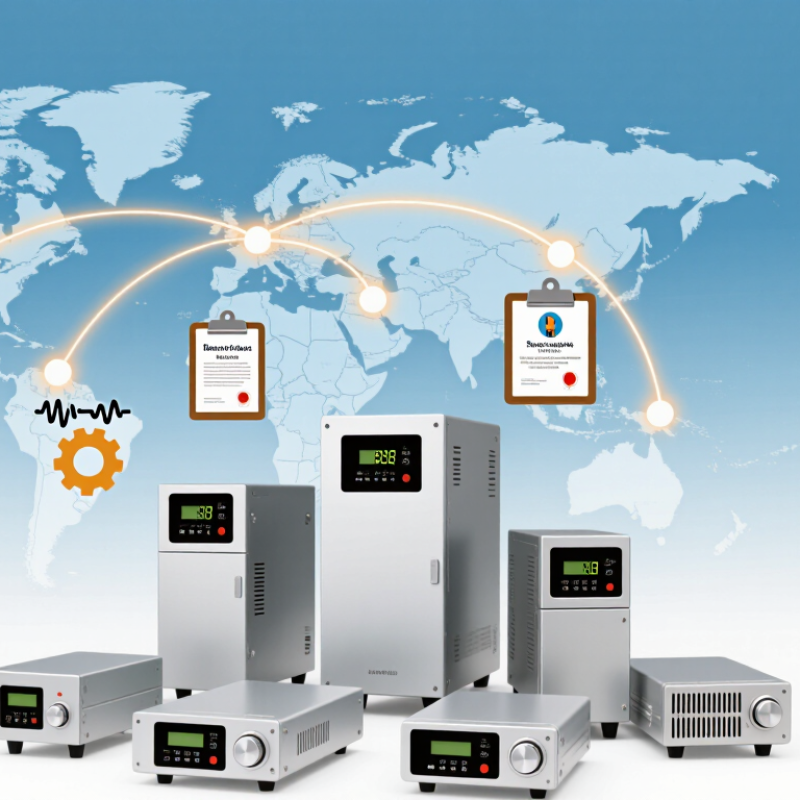
What Is a Programmable Power Supply?
A programmable power supply is a laboratory instrument that delivers controlled electrical power through digital commands. Users can set voltage, current limits, output timing, and protection thresholds. Unlike a basic bench supply, it can repeat precise test conditions without constant manual adjustment.
The supply measures its output continuously through internal feedback circuits. If a device suddenly draws more current, the unit can enter constant-current mode or shut down safely. Common control methods include front-panel settings, USB, Ethernet, and serial communication. Engineers often create voltage ramps, battery-test profiles, or automated production checks. A practical example is a motor test requiring 12 volts for ten seconds, followed by 9 volts for five minutes. The sequence can be saved and repeated.
Accuracy matters, but so do noise, response speed, and recovery after a load change. A clear display helps during bench work. Remote control helps when equipment sits inside a test cabinet. Global buyers should also check input voltage compatibility, connector types, operating temperature, electrical safety documentation, and local compliance requirements. These details are easy to overlook. A supply may be programmable yet unsuitable for a sensitive circuit because its ripple is too high. I have also seen test plans fail because software commands used different units. Careful verification remains necessary, even with modern automation.
2026 Best Programmable Power Supply for Global Buyers? – What Is a Programmable Power Supply?
A programmable power supply is a DC source whose output voltage and current can be controlled through a front panel, USB, LAN, RS-232, or other digital interface. The chart shows representative voltage and current classes commonly used for laboratory testing, electronics development, battery evaluation, and automated production systems. Actual ratings vary by model and application.
Key Specifications Global Buyers Should Compare
For global buyers, the best programmable power supply in 2026 is not simply the unit with the highest wattage. Compare output range, regulation accuracy, ripple, transient response, and protection functions. A 0–60 V, 0–10 A model may suit laboratory testing, while production equipment may need higher voltage, parallel outputs, or constant-power operation.
Resolution matters. Check voltage and current readback accuracy separately, not only display digits. NIST Technical Note 1297 emphasizes that measurement uncertainty affects every reported value. Ask for calibration data, test conditions, and traceability. Communication options also deserve attention. USB, LAN, and standard command protocols can reduce manual errors, but compatibility should be verified before purchase. I have seen impressive specifications become less useful when software support was weak.
Efficiency is increasingly practical. The IEA’s Electricity 2024 report estimates that global data-center electricity consumption could exceed 1,000 TWh by 2026. Buyers should compare standby power, heat output, fan noise, and efficiency at partial load. Safety documentation should reference applicable requirements, including IEC 61010-1 where relevant. Do not assume a certificate covers every destination market.
Tips: Request ripple results across the full load range. Check whether remote sensing is included. Compare warranty response times, calibration intervals, input voltage options, and replacement-part access. A cheaper unit can become expensive after shipping, customs, downtime, and local service costs. My own comparison habit still needs improvement: I sometimes focus too heavily on accuracy and overlook usability during long test sessions.
How to Choose Voltage, Current, and Power Ratings
2026 Best Programmable Power Supply for Global Buyers?
How to Choose Voltage, Current, and Power Ratings
Choosing a programmable power supply starts with the device under test, not the display on the front panel. List its normal voltage, peak voltage, operating current, and startup surge. A 12 V circuit may briefly draw 4 A when motors, relays, or capacitors activate. That short event can trigger current limiting. Leave practical headroom.
Calculate power with P = V × I, then add at least 20% capacity for heat, measurement error, and future testing. For example, a 24 V load drawing 3 A needs 72 W, but a 100 W supply is safer for continuous operation. Check whether the unit supports constant-voltage and constant-current modes. Their transition behavior matters during sudden load changes. Small details matter.
I have seen engineers select a high-current model while ignoring its minimum voltage setting. That choice caused trouble with low-voltage sensors. A wide voltage range is useful, but resolution and accuracy may become weaker near the lower limit. Review regulation, ripple, readback accuracy, and programming increments. Remote sensing helps when long cables create voltage drop. It is not magic; poor wiring still produces unstable results. Global buyers should also confirm input compatibility, connector safety, and required electrical certifications for their location. Some specifications look impressive until tested with real cables and changing loads.
2026 Best Programmable Power Supply for Global Buyers? - How to Choose Voltage, Current, and Power Ratings
| Power-Supply Class |
Output Voltage |
Output Current |
Maximum Power |
Typical Regulation |
Recommended Load Type |
Key Selection Point |
| Entry-level single output |
0–30 V DC |
0–3 A |
90 W |
CV ±0.05%; CC ±0.1% |
Sensors, small circuits, development boards |
Choose a unit with adjustable voltage and current limits. |
| General laboratory |
0–30 V DC |
0–5 A |
150 W |
CV ±0.02%; CC ±0.05% |
PCB testing, embedded systems, repair benches |
A 5 A range provides useful headroom for startup current. |
| Dual-channel laboratory |
0–30 V per channel |
0–3 A per channel |
180 W combined |
CV ±0.03%; CC ±0.05% |
Analog circuits, op-amp and split-rail designs |
Series and parallel tracking modes add flexibility. |
| High-voltage development |
0–60 V DC |
0–5 A |
300 W |
CV ±0.03%; CC ±0.05% |
Motor controllers, battery modules, industrial electronics |
Check insulation, output terminals, and over-voltage protection. |
| High-current DC |
0–30 V DC |
0–20 A |
600 W |
CV ±0.05%; CC ±0.1% |
Automotive electronics, power modules, battery charging tests |
Use adequately sized cables and confirm continuous-duty cooling. |
| High-power programmable |
0–80 V DC |
0–25 A |
2,000 W |
CV ±0.05%; CC ±0.1% |
Power-conversion testing and production test systems |
Verify input voltage, thermal derating, rack space, and remote control. |
| Precision low-noise |
0–20 V DC |
0–2 A |
40 W |
CV ±0.01%; low ripple requirement |
RF, audio, measurement, and sensitive analog circuits |
Prioritize ripple, noise, load transient response, and fine resolution. |
Quick Specification Guide
| Specification |
How to Choose |
Practical Recommendation |
| Voltage rating |
Select a maximum voltage above the device's required operating voltage. |
Keep approximately 20% additional voltage headroom where the application permits. |
| Current rating |
The supply should deliver the load's maximum continuous and startup current. |
Allow approximately 20–30% current headroom for reliable operation. |
| Power rating |
Calculate power as P = V × I at the intended operating point. |
Check whether the stated wattage is continuous output or short-term peak output. |
| Programming interface |
Choose USB, LAN, RS-232, or an industrial interface according to the test system. |
LAN is convenient for networked test benches; USB is practical for local control. |
| Protection functions |
Look for over-voltage, over-current, over-temperature, and short-circuit protection. |
For battery work, add reverse-polarity protection and controlled discharge capability. |
| International deployment |
Confirm the allowable AC input range, plug configuration, safety certification, and documentation. |
A universal input such as 100–240 V AC, 50/60 Hz simplifies global installation. |
Note: The specifications above represent common programmable DC power-supply classes and selection ranges. Always verify the manufacturer’s datasheet, accuracy conditions, ripple measurement method, duty cycle, and regional safety requirements before purchase.
Essential Safety, Compliance, and Regional Requirements
A programmable power supply for global buyers must satisfy more than voltage accuracy.
The IEA’s Renewables 2024 report expects nearly 5,500 GW of renewable capacity additions from 2024 to 2030. That expansion increases demand for repeatable laboratory testing and controlled power profiles. Buyers should request evidence for IEC 61010-1 electrical safety and IEC 61326-1 electromagnetic compatibility. Check insulation spacing, leakage current, grounding, and output protection. A certificate alone is not enough.
Regional compliance can change the purchasing decision. European shipments may require CE documentation, RoHS and REACH declarations, while the United Kingdom may require UKCA-related records. United States installations often need applicable national safety recognition and electromagnetic-emission compliance. Canada, Australia, Japan, and China apply different approval routes. Confirm the destination country, plug configuration, mains frequency, and importer responsibilities before ordering. Small details matter.
Network control creates another risk. NIST’s Cybersecurity Framework 2.0 recommends identifying, protecting, detecting, responding, and recovering from cyber risks. A supply with LAN or USB control should support access restrictions, firmware traceability, and safe remote shutdown behavior. Test these functions with the actual load, not only on a product sheet. I would also verify calibration intervals and uncertainty under regional mains conditions. Specifications still leave blind spots. The testing plan may need revision after the first failure.
Best Applications and Buying Considerations for 2026
For global buyers in 2026, programmable power supplies will serve more than laboratory benches. They support battery testing, electric-vehicle components, telecommunications equipment, automation systems, and data-center hardware. The IEA’s Global EV Outlook 2025 reports that electric-car sales exceeded 17 million in 2024. That growth increases demand for repeatable charging and discharge tests. In addition, the IEA’s Energy and AI report projects data-center electricity use will more than double by 2030, reaching about 945 TWh. Stable power testing is becoming operationally important.
Buying decisions should begin with the application, not the advertised wattage. Check voltage and current ranges, constant-voltage and constant-current control, ripple, transient response, and programmable sequencing. A battery laboratory may need accurate low-current control, while production equipment may require fast dynamic response. Digital interfaces such as LAN, USB, or industrial bus connections also matter for automated testing. Small errors matter. A supply with excellent resolution can still disappoint if its calibration record is unclear.
Global purchasing adds practical concerns. Confirm input compatibility, safety certification, thermal performance, replacement parts, and technical support in the destination market. IEC 61010-1 alignment is relevant for laboratory measurement equipment, but certification requirements can differ by region. Consider total ownership cost, including cooling, calibration, downtime, and software integration. I would not select the highest-power model automatically; oversized equipment may waste energy and bench space. Even experienced buyers sometimes underestimate connector quality and waveform behavior. That is worth checking with real loads before approval.
FAQS
Start with the device’s normal voltage and peak voltage. Leave practical headroom for startup events. A 12 V circuit may briefly rise to a 4 A demand. Choose a supply that handles this surge without unwanted limiting. Check low-end resolution too. A wide range is not always better.
Calculate power using P = V × I. A 24 V load at 3 A needs 72 W. A 100 W supply offers safer continuous operation. Keep at least 20% extra capacity for heat and measurement error. Future testing may need more. Do not trust the exact minimum.
Constant-voltage mode stabilizes the selected output voltage. Constant-current mode limits output current during demanding conditions. Their transition behavior matters during sudden load changes. Motors, relays, and capacitors can create short surges. Test both modes with the real load. The display alone cannot show everything.
Check regulation, ripple, readback accuracy, programming increments, and transient response. Also review minimum voltage settings. A high-current model may perform poorly with low-voltage sensors. Remote sensing can reduce cable voltage drop. It is not magic. Poor wiring still causes unstable results.
Confirm electrical safety and electromagnetic compatibility requirements for the destination. Review insulation spacing, leakage current, grounding, and output protection. Check local plug type and mains frequency. Required documentation may vary between regions. A certificate alone is not enough. Ask for traceable test evidence.
Review access restrictions, firmware traceability, and remote shutdown behavior. LAN or USB control adds practical cybersecurity concerns. Test recovery after communication loss. Use the actual load during testing. Do not rely only on a product sheet. The first failure may change your plan.
Common uses include battery testing, vehicle components, telecommunications, automation, and data-center hardware. Battery laboratories may need precise low-current control. Production systems may need fast dynamic response. Automated testing often requires LAN, USB, or industrial bus connections. The application decides the priority. Advertised wattage should not decide alone.
Include cooling, calibration, software integration, replacement parts, support, and possible downtime. Oversized equipment may waste energy and bench space. Confirm thermal performance during continuous operation. Check calibration intervals and measurement uncertainty. Connector quality also deserves attention. I would retest with changing loads before approval.
Conclusion
A Programmable Power Supply is a versatile electronic device that allows users to set and control output voltage, current, and power through digital controls or external software. For global buyers in 2026, comparing key specifications such as output range, regulation accuracy, resolution, response speed, channel configuration, communication interfaces, and protection functions is essential. The correct voltage, current, and power ratings should be selected according to the equipment’s normal operating conditions, startup demands, and future testing requirements, while avoiding unnecessary oversizing that may increase cost and complexity.
Buyers should also review electrical safety features, thermal management, overload and short-circuit protection, as well as applicable regional compliance and documentation requirements. A Programmable Power Supply can support research and development, laboratory testing, production verification, education, repair, and automated test systems. Before purchasing, users should consider workload, operating environment, control compatibility, measurement accuracy, service support, and total ownership cost to ensure reliable performance across international applications.

 Myami Power