Choosing the best Signal Generator for global buyers in 2026 requires more than comparing prices or frequency ranges. A reliable model should produce stable signals, accurate amplitude levels, and clean modulation under real laboratory conditions. Engineers may test a 50-ohm output with an oscilloscope, inspect phase-noise data, and verify settings across repeated sweeps. These details matter when equipment supports wireless development, education, production testing, or field maintenance.
Small differences become expensive later.
This guide examines frequency coverage, signal purity, modulation functions, interface options, software support, calibration records, and long-term service. Global buyers should also check input voltage, plug compatibility, shipping protection, warranty terms, export documentation, and regional safety requirements. A low-cost generator may appear attractive beside a premium unit, yet weak support or unclear specifications can delay an entire project. Independent laboratory results and manufacturer documentation deserve more trust than promotional claims. Still, no ranking can fit every buyer. A university may value simple controls, while a production team may need automation, fast switching, and remote monitoring. My recommendations may favor practical reliability over the lowest purchase price. That choice can change with workload, budget, and local service access. Buyers should compare current specifications carefully, because product revisions and firmware updates can alter performance. The best decision is not always the most advanced one. It is the model that delivers dependable measurements, clear documentation, and safe operation throughout its expected service life.
What Is a Signal Generator and Why Does It Matter in 2026?
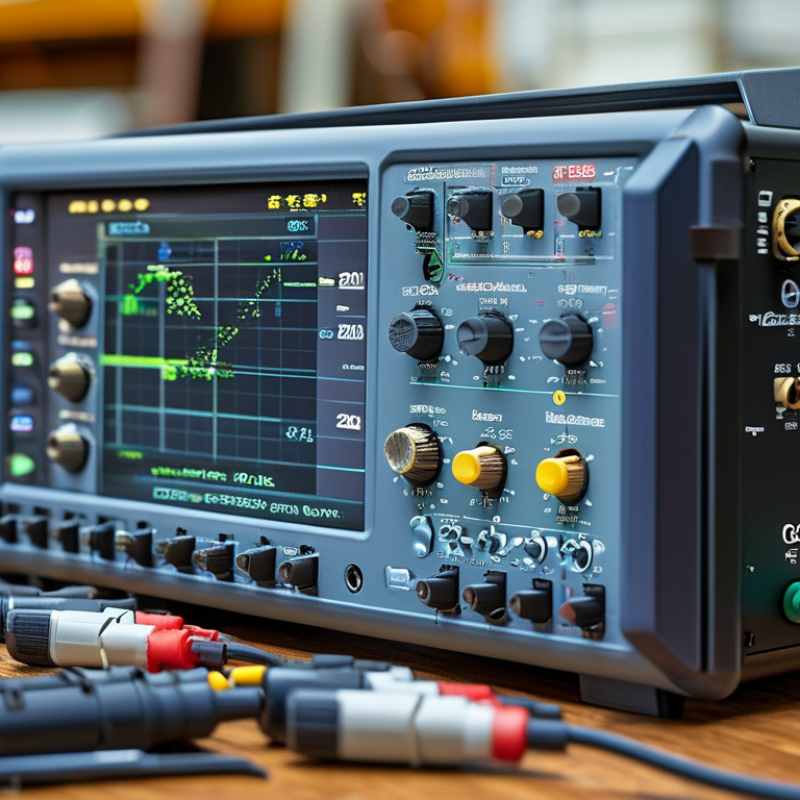
A signal generator creates controlled electrical signals for testing, calibration, and research. It can produce sine waves, pulses, noise, or complex digitally modulated patterns. Engineers use these signals to imitate real wireless conditions before equipment reaches customers. That practical step exposes weak receivers, unstable antennas, and software timing errors.
The need is expanding quickly. The GSMA Mobile Economy 2025 report estimates that global 5G connections reached about two billion by the end of 2024. It forecasts approximately 5.5 billion connections by 2030. More connected devices mean more demanding verification. A suitable generator should support relevant frequency ranges, vector modulation, low phase noise, accurate timing, and repeatable output power. Those specifications affect test confidence, not just laboratory convenience.
Global buyers should also examine calibration records, software compatibility, service access, and total ownership costs. A low purchase price can become expensive when repairs require overseas shipping. In my testing experience, clear documentation often saves more time than a slightly wider frequency range. That is easy to underestimate. Market forecasts also vary because vendors define “signal generator” differently. Buyers should question impressive growth figures and compare test requirements with independent measurement data. The best instrument is not automatically the most advanced one. It is the one that reproduces real operating conditions reliably, safely, and repeatedly.
A signal generator should cover the highest frequency required by the target application, with additional headroom for modulation, harmonics, and future testing needs. The reference values below use established global frequency ranges: audio to 20 kHz, AM medium-wave broadcasting to 1.602 MHz, FM broadcasting to 108 MHz, GNSS L1 at 1,575.42 MHz, and Wi-Fi 6 GHz and 5G NR FR1 up to 7,125 MHz.
Different testing goals require different signal generator types. Analog generators suit basic sine-wave checks, receiver alignment, and educational benches. They offer simple controls and stable output levels. They are often the practical choice for routine maintenance.
Vector signal generators create digitally modulated signals for wireless, radar, and communication testing. They support formats such as QAM, OFDM, and custom I/Q playback. Choose one when a test requires realistic channel behavior, not only carrier frequency.
Arbitrary waveform generators fit sensor, audio, power-conversion, and mixed-signal work. They can reproduce pulses, ramps, noise, and user-defined waveforms. However, waveform memory and sampling rate can limit complex testing.
For high-frequency receiver evaluation, check phase noise, frequency accuracy, output power, and harmonic performance. Pulse generators are useful for timing, trigger, and digital-interface verification. A wide frequency range sounds attractive, but it may reduce output strength at certain bands. That detail is easy to miss.
Global buyers should also verify calibration traceability, voltage compatibility, connector options, and local service capacity. Safety documentation matters in every region.
I have seen test plans fail because the generator lacked the required modulation depth or switching speed. The specification sheet looked impressive. The actual setup did not.
A careful buyer should compare measured performance, not only headline numbers. Calibration intervals should match laboratory risk and testing frequency. Some teams still choose excessive features, then struggle with complicated controls and unused costs. Simpler can be better, but only when future testing needs are honestly considered.
2026 Best Signal Generator for Global Buyers?
How to Compare Frequency Range, Accuracy, and Output Performance
A wide frequency range can be a trap. Start with the applications, not the headline specification. For wireless testing, confirm coverage from low-frequency control signals to the highest required carrier band. Check whether performance remains stable near the upper limit. Many instruments reach their maximum frequency with reduced output power or higher phase noise.
Accuracy needs two separate checks: reference accuracy and signal purity. NIST frequency research shows primary standards can reach uncertainties near 1×10⁻¹⁶, but practical laboratory generators operate far above that level. Compare time-base stability, aging rate, temperature drift, and calibration intervals. The NIST Special Publication 1065 framework also supports using Allan deviation for long-term stability analysis. A low ppm figure alone does not tell the whole story.
Output performance is more than amplitude range. Review level accuracy, flatness, harmonic distortion, spurious signals, and phase noise across the operating band. The IEC 61326-1 measurement framework highlights the importance of electromagnetic compatibility in reliable test environments. For global buyers, verify output connectors, impedance options, power-line compatibility, and documented calibration traceability. I would also test a unit after warm-up, because the first reading can look convincing but remain slightly unstable. Specifications are useful. Real measurements are harder, and occasionally less flattering.
2026 Best Signal Generator for Global Buyers?
International buyers should match the signal generator to their actual test work, not impressive specifications alone. Check the frequency range, output level, modulation options, and phase-noise performance. Frequency accuracy matters during long tests, especially when temperature changes. A stable timebase can prevent repeated measurements and costly troubleshooting. Confirm whether the unit supports the standards used in your region and industry.
Power compatibility is easy to overlook. Check input voltage, plug type, fuse requirements, and cooling needs before ordering. Communication ports also matter. Ethernet, USB, or remote-control support can simplify automated testing. Ask for calibration records, measurement uncertainty data, and a clear warranty policy. Manuals should be available in a language your technicians understand. Support response times deserve attention too.
Tips: Request a sample test report before purchase. Compare the generator’s output at low and high frequencies. Inspect connector quality and shielding. Verify shipping conditions for sensitive equipment. Do not assume every listed feature works equally well across the full range. A perfect specification sheet is rare. I would also leave budget for future calibration, because maintenance costs are often underestimated.
| Buying Dimension | Recommended Specification Range | Why It Matters | What International Buyers Should Verify | Best-Fit Applications |
|---|---|---|---|---|
| Frequency Coverage | 9 kHz–6 GHz for general RF work; 6 GHz–20 GHz or higher for microwave testing | The maximum frequency determines which wireless, radar, satellite, and high-speed RF systems can be tested. | Confirm the guaranteed operating range, not only the maximum display value. Check whether frequency options are hardware-installed or software-enabled. | Wireless communications, RF education, component testing, antenna measurements, and receiver development. |
| Signal Types | Continuous-wave, swept-frequency, list, pulse, and arbitrary-waveform generation | Different test plans require different signal structures. A basic CW-only unit may not support modern digital or pulsed measurements. | Check whether pulse and arbitrary-waveform functions are standard, optional, or limited by memory and sampling rate. | General laboratory testing, radar simulation, receiver sensitivity testing, and automated production test. |
| Modulation Capability | AM, FM, PM, pulse modulation, frequency shift keying, and external I/Q input where required | Modulation functions allow the generator to reproduce realistic transmitter and receiver conditions. | Verify modulation bandwidth, deviation limits, pulse width range, trigger behavior, and whether internal modulation sources are included. | Broadcasting, avionics, wireless equipment, navigation systems, and communication receiver testing. |
| Output Power Range | Typically about −120 dBm to +13 dBm at the RF output, depending on frequency | A wide amplitude range supports both low-level sensitivity measurements and higher-level functional tests. | Request an amplitude accuracy table by frequency. Check maximum safe output, reverse-power protection, step size, and whether an electronic attenuator is fitted. | Receiver sensitivity, blocking tests, filter evaluation, amplifier drive, and cable-loss compensation. |
| Amplitude Accuracy | Approximately ±0.5 dB to ±1.0 dB under specified conditions | Accurate output level is essential when measuring gain, compression, sensitivity, and dynamic range. | Review accuracy versus frequency, output level, temperature, connector type, and time since calibration. Ask for traceable calibration documentation. | Calibration laboratories, production lines, compliance pre-testing, and precision RF characterization. |
| Phase Noise and Spectral Purity | For demanding RF work, examine phase-noise data at stated offsets such as 10 kHz, 100 kHz, and 1 MHz | Low phase noise reduces measurement error when testing narrowband receivers, oscillators, filters, and adjacent-channel performance. | Compare phase-noise plots at the same carrier frequency and offset. Also check harmonics, non-harmonics, spurious signals, and residual FM. | High-performance receivers, frequency synthesis, spectrum analysis support, radar, and oscillator evaluation. |
| Frequency Reference | Internal timebase with an external 10 MHz reference input and output; optional high-stability reference for demanding work | Frequency accuracy and stability affect channel-spacing tests, synchronization, and long-duration measurements. | Check frequency aging, temperature stability, warm-up time, reference input level, connector type, and lock-status indication. | Multi-instrument systems, communications testing, network synchronization, and frequency-standard laboratories. |
| Frequency Switching Speed | Fast list or stepped switching with microsecond-level performance for automated test systems | Fast switching reduces test time when multiple channels, bands, or power levels must be evaluated. | Confirm whether the quoted speed includes settling time, frequency list loading, amplitude changes, modulation changes, and remote-control overhead. | Production testing, channel scanning, automated receiver characterization, and manufacturing quality control. |
| Arbitrary Waveform and I/Q Performance | At least 100 MSa/s for basic wideband work; higher sampling rates and wider bandwidth for modern wireless signals | Sampling rate, memory depth, and I/Q bandwidth determine whether complex digitally modulated signals can be reproduced accurately. | Check effective bandwidth, vertical resolution, waveform memory, crest-factor handling, file formats, and support for external I/Q data. | 5G/6G research, software-defined radio, wireless chipset testing, and complex modulation analysis. |
| RF Connector and Impedance | 50 Ω RF output with a suitable precision coaxial connector for the operating frequency | Impedance mismatch causes reflection, level error, and possible damage to connected equipment. | Confirm connector type, maximum input or reverse-power tolerance, adapter requirements, torque guidance, and included calibration accessories. | All RF and microwave applications, especially calibrated measurements and automated test fixtures. |
| Remote Control and Automation | LAN and USB standard; optional GPIB or other industrial interface when legacy equipment is used | Remote control enables repeatable test sequences and integration with laboratory or production software. | Verify SCPI command compatibility, driver availability, operating-system support, programming examples, and licensing requirements. | Automated test equipment, laboratories, production lines, and multi-instrument research platforms. |
| Display and User Interface | Color display with clear frequency, level, modulation, sweep, trigger, and status information | A responsive interface reduces setup mistakes and makes local troubleshooting faster. | Check language options, touch-screen behavior, physical controls, screen readability, menu locking, and user-access permissions. | Shared laboratories, training centers, field service, and production environments. |
| Triggering and Synchronization | External trigger input, trigger output, marker output, and deterministic list or sweep control | Reliable triggering is necessary for synchronized measurements and repeatable pulsed or burst signals. | Review trigger voltage levels, edge selection, latency, timing jitter, marker positions, and synchronization behavior during remote operation. | Radar, pulsed RF, digital communications, time-domain testing, and automated measurement systems. |
| Calibration and Traceability | Factory calibration with documented procedures and a recommended periodic calibration interval | Traceable calibration supports quality systems, regulated industries, and reliable comparison between laboratories. | Ask whether calibration is traceable to a recognized national or international measurement standard and whether adjustment service is available locally. | Aerospace, medical electronics, automotive electronics, telecommunications, and accredited laboratories. |
| Electrical Supply | Universal AC input, commonly covering approximately 100–240 V and 50/60 Hz | Universal input reduces the need for external transformers when equipment is moved between regions. | Confirm the exact input range, supplied power cord, plug type, fuse requirements, power consumption, and regional electrical certification. | International laboratories, distributors, contract manufacturers, and mobile engineering teams. |
| Compliance and Documentation | Applicable electromagnetic compatibility, electrical safety, and environmental compliance documentation | Compliance documents may be required for import clearance, workplace use, customer audits, or government procurement. | Request the declaration of conformity, safety manual, EMC test information, restricted-substance documentation, and local-language materials where required. | Global procurement, public-sector projects, regulated industries, and multinational organizations. |
| Operating Environment | Typical laboratory operation around 5–40 °C with specified humidity and altitude limits | Temperature, humidity, dust, and altitude can affect frequency accuracy, output level, cooling, and long-term reliability. | Check the complete environmental specification, warm-up conditions, storage limits, cooling clearance, fan noise, and suitability for non-laboratory locations. | Laboratories, factories, classrooms, service centers, and regional field offices. |
| Warranty and Serviceability | Multi-year warranty option, firmware support, replaceable accessories, and accessible service channels | Downtime and international repair logistics can cost more than the initial price difference. | Confirm warranty territory, return procedure, repair turnaround, spare-part availability, firmware policy, and whether service is available in the buyer’s region. | Continuous production, remote sites, contract testing, and organizations with strict uptime requirements. |
| Total Cost of Ownership | Evaluate the instrument, options, calibration, software, adapters, shipping, taxes, service, and training as one package | The lowest purchase price may not be the lowest long-term cost if essential functions require paid options or overseas service. | Request a complete delivered quotation with tariff classification, included accessories, recurring software fees, calibration cost, and estimated import charges. | All international purchases, especially public tenders and multi-unit procurement. |
2026 Best Signal Generator for Global Buyers?
Choosing a reliable signal generator supplier worldwide requires more than comparing frequency ranges. According to MarketsandMarkets’ 2024 Test and Measurement Equipment report, this market is projected to grow steadily through 2029. That growth reflects stronger demand for accurate, connected laboratory equipment. Buyers should check output stability, phase noise, modulation options, harmonic performance, and calibration intervals. A supplier should provide traceable calibration records, clear operating limits, and tested specifications. ISO/IEC 17025-accredited calibration is a strong reliability indicator.
Experience matters during evaluation. Ask for a sample test report, not only a product brochure. Check whether the supplier supports remote troubleshooting, replacement parts, firmware updates, and export documentation. The U.S. National Institute of Standards and Technology emphasizes measurement traceability through documented links to recognized standards. This principle matters when equipment crosses borders. A low purchase price can look efficient. It may not be.
Tips: Request a live demonstration using your target frequency and load. Compare phase noise at several output levels. Confirm delivery terms, warranty coverage, and local service capacity in writing. Also inspect the supplier’s response time before ordering. Slow answers often predict slower technical support. Some buyers focus too heavily on maximum frequency. In practice, signal purity, repeatability, and software usability may influence daily results more. A glossy PDF is not evidence. Ask difficult questions.
An analog generator works well for sine-wave checks, receiver alignment, and routine maintenance. Controls are usually simple. It may be insufficient for complex digital communication tests.
Choose one when testing wireless, radar, or communication systems with realistic digital modulation. It can reproduce QAM, OFDM, and custom I/Q signals. A carrier alone is not enough.
It suits sensor, audio, power-conversion, and mixed-signal testing. It can reproduce pulses, ramps, noise, and user-defined waveforms. Check memory depth and sampling speed carefully.
Yes. Pulse generators verify timing, triggers, and digital-interface behavior. Confirm switching speed and pulse quality before purchasing. Timing errors can hide in a clean-looking waveform.
Start with your required applications, not the largest advertised range. Check performance near the upper frequency limit. Output power may weaken there.
Review reference accuracy, time-base stability, aging, temperature drift, and calibration intervals. A low parts-per-million figure does not explain everything. Warm-up readings can be slightly unstable.
Check level accuracy, flatness, harmonic distortion, spurious signals, and phase noise. Compare these values across the operating band. One headline number is not enough.
Verify input voltage, plug type, fuse requirements, cooling, connectors, and remote-control ports. Request calibration records and a sample test report. Leave room for future maintenance costs.
In 2026, a Signal Generator remains an essential tool for creating controlled electrical signals used in testing, calibration, research, and product development. This article explains how signal generators support global testing needs and compares common types, including basic function generators, radio-frequency models, pulse generators, and arbitrary waveform generators. Each type serves different applications, so buyers should match the instrument to their required signal formats, frequency range, modulation capabilities, and testing environment.
The guide also highlights the key specifications that influence performance, such as frequency accuracy, stability, output power, amplitude control, waveform quality, and low phase noise. International buyers should additionally review user interface options, connectivity, software compatibility, power requirements, documentation, warranty coverage, and after-sales support. Choosing a reliable supplier requires evaluating product consistency, technical communication, customization capabilities, delivery processes, and long-term service, helping organizations make a practical and confident purchasing decision.

Myami Power