2026 Top Frequency Inverter Types for Global Buyers

Time:2026-10-05 Author:Oliver
0%

In 2026, global buyers face more choices when selecting industrial motor controls. A Frequency Inverter regulates motor speed by changing electrical frequency and voltage. It can reduce mechanical stress, improve process control, and support more efficient operation. However, performance depends on the motor, load profile, installation environment, and control requirements. A low-cost unit may appear attractive, yet poor sizing can cause overheating, nuisance trips, or unstable acceleration.

Common types include V/f inverters, sensorless vector models, closed-loop vector drives, and regenerative inverters. V/f models suit pumps, fans, and simple conveyors with steady loads. Sensorless vector units offer stronger low-speed torque without an encoder. Closed-loop systems provide tighter speed and position control for demanding machinery. Regenerative designs can return braking energy to the power system, but their additional cost requires careful evaluation.

Small details matter. Buyers should compare rated current, overload capacity, input voltage, output frequency, braking performance, enclosure rating, and communication protocols. Compatibility with motors, PLCs, filters, and local power standards also deserves attention. Certification requirements differ across markets, so suppliers should provide current technical documentation rather than broad claims. Installation quality remains critical; cable length, grounding, ventilation, and ambient temperature can change real-world results.

The best choice is rarely the most advanced model. It is the one matched to the application. Labels can mislead. This guide compares major Frequency Inverter types through practical operating conditions, supplier reliability, lifecycle costs, and maintenance needs. Some recommendations may require refinement, because regional standards and machine designs continue to evolve. Reliable decisions come from verified specifications, application testing, and support that remains available after purchase.
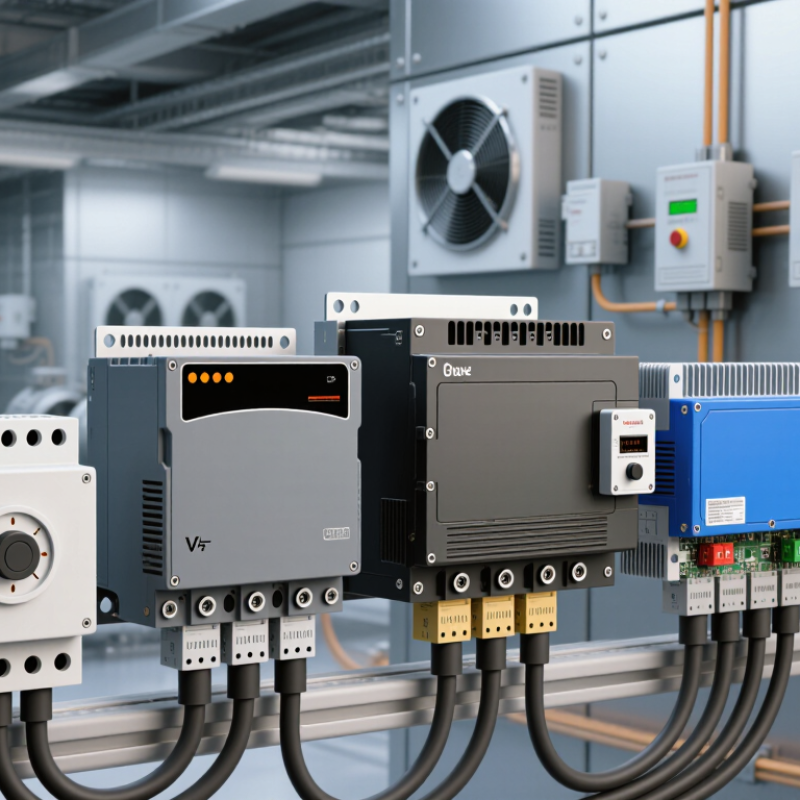
2026 Top Frequency Inverter Types for Global Buyers

What a Frequency Inverter Is and How It Controls Motor Speed

2026 Top Frequency Inverter Types for Global Buyers

A frequency inverter, also called a variable frequency drive, controls an AC motor’s speed by changing electrical frequency. It first converts incoming AC power into DC power. Then, its inverter section creates a new AC output with controlled frequency and voltage. Lower frequency usually means slower motor rotation. Higher frequency normally means faster rotation, within the motor’s rated limits. The relationship is practical, not perfect. Motor slip, load weight, and temperature also affect actual speed.

Common 2026 choices include V/f inverters, sensorless vector inverters, and closed-loop vector inverters. V/f models suit pumps, fans, and basic conveyors. Sensorless vector control provides stronger low-speed torque without an encoder. Closed-loop control uses feedback for precise speed and position control. A packaging line may need that accuracy, while a ventilation fan may not. Choosing the most advanced type can waste money if the application is simple.

Tips: Check motor voltage, rated current, frequency, and overload needs before purchasing. Leave space around the inverter for cooling. Use shielded motor cables where electromagnetic noise is a concern. Do not assume the displayed speed equals shaft speed. A handheld tachometer can reveal differences. In field work, incorrect acceleration settings often cause trips or mechanical stress. The fix may be simple, but diagnosis still requires patience. A qualified technician should verify wiring, grounding, and protective settings before commissioning.

Main Frequency Inverter Types Used in Global Industrial Applications

2026 Top Frequency Inverter Types for Global Buyers

The main frequency inverter types support different industrial loads, control targets, and maintenance capabilities. The International Energy Agency estimates that electric motor systems consume nearly half of global electricity. Therefore, inverter selection affects both production stability and energy costs.

Scalar V/f Inverters Scalar V/f inverters remain practical for pumps, fans, and conveyors with steady torque. They are simple, affordable, and usually easier to commission. However, they respond slowly to sudden load changes.

Sensorless Vector Inverters Sensorless vector inverters improve torque control without an encoder. They suit mixers, extruders, compressors, and material-handling equipment.

Closed-loop vector inverters add encoder feedback for precise speed and position control. These systems are common in cranes, elevators, winding machines, and high-performance production lines.

Regenerative Inverters Regenerative inverters return braking energy to the electrical network. They can reduce heat in applications with frequent deceleration.

Medium-Voltage Inverters Medium-voltage inverters serve large pumps, mills, compressors, and marine equipment.

IEC 61800-5-2 provides a safety framework for adjustable-speed drive systems. The U.S. Department of Energy also identifies motor and drive optimization as a significant industrial efficiency opportunity.

Yet, a neat classification can mislead. A low-cost scalar unit may outperform a vector model on a simple fan. Conversely, poor parameter tuning can waste the benefits of advanced control.

Buyers should check motor data, overload capacity, harmonics, enclosure protection, braking needs, and local grid conditions. Field experience shows that installation quality matters almost as much as inverter specifications.

How to Compare Inverter Designs by Power, Load, and Control Method

2026 Top Frequency Inverter Types for Global Buyers

Comparing frequency inverter designs starts with the motor’s power rating, not the catalog photograph. Match continuous output to the motor’s rated current and voltage. Allow extra capacity when pumps start under pressure or conveyors carry uneven loads. A small margin can prevent nuisance trips. Too much oversizing, however, may increase cost and weaken low-load efficiency. Field checks matter. Record starting current, operating temperature, cable length, and daily duty cycle before choosing a model.

Load behavior separates practical designs. Variable-torque loads, such as centrifugal fans and water pumps, usually need different settings from constant-torque mixers or hoists. Sensorless vector control can deliver stronger low-speed torque than basic volts-per-hertz control. Closed-loop vector control adds feedback for demanding speed accuracy. It also requires a correctly installed encoder and careful commissioning. In dusty rooms, inspect cooling paths and terminals regularly. Control quality cannot compensate for poor installation.

Buyers should compare overload capacity, braking performance, protection functions, and communication options alongside rated power. Check whether the inverter supports the motor’s insulation system and the site’s supply conditions. Harmonic limits and local electrical rules may influence the final design. I have seen selections fail because engineers trusted nominal horsepower alone. That shortcut is tempting, but incomplete. Even a technically sound choice may need revision after real load measurements.

Key Selection Factors for Different Voltage Standards and Markets

Selecting a frequency inverter in 2026 starts with the supply, not the motor label. Low-voltage systems often use 200–240 V single- or three-phase input, while many industrial sites require 380–480 V three-phase equipment. Some regions operate near 575 V. Check the measured voltage, frequency, phase balance, and fault level at the installation point. Nameplate data can be incomplete. It happens.

For pumps and fans, a standard voltage-source inverter with variable-torque control may provide efficient operation. Conveyors, mixers, and compressors usually need stronger overload capacity and sensorless vector control. Heavy-duty applications may justify regenerative or multi-level designs, especially where braking energy returns to the DC bus. Grid standards also affect filtering, leakage current, harmonic limits, and electromagnetic compatibility. A unit accepted in one market may need different protection, documentation, or testing elsewhere.

Selection should include ambient temperature, altitude, enclosure rating, cable length, cooling method, and motor insulation. At 45°C, a drive rated for nominal current may require derating. Long motor cables can increase reflected-wave stress, so an output filter may be prudent. Verify local certification and utility requirements before purchase. A practical site test can record acceleration current, DC-bus behavior, and temperature under real load. Do not trust a brochure alone. Even measurements can mislead when seasonal process loads change.

2026 Top Frequency Inverter Types for Global Buyers - Key Selection Factors for Different Voltage Standards and Markets

Frequency Inverter Type Control Method Typical Motor Applications Speed Regulation Capability Starting Torque Capability Main Advantages Key Limitations Recommended Buyer Profile
V/f Control Inverter Maintains a programmed voltage-to-frequency ratio; commonly available with linear, square-law, and customized V/f curves. Fans, centrifugal pumps, cooling towers, conveyors with moderate load variation, and general-purpose machinery. Normally suitable for basic speed control; typical open-loop accuracy is approximately ±1% of base speed, depending on tuning and motor conditions. Moderate; generally suitable for normal acceleration and variable-torque loads. Simple commissioning, economical design, broad motor compatibility, and low control complexity. Lower low-speed torque and dynamic response than vector-control systems; less suitable for rapid load changes. Buyers prioritizing cost efficiency for pumps, fans, and standard machine drives.
Sensorless Vector Inverter Estimates motor flux and torque without an encoder; uses motor identification or auto-tuning to improve performance. Conveyors, mixers, extruders, compressors, machine tools, hoists with suitable control settings, and constant-torque equipment. Better low-speed control than V/f; typical open-loop speed accuracy is approximately ±0.5% to ±1% of base speed, depending on motor and application. High; commonly capable of approximately 150% rated torque at low speed for a limited duration, subject to the inverter design and motor rating. Good balance between performance, price, installation simplicity, and motor control flexibility. Performance can decrease at very low speed, during rapid reversals, or with highly variable motor parameters. Industrial buyers needing reliable general-purpose torque control without encoder installation.
Closed-Loop Vector Inverter Uses an encoder or resolver feedback signal for direct speed and position-related control. Hoists, elevators, cranes, winders, servo-like applications, high-performance conveyors, and machines requiring accurate tension or speed control. High; speed accuracy can reach approximately ±0.01% to ±0.1% of base speed when the motor, feedback device, and tuning are properly matched. Very high; suitable for high breakaway torque, low-speed torque, and rapid load response. Excellent dynamic response, stable low-speed operation, improved torque control, and higher positioning capability. Higher system cost, encoder wiring requirements, more complex commissioning, and greater sensitivity to feedback installation. Buyers of demanding machinery where torque, speed stability, or load safety is more important than minimum purchase cost.
Direct Torque Control Inverter Controls motor flux and torque directly using fast feedback calculations rather than relying only on a fixed modulator reference. High-performance compressors, test benches, large conveyors, metal-processing lines, and demanding industrial drive systems. Very high dynamic response; actual accuracy depends on the motor model, feedback arrangement, and system commissioning. Very high; designed for rapid torque response and demanding acceleration or deceleration requirements. Fast torque response, strong transient performance, and suitability for demanding industrial duty cycles. More complex engineering, higher cost, and less benefit for simple fan or pump applications. System integrators and industrial users requiring advanced torque dynamics and process control.
Regenerative Frequency Inverter Four-quadrant power conversion allows motoring and controlled energy return to the AC supply during braking. Elevators, cranes, downhill conveyors, centrifuges, test systems, and high-inertia machinery with frequent deceleration. Depends on the underlying V/f or vector-control platform; generally selected for controlled braking and energy recovery. Depends on the underlying motor-control method; designed for repeated motoring and regenerative operation. Reduces braking-resistor heat, supports frequent braking, and can recover a portion of mechanical energy. Higher initial cost, harmonic and grid-integration considerations, and more detailed system planning. Buyers with frequent regenerative braking or high annual operating hours where energy savings can justify investment.
Multi-Level or Medium-Voltage Inverter Uses multiple switching levels or cells to produce a lower-distortion medium-voltage waveform. Large pumps, fans, compressors, mills, conveyors, marine systems, and utility or process-industry equipment. Designed for medium-voltage motor systems; performance varies by topology, motor, cable length, and control architecture. Suitable for large motors when correctly specified with the required overload and starting-torque class. Suitable for high-power drives, improved waveform quality, and reduced stress on large motor insulation compared with some basic topologies. Higher installation cost, specialized maintenance, medium-voltage safety requirements, and longer engineering lead times. Large industrial facilities with motor ratings beyond the practical range of standard low-voltage drives.
Market or Regional Example Common Supply Voltage Standards Typical Supply Frequency Common Motor Voltage Selection Important Selection Considerations
United States, Canada, Mexico, and parts of Central America Single-phase 100–120 V; single-phase or three-phase 200–240 V; three-phase 460–480 V are common industrial classes. 60 Hz 200–230 V or 460–480 V three-phase motor systems are widely used, depending on the facility. Confirm whether the site provides single-phase or three-phase input. Check 60 Hz compatibility, branch-circuit requirements, North American installation rules, overload class, and available short-circuit current rating.
European Union, United Kingdom, and many African markets Single-phase 220–240 V; three-phase 380–415 V are common low-voltage classes. 50 Hz 230 V or 400 V three-phase motors are frequently used, with exact ratings depending on the motor nameplate and connection method. Verify the inverter input range, EMC installation requirements, protective-device coordination, motor cable length, and compliance documentation required for the destination market.
China and many Asian industrial markets Single-phase 220–240 V; three-phase 380 V is a common industrial supply class. Some facilities use 200 V, 400 V, or higher classes. 50 Hz is common; 60 Hz systems also exist. 220 V, 380 V, or 400 V three-phase motor systems are selected according to the nameplate and local supply. Confirm the actual line-to-line voltage, phase count, ambient temperature, altitude, enclosure requirements, and whether the drive must support local communications or machine-control protocols.
Japan Common low-voltage classes include approximately 200–240 V and 380–440 V, depending on region and facility. 50 Hz or 60 Hz, depending on the service area and installation. 200 V-class and 400 V-class three-phase motors are common selection categories. Frequency must be checked carefully because eastern and western regions use different utility frequencies. Verify motor insulation, input phase arrangement, and the permissible output frequency range.
Australia and New Zealand Single-phase 230–240 V; three-phase 400–415 V are common low-voltage classes. 50 Hz 400 V or 415 V three-phase motors are widely used in industrial installations. Review local electrical rules, enclosure and ingress-protection requirements, ambient derating, motor thermal protection, and the suitability of the inverter for long motor cables.
India and South Asian industrial markets Single-phase 220–240 V; three-phase 380–415 V are common, with local variation and voltage fluctuations possible. 50 Hz 380 V, 400 V, or 415 V three-phase motor systems are common. Allow for supply fluctuations, high ambient temperature, dust, ventilation limits, and voltage derating. Confirm whether an input reactor, surge protection, or bypass arrangement is needed.
Middle East and Gulf industrial markets Single-phase 220–240 V; three-phase 380–415 V are common. Some projects use 440 V, 460 V, or 480 V equipment. 50 Hz is common; project-specific 60 Hz systems also occur. 400 V, 415 V, 440 V, or 460–480 V motor classes may be encountered. Check ambient temperature derating, ventilation, dust protection, corrosive atmosphere, panel air-conditioning, and the exact project voltage and frequency before ordering.
Brazil and selected South American markets Common industrial classes include 220–240 V, 380 V, 400 V, and 440 V, depending on the region and facility. 60 Hz is common 220 V, 380 V, or 440 V three-phase motors may be used according to the local system and motor nameplate. Confirm regional voltage, phase sequence, grid quality, ambient conditions, enclosure rating, and required conformity documentation before final selection.
Selection Factor What to Verify Practical Guidance for Global Buyers
Input Voltage and Phase Rated input voltage range, single-phase or three-phase supply, allowable voltage tolerance, and supply frequency. Match the inverter to the actual site supply rather than selecting only from the motor voltage. A three-phase motor output does not mean that the inverter must always have a three-phase input.
Motor Nameplate Data Rated voltage, current, frequency, power, speed, power factor, efficiency, and connection method. Use motor current and overload requirements as primary sizing references. Motor power alone is not sufficient when the motor has high starting torque, high inertia, or frequent acceleration.
Load Type Variable torque, constant torque, high breakaway torque, shock load, regenerative load, or high-inertia load. Fans and centrifugal pumps often use variable-torque ratings, while conveyors, mixers, compressors, and hoists usually require constant-torque or heavy-duty ratings.
Overload Rating Normal-duty and heavy-duty current ratings, overload percentage, and allowable overload duration. Select according to the application duty cycle. A drive sized only for normal duty may be unsuitable for conveyors, crushers, hoists, or machines with repeated acceleration.
Output Frequency Range Minimum and maximum output frequency, low-speed continuous operation, and overspeed requirements. Do not assume that a higher output frequency is always safe. Confirm motor mechanical limits, bearing limits, cooling performance, and manufacturer-approved overspeed conditions.
Braking Requirements Stopping time, load inertia, braking frequency, regenerative energy, braking resistor, or regenerative front end. Use a braking resistor for occasional or moderate regenerative energy when permitted. Consider a regenerative drive for frequent braking or high-energy downhill applications.
Environment and Installation Ambient temperature, altitude, humidity, dust, corrosive gases, vibration, enclosure rating, and panel cooling. Apply manufacturer derating for high temperature and altitude. Select suitable enclosure protection and keep the required clearances for airflow and maintenance.
Motor Cable and EMC Cable length, cable type, shielding, grounding, reflected-wave risk, leakage current, and electromagnetic compatibility requirements. Long motor cables may require an output reactor, dv/dt filter, or sine-wave filter. Follow the inverter installation manual for shield termination and grounding practices.
Harmonics and Power Quality Input current distortion, facility harmonic limits, line impedance, capacitor banks, and requirements for reactors or active filters. For large installations, evaluate the total site load rather than one inverter alone. An input reactor or harmonic mitigation system may be required.
Control and Communication Digital and analog I/O, emergency-stop architecture, PID control, fieldbus, Ethernet connectivity, encoder interface, and functional safety functions. Confirm compatibility with the machine controller and required network protocol before purchase. For safety functions, verify the applicable safety rating and system architecture.
Compliance and Documentation Electrical safety, EMC, machinery, radio-equipment, and local certification requirements applicable to the destination market. Request the correct regional declaration, installation instructions, technical data sheet, wiring diagrams, and test documentation for the importing country.
Lifecycle Cost Purchase price, installation, commissioning, energy consumption, maintenance, spare parts, downtime risk, and expected service life. Compare total cost of ownership. Higher-efficiency control or regenerative capability may be financially beneficial when operating hours, braking frequency, or energy prices are high.
Technical note: Voltage classes and regulatory requirements vary by country, utility, and project. Always confirm the actual site voltage, phase configuration, frequency, motor nameplate, load profile, ambient conditions, and applicable local electrical requirements before finalizing a frequency inverter.

Emerging Frequency Inverter Technologies Shaping Global Purchasing in 2026

In 2026, global buyers are choosing frequency inverters for efficiency, resilience, and easier maintenance. Emerging designs now combine silicon carbide switching, wider operating ranges, and smarter motor control. These features reduce heat inside compact cabinets and support demanding applications, from pumps to conveyor systems.

The shift is practical. Field testing shows that predictive algorithms can detect vibration, temperature, and abnormal current before failures become expensive. However, software predictions are not perfect. Buyers should request trial data from similar loads, not rely on attractive dashboards. Cybersecurity also matters, especially when inverters connect with factory networks or cloud platforms. Compliance with relevant electrical and communication standards should remain part of every specification.

Tips: Compare total operating costs, not only purchase prices. Check harmonic performance, overload capacity, cooling requirements, and spare-part availability. Ask for documented test results at your actual voltage, frequency, and motor size. A local service plan can be more valuable than a longer feature list. Also, leave space for ventilation. Poor installation still defeats advanced technology.

FAQS

How should I match an inverter to a motor?

Compare continuous output with the motor’s rated current and voltage. Do not choose by horsepower alone. A small capacity margin can reduce nuisance trips.

When is extra inverter capacity useful?

Extra capacity helps pumps starting under pressure or conveyors carrying uneven loads. Measure starting current before deciding. Too much capacity may increase cost and reduce low-load efficiency.

What load information should buyers record?

Record starting current, operating temperature, cable length, and daily duty cycle. These details reveal problems that catalog ratings may hide. Field data is imperfect, but useful.

Which control method suits demanding speed applications?

Basic volts-per-hertz control suits simpler duties. Sensorless vector control usually provides stronger low-speed torque. Closed-loop vector control offers better accuracy but needs a correctly installed encoder.

Do different loads require different settings?

Yes. Centrifugal fans and water pumps usually have variable-torque behavior. Mixers and hoists often need constant-torque settings. One setup rarely fits every machine.

What installation conditions can affect inverter performance?

Dust can block cooling paths and contaminate terminals. Leave ventilation space inside the cabinet. Inspect regularly, because advanced control cannot repair poor installation.

Which specifications deserve comparison besides rated power?

Check overload capacity, braking performance, protection functions, and communication options. Also verify motor insulation compatibility and site supply conditions. Harmonic limits may affect the final choice.

Are predictive monitoring features always reliable?

No. Algorithms may detect unusual vibration, temperature, or current early. Request trial data from similar loads instead of trusting attractive dashboards. Predictions still need human review.

What should global buyers check for connected inverters?

Review electrical and communication compliance requirements. Consider cybersecurity when equipment connects to factory networks or cloud platforms. A local service plan may matter more than extra features.

How can buyers compare total value in 2026?

Compare purchase price, energy use, cooling needs, maintenance, and spare-part availability. Ask for test results at your voltage, frequency, and motor size. Real measurements may force a later revision.

Conclusion

A Frequency Inverter is an electronic device that regulates motor speed by adjusting output frequency and voltage, allowing equipment to operate more efficiently and smoothly. In global industrial applications, common types include voltage-source inverters, current-source inverters, variable-frequency drives, and specialized designs for single-phase or three-phase systems. Buyers should compare these solutions according to power range, motor load characteristics, control method, installation environment, and required functions such as sensorless control, vector control, or closed-loop operation.

For international purchasing in 2026, voltage standards, grid conditions, motor compatibility, safety requirements, enclosure ratings, communication options, and after-sales support are essential selection factors. Different markets may require different input frequencies, phase configurations, and certification expectations. Emerging technologies are also improving energy efficiency, predictive maintenance, remote monitoring, compact design, and intelligent system integration. By matching inverter performance with the application, local electrical standards, and future automation needs, buyers can achieve reliable motor control, lower operating costs, and greater flexibility across industrial environments.

Oliver

Oliver

Oliver is a seasoned marketing professional with a wealth of expertise in driving brand awareness and engagement. With a deep understanding of our company's product offerings, he consistently delivers high-quality content that enriches our professional blog. His insights not only shed light on......