An LED Driver is the electronic component that supplies LEDs with controlled power. It converts incoming electricity into a form the light source can use. Many designs also regulate current, helping prevent damaging fluctuations and uneven brightness. Without suitable control, an LED may flicker, overheat, or fail sooner than expected. Small component, important job.
Drivers generally use constant-current or constant-voltage output. A constant-current model maintains a set current across its specified voltage range. A constant-voltage model supplies a fixed voltage, often for LED strips designed around that requirement. The correct choice depends on the LED product, its electrical ratings, and the installation. Check the product label and manufacturer’s instructions rather than relying on appearance alone.
Inside a driver, circuits rectify, convert, and regulate electrical power. Some models also support dimming, using methods such as 0–10 V control or pulse-width modulation. Compatibility matters: a dimmer and driver can both work separately yet still produce flicker together. That detail is easy to miss. For a real installation, verify input voltage, output current or voltage, wattage capacity, and dimming method before connecting components. A warm enclosure can be normal, but excessive heat or buzzing deserves attention. Do not open equipment connected to mains power; qualified professionals should handle uncertain wiring. Driver terminology can feel inconsistent across product listings, so specifications are more dependable than marketing names. Understanding these basics makes it easier to choose, troubleshoot, and maintain LED lighting safely.
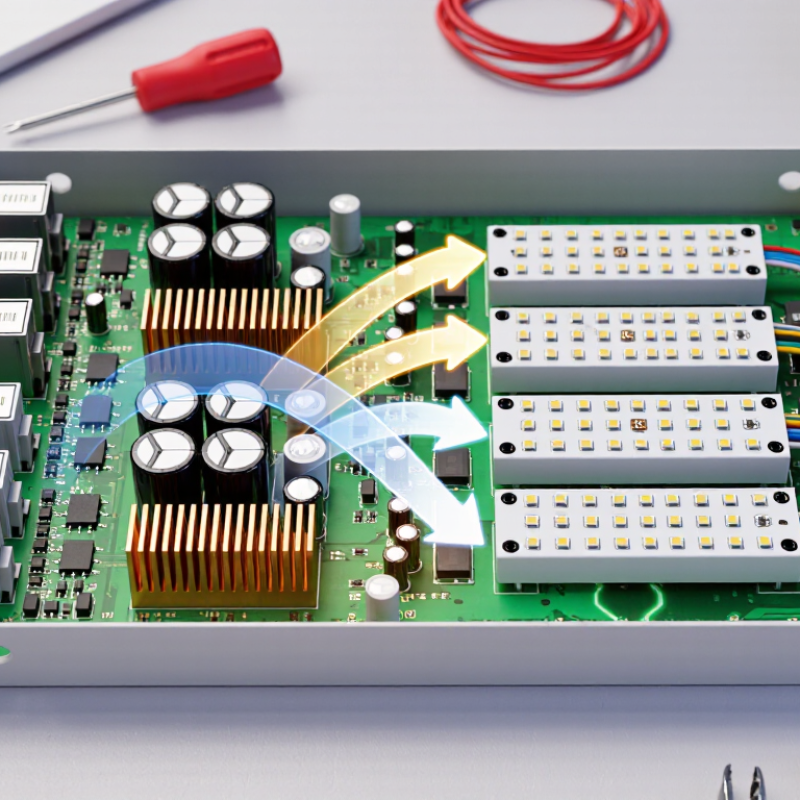
An LED driver is the electronic unit that supplies LEDs with controlled electrical power. Many household lights receive power from an alternating-current supply, while LEDs need direct current. The driver converts the incoming power and regulates the current flowing through the LEDs. Unlike a simple bulb filament, an LED’s current can rise sharply when its voltage changes slightly. That matters. Too much current can overheat the tiny semiconductor components and shorten their useful life.
A driver is necessary because the power coming from a wall outlet can fluctuate, and LEDs need a steadier supply. It also helps limit electrical stress during normal operation. Without suitable control, a light may flicker, grow dim, or fail earlier than expected. Some drivers also support dimming, but the driver and dimmer must be compatible for smooth results. Small details matter here. A lamp that dims unevenly may not have a defective LED; the control components may simply not work well together.
Drivers can be built into a bulb or installed separately in a fixture. The right type depends on the LED load, input voltage, and installation conditions. Check the driver’s output current and voltage range against the LED specifications, rather than choosing by wattage alone. It is tempting to treat the driver as an unimportant box hidden above a ceiling. In practice, it has a direct effect on light quality and reliability, though no driver can compensate for poor heat management or an unsuitable fixture.
An LED driver contains several stages that control how electrical power reaches the LEDs. The exact layout depends on the supply voltage, output current, and whether the design needs electrical isolation. In a typical driver, an input rectifier converts incoming AC into DC. A filter capacitor then smooths much of the resulting ripple. The details matter.
A switching controller and power transistor regulate energy flow at high speed. In isolated designs, a transformer transfers energy while keeping input and output circuits separated. An output rectifier and capacitor produce a steadier DC current for the LED string. Some simpler drivers use a linear regulator instead; it can be quieter, but may waste more energy as heat.
Feedback circuitry monitors the output and adjusts switching when LED current changes. Protection components may respond to overheating, short circuits, or unusually high input voltage. A fuse or surge suppressor can also limit damage from certain faults. Heat matters, too. During inspection, look for adequate spacing and a clear path from hot components to the enclosure. A tidy block diagram can make these parts seem independent, but layout, cooling, and component ratings affect one another. Actual driver designs vary, so the schematic and rated operating conditions are worth checking.
What Is an LED Driver and How Does It Work?
An LED driver controls the electrical power that reaches an LED. It often converts incoming AC power into stable DC power. More importantly, it regulates current because LEDs can draw excessive current as they heat. That can quickly reduce light output or damage the LED. A constant-current driver keeps the current near a set value, such as 350 milliamps. A constant-voltage driver maintains a fixed output, such as 12 volts, for compatible LED modules.
Inside the driver, electronic switching components adjust power many times per second. A sensing circuit measures output current and compares it with the target value. The controller then increases or reduces the switching time. This process keeps brightness more consistent when the supply voltage changes. Many drivers also provide dimming, short-circuit protection, and thermal shutdown. In practical testing, I check output current with a suitable meter before connecting the LED. A small wiring mistake can still create heat. My earlier assumption was that higher wattage meant safer operation, but poor matching can cause instability.
Tips: Match the driver’s output type, current, voltage, and wattage range with the LED load. Leave ventilation space around the driver. Check the temperature after thirty minutes of operation. If the housing feels unusually hot, review the load and wiring. Dimming performance may vary, so test it at both low and full brightness.
An LED driver converts the available power into a controlled electrical output. In this example, the driver regulates the LED peak current at 350 mA while PWM dimming changes the average current by changing the percentage of time the LEDs are switched on.
At 25% duty cycle, the LEDs receive 350 mA for one quarter of each PWM period, producing an average current of 87.5 mA. At 100% duty cycle, the regulated current remains 350 mA continuously. This constant-current control helps protect LEDs from excessive current and improves brightness consistency.
LED drivers are commonly grouped by how they regulate power: constant-current or constant-voltage.
A constant-current driver holds its output current steady while allowing voltage to vary within a specified range. It suits LED arrays designed for a set current, such as many downlights and panel lights.
Check the fixture’s current rating and voltage range. A mismatch can cause poor performance or damage.
Constant-voltage drivers provide a fixed output, often 12 or 24 volts.
They are widely used with LED strips and modules built for that voltage. The LEDs or module circuitry manage current locally. Keep the supply voltage consistent with the product label, and avoid connecting more load than the driver’s rated capacity.
Simple in theory. Wiring details still matter.
Drivers can also be dimmable or non-dimmable.
Dimmable models may use phase-cut controls, 0–10-volt signals, or pulse-width modulation, but the driver and dimmer must use compatible methods. Otherwise, lights may flicker, buzz, or dim unevenly.
In real installations, heat and limited ventilation can shorten driver life, even when the electrical ratings appear correct. That detail is easy to overlook.
Choosing an LED driver starts with the fixture’s electrical requirements, not its appearance. Check whether the LEDs need constant current or constant voltage, then match the driver’s output range to the module. A mismatch can cause flicker, poor dimming, or early failure. Check the load, too: keep the connected LED wattage within the driver’s rated range, with reasonable capacity for startup and operating variation. Small details matter.
The U.S. Department of Energy’s 2019 Solid-State Lighting forecast estimated that LED adoption could save 569 terawatt-hours of electricity annually by 2035. That projection concerns lighting overall, but it highlights why efficient, properly matched components matter. For a real installation, compare driver efficiency and power factor, and confirm compatibility with the dimmer’s control method. Also check ambient-temperature and enclosure ratings; a driver trapped above a warm ceiling may run hotter than its label suggests. I have seen that assumption overlooked. It is easy to do.
Before wiring, disconnect power and follow the fixture and driver instructions. Verify input voltage, output polarity, and terminal markings; never guess from wire color alone. If several fixtures share a driver, confirm their combined electrical requirements and wiring arrangement. Keep connections secure and provide ventilation where the manufacturer specifies it. When specifications are unclear, pause and ask a qualified electrician rather than testing an uncertain combination.
| Topic | Key Information | How to Apply It |
|---|---|---|
| What an LED driver does | An LED driver converts electrical power into an output suitable for LEDs and regulates current or voltage to help operate them within their specified limits. | Check the LED or module datasheet for its required input type, operating current, and voltage before choosing a driver. |
| Constant-current driver | Maintains a specified output current while adjusting its output voltage within a stated range. Common LED current ratings include 350 mA, 500 mA, and 700 mA; these are examples, not universal requirements. | Match the driver’s rated current to the LED’s required current. Confirm that the LED’s operating voltage falls within the driver’s output-voltage range. |
| Constant-voltage driver | Maintains a set output voltage, commonly 12 V or 24 V in compatible LED strip systems. The connected LED load draws current according to its design. | Use a driver with the same rated voltage as the LED product. Add the connected loads’ power requirements to determine the minimum output capacity. |
| Power calculation | Electrical power is calculated as watts = volts × amperes. For a constant-voltage installation, total load power is generally the sum of the connected sections’ stated wattages. | Example: a 24 V strip rated at 9.6 W per metre and cut to 4 metres has a nominal load of 38.4 W (9.6 × 4). Select a compatible 24 V driver with adequate rated capacity. |
| Capacity and headroom | The driver must support the expected load. Operating conditions, temperature, enclosure, and manufacturer derating guidance can affect usable capacity. | Allow suitable headroom where recommended by the driver and LED manufacturers. A margin such as 10–20% is a common design starting point, not a universal rule; follow product specifications. |
| Dimming compatibility | Dimming may use methods such as phase control, 0–10 V, PWM, or a digital control protocol. A dimmable driver does not necessarily support every method. | Match the driver’s dimming input and control method to the dimmer or control system. Check compatibility and the permitted dimming range in the relevant datasheets. |
| Input and output ratings | Drivers have specified input-voltage, frequency, output-voltage, current, and power limits. These values vary by product and installation region. | Verify that the supply matches the driver’s input rating and that the driver’s output matches the LED load. Do not exceed any published rating. |
| Environment and heat | Ambient temperature, ventilation, mounting position, and enclosure conditions can affect driver temperature and performance. Outdoor or damp locations may require suitable ingress protection. | Check the permitted operating-temperature range, derating curves, mounting instructions, and IP rating against the actual installation conditions. |
| Wiring and installation | Incorrect polarity, loose connections, unsuitable wire, or wiring beyond the product’s limits can cause malfunction or create hazards. | Follow the driver’s wiring diagram and local electrical requirements. Disconnect power before installation; have mains wiring completed by a qualified person where required. |
| Quick selection checklist | Important checks include LED type, constant-current or constant-voltage requirement, output ratings, total load, dimming method, environment, and applicable safety requirements. | Compare the LED and driver datasheets point by point, then verify the complete installation before energizing it. |
Note: Ratings and requirements differ between LED products and drivers. Use the specifications supplied for the exact products in your installation.
It converts incoming alternating current into controlled direct current for LEDs. It also regulates current during operation. Stable power matters.
LEDs can draw sharply higher current after small voltage changes. Excess current may overheat components and shorten service life. Tiny changes matter.
The light may flicker, dim unexpectedly, buzz, or fail early. These symptoms do not always mean the LED itself is defective.
It maintains a steady output current while allowing voltage to vary within a specified range. It suits LED arrays designed for fixed current.
It supplies a fixed voltage, commonly 12 or 24 volts. LED strips and modules often use this arrangement. Match the labeled voltage carefully.
Compare output current, voltage range, LED load, and input voltage with the fixture specifications. Do not choose by wattage alone. That shortcut can mislead.
No. Some drivers are dimmable, while others are not. The driver and dimmer must use compatible control methods for smooth adjustment.
The control components may be incompatible, even when the LEDs are working correctly. Flickering or buzzing can reveal this mismatch. Check again.
Yes. Limited airflow can raise operating temperature and reduce reliability. A hidden driver still needs suitable conditions. Heat is easy to underestimate.
An LED Driver is an essential power-control device that helps LED lights operate safely and consistently. It converts incoming electrical power into a form suited to the LEDs and keeps the current within an appropriate range. Without a suitable driver, changes in voltage or current can cause uneven brightness, flickering, reduced performance, or premature failure. Common driver components include power-conversion circuits, current-regulation elements, and protective features that help manage heat and electrical fluctuations.
LED Drivers regulate power by adjusting the output to match the needs of the connected LEDs. They are generally available as constant-current or constant-voltage types, each designed for different lighting configurations. To choose the right one, check the LED’s voltage, current, total power, and installation environment, then select a driver with compatible output ratings and suitable protection. Correct wiring and operation within the driver’s specified limits help provide reliable, efficient lighting over time.
Myami Power
