Buying an Oscilloscope for international laboratory, education, or production use requires more than comparing prices online. A suitable instrument must match the signals, environment, and support available at the destination. Bandwidth, sample rate, channel count, memory depth, and probe quality directly affect measurement confidence. Small details matter. A weak probe can hide a fast transient, even when the instrument appears powerful.
Global buyers also need to examine calibration records, warranty coverage, software compatibility, power requirements, and delivery protection. A 230-volt laboratory may require different accessories from a 120-volt workshop. Local technical support can be as valuable as an attractive specification sheet. Experienced engineers usually confirm performance through datasheets, independent reviews, and practical demonstrations before placing an order. Manufacturer claims still deserve careful verification.
There is no perfect Oscilloscope for every application. A model designed for embedded debugging may not suit high-energy power measurements. Budget decisions can also create unexpected costs, including replacement probes, licensing fees, customs processing, or training. Some buying mistakes are difficult to notice until the first complex waveform appears. That is worth remembering.
This guide presents ten practical buying tips for global customers. It focuses on measurable performance, dependable sourcing, and long-term usability. The recommendations are not a substitute for application testing. They provide a disciplined starting point for comparing instruments across brands and markets. With careful questions and realistic expectations, buyers can reduce risk and select equipment that supports accurate, repeatable work.
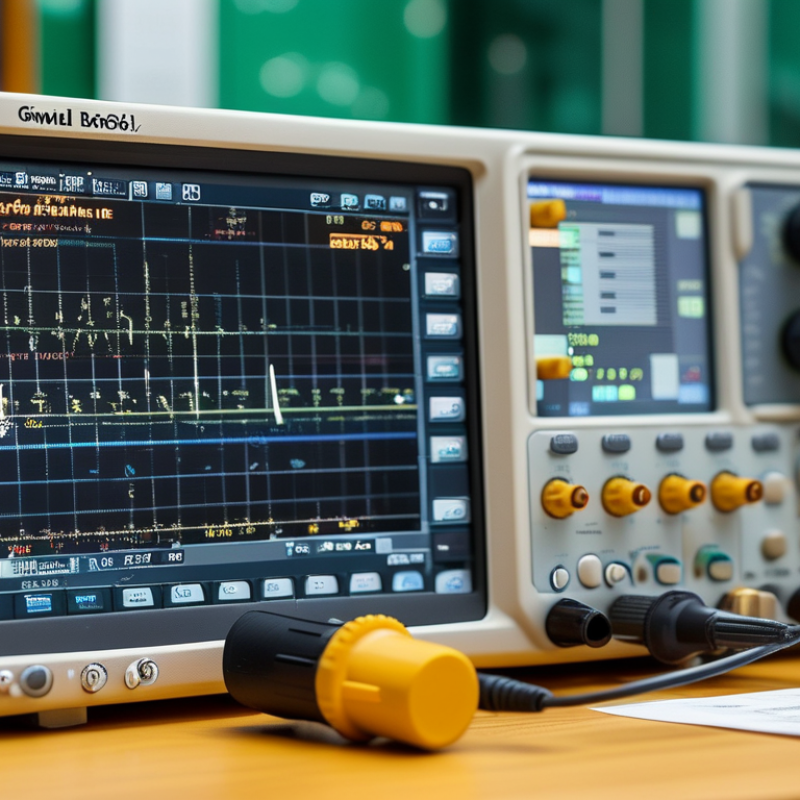
Before comparing oscilloscopes, define the signal you must measure. A 2024 global test-and-measurement report valued the oscilloscope market at more than 2 billion US dollars. That growth reflects wider use in automotive electronics, communications, and power conversion. However, market size does not identify your required instrument.
Write down the highest frequency, voltage range, rise time, and signal type. A 100 MHz clock needs more than a 100 MHz bandwidth rating. Real circuits contain harmonics and ringing. Many engineers use a bandwidth target of three to five times the highest important frequency. For a 20 MHz edge, a 100 MHz instrument may provide a clearer waveform. Check the probe rating too. A high-voltage probe can reduce loading and improve measurement safety.
Count the channels required for each task. Two channels may suit a power-supply check, but four channels help compare gate drive, current, voltage, and timing. Memory depth matters when rare faults appear after long idle periods. A 2023 industry report on electronic test equipment identified faster sampling and higher channel counts as major demand drivers. Do not buy specifications you cannot use. I once chose bandwidth before defining the measurement task. That shortcut was expensive. A written test list would have exposed it. Also consider update rate, trigger control, serial decoding, and local electrical standards before approval. Short tests reveal more than impressive brochures.
When comparing oscilloscopes, bandwidth should match the fastest signal you actually measure. A common engineering rule is to select at least three times the signal bandwidth. For a 100 MHz edge, that suggests roughly 300 MHz of oscilloscope bandwidth. The 0.35/BW rise-time relationship also matters. Higher bandwidth captures sharper transitions, but it can increase noise and cost. A 2024 analysis from Grand View Research projects steady global oscilloscope market growth through 2030, reflecting wider use in automotive, communications, and power electronics. More buyers now need performance headroom.
Sample rate deserves equal attention. Nyquist requires more than twice the highest frequency, but real waveforms need oversampling. Four to ten times the bandwidth is a more practical range for inspecting edges and glitches. Check whether the advertised rate applies to every channel. It often does not. A 2024 market study from MarketsandMarkets identifies multi-channel capability and higher sampling performance as important purchasing factors. That supports careful specification reading, not automatic upsizing.
Memory depth controls how long the instrument can record. Record time equals memory depth divided by sample rate. A 100-million-point memory running at 1 GSa/s stores about 0.1 seconds of data. That sounds generous. It may not be enough for a rare startup fault. Deep memory also becomes less useful when the instrument reduces sample rate across long captures. In my lab experience, I sometimes overbuy bandwidth and underbuy memory. Ten checks help: bandwidth, sample rate, memory, channel count, trigger quality, vertical resolution, probe loading, update rate, software access, and calibration records. Specification sheets still require skepticism.
When buying an oscilloscope internationally, start with channel needs rather than screen size. Two channels may suit basic power checks, but four channels help compare clock, data, trigger, and supply behavior. I once underestimated this and later needed an external instrument. That mistake cost more time than money. Check bandwidth, sample rate, memory depth, and waveform update speed together. A high bandwidth figure means little if the instrument stores only short captures.
Probes deserve equal attention. Match probe bandwidth and attenuation to the signals being measured. Use a short ground spring for fast edges; a long ground lead can create ringing that is not present in the circuit. Passive probes are practical for general work, while differential or current probes may be necessary for floating or high-side measurements. Confirm input ratings, connector types, and included accessories. Some specifications look impressive until probe limitations are considered.
Connectivity and software support often determine long-term value. USB is convenient for quick transfers, while LAN and standardized remote commands support automated testing across laboratories. Check driver compatibility with your operating system, file formats, API documentation, and update history. Local technical support, repair procedures, and training materials matter when equipment crosses borders. Ask about language options and response times. Do not assume every software feature is included. My purchasing checklist still misses details sometimes, so I request a live demonstration with real signals before approving an order.
When global buyers compare oscilloscopes, accuracy deserves more than a headline specification. Check vertical accuracy, time-base stability, bandwidth, and sample rate together. A wide bandwidth cannot rescue poor probe compensation. Use a known signal, such as a calibrated square wave, and inspect amplitude and timing errors. Test it live. If the display feels slow or menus hide essential controls, daily troubleshooting becomes frustrating.
Usability affects measurement quality. Look for clear waveform scaling, responsive controls, readable labels, and accessible probe connections. Confirm that the instrument supports your preferred data formats and remote-control methods. I have found that a crowded interface encourages rushed decisions. That is not a minor weakness. A practical test with real cables and typical signals reveals more than a product sheet.
Safety ratings require careful verification, especially for laboratories, factories, and field service. Check the measurement category, maximum input voltage, isolation details, and the applicable edition of IEC 61010-1. Also review electromagnetic compatibility requirements, such as IEC 61326-1, where relevant. Global compliance is not automatically transferable between markets. Look for current conformity documents, local language instructions, and importer requirements. Markings alone are insufficient. Confirm whether certificates cover the exact model and accessories. My checklist is useful, but not flawless; regulations and configurations change, so independent technical review remains worthwhile.
| No. | Buying Dimension | Practical Target or Benchmark | What to Check Before Purchase | Why It Matters for Global Buyers |
|---|---|---|---|---|
| 1 | Vertical Accuracy | Prefer a stated DC gain accuracy of approximately ±2% to ±3% of reading, plus the specified offset error. | Request the complete accuracy formula, including gain error, offset error, probe error, and operating-temperature conditions. Confirm whether the specification applies to all vertical ranges. | A clear accuracy statement makes measurements comparable across suppliers and helps prevent incorrect pass/fail decisions in production and service work. |
| 2 | Bandwidth and Sample Rate | Choose bandwidth at least 3 to 5 times higher than the highest signal frequency of interest. For repetitive signals, a sample rate of at least 10 times the highest frequency is a useful starting point. | Check analog bandwidth, real-time sample rate, memory depth, and whether the maximum sample rate is available on all channels simultaneously. | Insufficient bandwidth can reduce measured amplitude and distort rise-time results. Deep memory helps capture long events without sacrificing time resolution. |
| 3 | Channel Configuration | Common general-purpose configurations include 2 or 4 analog channels, with optional digital channels for mixed-signal work. | Verify channel count, channel isolation, input impedance, maximum input voltage, probe quantity, and whether all channels share the same sampling resources. | The correct configuration avoids later accessory costs and supports both analog troubleshooting and digital control-signal analysis. |
| 4 | Trigger Performance | Look for edge, pulse-width, runt, video, sequence, slope, timeout, and serial-bus triggering where applicable. | Test trigger stability on single-shot events, low-duty-cycle pulses, noisy signals, and intermittent faults. Confirm trigger sensitivity, holdoff control, and external-trigger availability. | Reliable triggering is essential for finding rare faults. Trigger functions can have a greater effect on troubleshooting efficiency than headline bandwidth alone. |
| 5 | Usability and Display | A clear color display, responsive controls, automatic measurements, waveform cursors, and adjustable persistence are useful baseline features. | Evaluate menu depth, control layout, screen visibility, waveform update rate, multilingual support, remote-control software, and accessibility of frequently used functions. | Intuitive operation reduces training time and measurement errors across international teams with different technical backgrounds. |
| 6 | Probe and Input Safety | Use probes whose voltage, bandwidth, attenuation, and measurement-category ratings match the application. Never exceed the lower rating of the probe or oscilloscope input. | Check the input voltage limit, floating-input restrictions, maximum common-mode voltage, probe compensation range, and the safety category marking on supplied probes. | Oscilloscope inputs are normally intended for measurement circuits, not unrestricted connection to mains or high-energy installations. Correct probing is a primary safety control. |
| 7 | Electrical Safety Ratings | For laboratory instruments, verify conformity with IEC 61010-1 and the relevant oscilloscope-specific safety requirements. Check the actual CAT rating where applicable. | Request the declaration of conformity, safety test information, rated mains voltage, protective-earth requirements, fuse details, and clear warnings for floating measurements. | Safety ratings vary by model and accessory. A valid certification record supports workplace risk assessments and import or installation reviews. |
| 8 | EMC and Environmental Compliance | Look for documented electromagnetic compatibility testing, commonly aligned with IEC 61326-1 or the applicable regional equivalent. | Confirm operating temperature, humidity, altitude, vibration, storage conditions, ingress limitations, and immunity or emissions test documentation. | Environmental and EMC conditions differ between regions and facilities. Compliance evidence helps ensure stable operation in industrial and laboratory environments. |
| 9 | Calibration and Traceability | Specify a calibration interval based on use, risk, and internal quality procedures; many organizations begin with a 12-month interval and adjust it using historical data. | Ask for a calibration certificate, stated measurement uncertainty, traceability to national or international standards, adjustment records, and recommended service procedures. | Traceable calibration supports audits, customer acceptance testing, regulated production, and confidence in measurements made at different global sites. |
| 10 | Global Compliance and Total Cost | Evaluate the complete delivered cost: instrument, probes, options, software, calibration, freight, taxes, local power accessories, training, and service. | Confirm applicable market marks and documents, including regional electrical safety, EMC, radio or wireless requirements if fitted, restricted-substance obligations, warranty terms, and local support coverage. | Compliance documents and service availability can affect customs clearance, installation approval, warranty handling, and the long-term cost of ownership. |
When purchasing an oscilloscope internationally, compare the total landed cost, not only the catalog price. Include freight, import duties, local taxes, insurance, probes, software, and calibration services. A low-priced unit can become expensive after delivery. Request a written quotation with every charge clearly listed.
Warranty coverage deserves practical attention. Check its duration, repair location, replacement policy, and shipping responsibility. Ask whether calibration remains covered after overseas transport. Some suppliers promise support but provide no response-time commitment. Get service terms in writing. My early purchasing mistake was trusting a warranty page without checking regional repair arrangements. The instrument worked well, but returning it was slow and costly.
Supplier reliability is easier to judge through evidence. Review company registration details, technical certificates, inspection records, and recent customer references. Ask for a sample serial-number format and a pre-shipment test report. Reliable suppliers explain limitations instead of making perfect claims. They should answer technical questions clearly, including bandwidth accuracy, sampling performance, and firmware support. Keep communication records and payment documents. Small details matter.
A trial order may reveal more than a sales presentation. Measure response speed, packaging quality, documentation, and problem-solving behavior. Do not ignore weak answers. That can hurt later. Also confirm whether replacement parts remain available in your region. A dependable supplier may cost slightly more, yet predictable support protects laboratory schedules and project budgets. The cheapest choice is not always the economical one.
: List the highest frequency, voltage range, rise time, and signal type. Add channel count, memory, triggering, decoding, and local electrical requirements.
Choose roughly three to five times the highest important signal frequency. A 100 MHz edge may need about 300 MHz bandwidth for clearer details.
Rise time shows how quickly a signal changes. The relationship is approximately 0.35 divided by bandwidth, but circuit noise can affect the result.
Nyquist requires more than twice the highest frequency. For practical edge and glitch testing, four to ten times the bandwidth is often better.
Not always. Some instruments reduce the rate when several channels operate together. Check the specification for simultaneous channel use.
Memory depth controls recording time. At 1 GSa/s, 100 million points capture about 0.1 seconds of waveform data.
Rare faults may occur after long idle periods. The instrument may also reduce sample rate during long recordings, weakening fine detail.
Two channels may suit basic power checks. Four channels can compare clock, data, trigger, and supply timing together.
Match probe bandwidth, attenuation, voltage rating, and loading to the signal. A short ground spring often shows fast edges more accurately.
It can create artificial ringing. That ringing may appear on screen but not exist in the actual circuit.
Check USB, LAN, remote-command support, drivers, file formats, API documentation, and update history. Missing software access can limit automation.
No. Request a live demonstration using real signals. I have missed small details before, and brochures rarely show every limitation.
Choosing the right Oscilloscope begins with clearly defining its intended purpose and the measurement tasks it must perform. Buyers should compare bandwidth, sample rate, and memory depth to ensure the instrument can capture and display signals accurately, especially when working with fast or complex waveforms. The number of channels, probe compatibility, connectivity options, and software support should also match current workflows and future testing needs.
Beyond technical specifications, evaluate measurement accuracy, user interface, operating convenience, safety ratings, and compliance with applicable international requirements. A complete purchasing decision should consider total cost of ownership, including accessories, maintenance, training, warranty coverage, and after-sales support. Finally, assess the supplier’s reliability, communication, delivery capability, and ability to provide long-term service. A balanced review of performance, usability, compliance, cost, and supplier support will help global buyers select an Oscilloscope that delivers dependable value for their specific applications.

Myami Power