What Is the Best Power Meter from China? The answer depends on accuracy, installation, durability, and after-sales support. A low price alone does not make a Power Meter trustworthy. Cyclists should examine the measurement system, claimed accuracy, battery design, weather resistance, and compatibility with their cycling computer.
As cycling coach Hunter Allen puts it, “Power is the currency of cycling.” That idea matters when comparing Chinese products. A reliable meter should record stable values during short sprints, steady climbs, and uneven road conditions. It should also maintain consistent readings after wheel changes, firmware updates, and temperature shifts. Look for practical evidence, such as independent tests, calibration instructions, warranty terms, and transparent product specifications. Brand reputation helps, but direct testing remains more convincing.
Small details can expose major weaknesses. A loose crank sensor, delayed Bluetooth connection, or confusing app can damage the riding experience. Some Chinese manufacturers now offer advanced dual-sided measurement, rechargeable batteries, and ANT+ compatibility. However, product quality can vary between models and production batches. That requires careful checking.
There is no universal winner. Not yet.
This guide will compare leading Chinese Power Meter options through a practical lens. It will consider accuracy, installation effort, software support, long-term reliability, and value for money. Laboratory figures are useful, but real roads are less forgiving. Rider weight, cadence, temperature, and maintenance habits can influence results. My assessment may also change as new firmware and independent reviews appear. That uncertainty deserves honesty. A suitable Power Meter should produce dependable data, not merely impressive numbers on a product page.
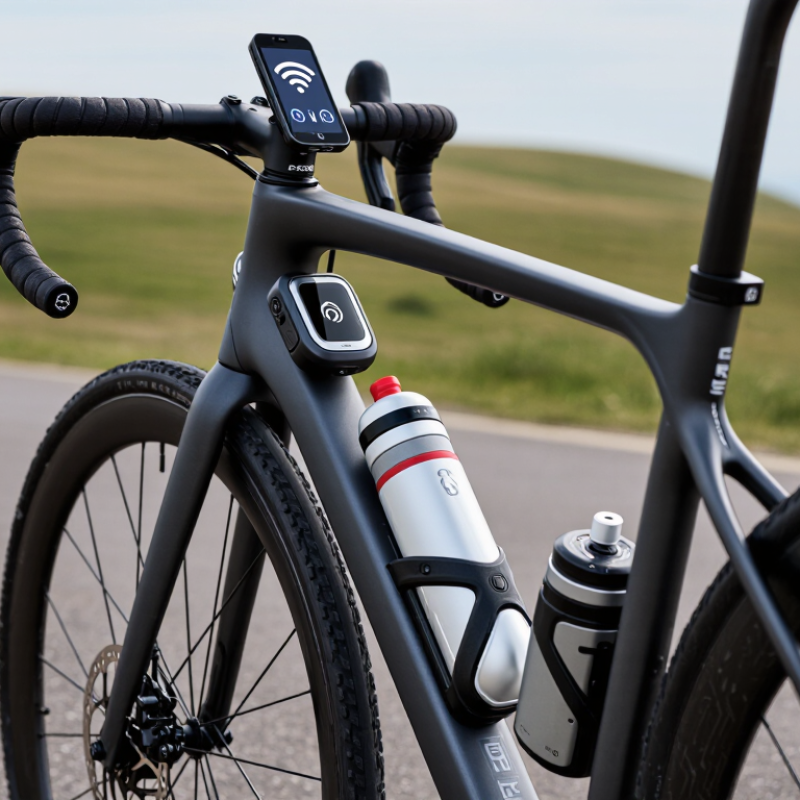
The best power meter from China is not defined by price or a polished screen. It is defined by verified accuracy under real operating conditions. IEC 62053-21 class 1 meters allow wider errors than class 0.5S meters covered by IEC 62053-22. For billing and high-value energy management, that difference matters. A 1% error on a 1,000 kW load can distort readings by 10 kW.
Read the certificate carefully. It should state the IEC accuracy class, test current, power factor, frequency, temperature, and measurement uncertainty. IEC 62053 testing commonly examines several current points, not only the rated load. A meter that performs well at 100% current may behave differently at 5%. That small detail is easy to miss.
NIST Handbook 44, 2024 edition, emphasizes traceable testing and specified tolerances for commercial measuring equipment. The IEC 61557-12 framework also helps assess power monitoring equipment in low-voltage systems. Look for calibration results linked to traceable laboratory standards, not just a printed “high accuracy” claim. Communication stability matters too. Lost Modbus data can weaken an otherwise accurate meter.
In practical audits, engineers should compare readings against a calibrated reference meter. Allow the equipment to warm up first. Check low loads, uneven phases, harmonics, and changing power factors. A class 0.5S rating is not a guarantee of perfect site performance. Installation errors still matter. That is the uncomfortable part.
Under IEC 62053 accuracy classifications for active-energy measurement, a lower class number indicates a smaller maximum permissible error under specified reference conditions. For example, a Class 0.2S meter has a maximum permissible error of approximately ±0.2%, while a Class 2 meter allows approximately ±2%. Actual performance also depends on installation conditions, current range, power factor, temperature, and the applicable standard.
Choosing the best power meter from China starts with accuracy class, not price. IEC 62053 standards define performance under stated reference conditions. Class 0.2S allows about ±0.2% error. Class 0.5S allows about ±0.5%. Class 1.0 permits about ±1.0% under its applicable standard and test conditions. These figures are not permanent guarantees. Temperature, power factor, wiring, and low current can change field results.
For substations and industrial energy management, Class 0.2S offers tighter measurement. It suits revenue allocation and high-load monitoring. Class 0.5S often balances cost and precision for commercial facilities. Class 1.0 may fit basic distribution monitoring, especially where energy values are less sensitive. IEC 62053-22 focuses on higher-accuracy active-energy meters, including 0.2S and 0.5S categories. IEC 62053-21 covers wider applications, including Class 1 equipment. The IEA’s Electricity 2024 report expects global electricity demand to rise through 2026, increasing the need for dependable measurement across expanding networks.
Tips: Check the complete test certificate, not only the class label. Confirm the current range, starting current, power-factor test points, temperature limits, and communication protocol. Ask for tests at 5%, 10%, and 100% load. A meter can pass the headline class yet perform poorly at light loads. That detail is easy to miss. My practical view is cautious: Class 0.2S is not automatically the best choice. A well-tested Class 0.5S meter may deliver more reliable site data than a cheaper, poorly verified 0.2S model.
What Is the Best Power Meter from China?
For a reliable power meter, core specifications matter more than a polished display. Voltage should cover the intended circuit, such as 230 V single-phase systems or higher industrial ranges. Current capacity must match the load and include a safe margin. Frequency measurement should remain stable around 50 or 60 Hz, especially where generators or variable loads operate. The International Energy Agency’s Electricity 2024 report forecasts global electricity demand to grow by an average of 3.2% annually from 2024 to 2026. Better measurement will become less optional.
Accuracy needs closer attention. A stated ±0.5% measurement accuracy sounds strong, but the reference condition matters. Is it tested at room temperature, a resistive load, and a clean waveform? Real workshops include motor starts, switching supplies, and harmonic distortion. IEC 61557-12 provides performance guidance for power metering equipment, including measurement behavior and operating conditions. Look for calibration records, sampling details, and uncertainty information. Small details matter.
Check the screen in a dim cabinet. Test voltage and current against a calibrated reference. Compare readings at low and high loads. The result may drift. That is not always a defect, but ignoring it is a mistake. A practical Chinese power meter should provide clear wiring instructions, isolated inputs, protected terminals, and traceable calibration support. Low price helps, yet unstable readings can cost more than the instrument.
| Evaluation Dimension | Typical Practical Range | Recommended Specification | Measurement Resolution | Accuracy Target | Selection Notes |
|---|---|---|---|---|---|
| Voltage Measurement | 0–300 V AC for single-phase circuits; 0–600 V AC or 0–1,000 V AC for higher-voltage systems | At least 0–300 V AC for standard household and laboratory applications | 0.1 V or better | ±0.5% of reading or better | Confirm whether the stated range is true RMS and whether the input category is suitable for the installation voltage. |
| Current Measurement | 0–10 A direct input; 0–100 A with a current clamp; up to 1,000 A with an external current transformer | 0–100 A for general equipment testing; select a transformer input for industrial loads | 0.01 A for low-current ranges; 0.1 A for high-current ranges | ±0.5% of reading or better | Check whether accuracy includes the sensor, shunt, clamp, or external transformer used with the meter. |
| Frequency Measurement | 45–65 Hz for utility power; wider ranges may support inverters and variable-frequency drives | 45–65 Hz minimum; 10–1,000 Hz when testing electronic power sources | 0.1 Hz | ±0.1% of reading or better | A wider frequency range is useful for converters, motor drives, backup power systems, and laboratory sources. |
| Active Power | Calculated from voltage, current, and power factor | W, kW, and MW display with selectable measurement ranges | 0.1 W on low-power ranges; 1 W or better on higher-power ranges | ±0.5% of reading under specified test conditions | Power accuracy depends on voltage accuracy, current accuracy, phase error, waveform distortion, and power factor. |
| Power Factor | −1.000 to +1.000 | At least −1.000 to +1.000 with leading and lagging indication | 0.001 | Typically ±0.01 or better | Power-factor performance should be verified at low power factors, not only with resistive loads near unity power factor. |
| Energy Accumulation | Wh, kWh, or MWh depending on the application | kWh accumulation with reset and non-volatile data storage | 0.001 kWh or better for low-power testing | Derived from the meter’s power and time accuracy | Look for an adjustable integration interval and protection against data loss after power interruption. |
| Waveform Compatibility | Sinusoidal and non-sinusoidal AC loads | True-RMS measurement with crest-factor information | Not applicable | Maintain ±0.5% performance within the stated bandwidth and crest-factor limits | Average-responding meters can produce substantial errors with switching power supplies and other distorted loads. |
| Sampling and Bandwidth | Several kS/s to hundreds of kS/s depending on design | Adequate sampling for the intended waveform; specify bandwidth in the datasheet | Not applicable | Accuracy must be stated over the supported bandwidth | For ordinary 50/60 Hz power, a stable true-RMS design is usually more important than an extremely high sampling rate. |
| Safety and Installation Category | CAT II, CAT III, or CAT IV depending on the measurement location | CAT III for distribution panels; CAT IV for service entrances and outdoor utility points | Not applicable | Safety rating is separate from measurement accuracy | Verify rated voltage, creepage, clearance, input protection, and the correct measurement category before use. |
| Best Overall Profile | Single-phase or three-phase AC measurement for general testing | 0–300/600 V AC, 0–100 A sensor input, 45–65 Hz, true RMS, and ±0.5% power accuracy | 0.1 V, 0.01–0.1 A, and 0.1 Hz | ±0.5% of reading under documented reference conditions | This combination provides a balanced specification for appliance testing, energy audits, laboratory work, and equipment commissioning. |
The best Chinese power meter depends on where and how you measure electricity. A smart power meter suits homes, workshops, and small offices. It records voltage, current, energy use, and sometimes power factor. Many models send readings to a phone, which helps reveal a heater running overnight. However, wireless connections can fail in thick concrete buildings. A portable meter is better for inspections, repairs, and temporary checks. You can carry it between circuits and compare readings within minutes. I once found a small load that stayed active after closing time. The result was useful, but portable measurements are not always perfect.
Panel meters fit control cabinets and production equipment. Their clear displays make live readings easy to see from a short distance. DIN-rail models save space inside distribution boxes and support permanent monitoring. Choose models with suitable current ranges, accuracy ratings, communication options, and safety documentation. In a crowded cabinet, poor wiring can affect results. Installation quality matters. A lower-cost meter may look attractive, but unclear specifications create doubt later.
Tips: Check whether the meter measures single-phase or three-phase systems. Confirm the current transformer size before ordering. Test the device against a trusted reference meter. Compare readings under light and heavy loads. Keep installation records and photographs. If the cabinet carries hazardous voltage, use a qualified electrician and follow local requirements. Read the manual carefully. Small details matter.
A reliable power meter should survive practical testing, not just a polished product page. I check Modbus RTU communication with a USB-to-RS-485 adapter and a controlled test load. The meter must return stable voltage, current, power factor, and energy values. I also compare its register map with the manual. Wrong addresses or unclear data types can create expensive mistakes. That matters.
RS-485 wiring deserves attention. I use twisted-pair cable, confirm A/B polarity, and test termination at both network ends. The device should communicate without timeouts when nearby motors start. I record baud rate, parity, slave address, and CRC errors. A quiet bench test is not enough. Real panels are noisier.
IP ratings need evidence, not assumptions. I inspect gaskets, cable glands, and enclosure joints before checking the stated protection level. Installation conditions still matter. For accuracy, I compare the meter with a calibrated reference at low, medium, and high loads. I include different power factors because one resistive load can hide weaknesses. My setup is not a perfect laboratory, so I repeat readings and document temperature, wiring, and instrument uncertainty. Small errors grow. A calibration certificate helps, but repeatable field results matter more.
Class 0.2S allows about ±0.2% error under stated conditions. Class 0.5S allows about ±0.5%. Class 1.0 allows about ±1.0%. Field results may change with temperature, wiring, and low current.
Class 0.2S suits substations, revenue allocation, and high-load monitoring. Class 0.5S often balances cost and precision. Class 1.0 fits basic distribution checks.
No. A well-tested Class 0.5S meter may outperform a poorly verified Class 0.2S model. That detail matters. I would check evidence before paying more.
Confirm voltage range, current capacity, frequency stability, and measurement accuracy. Check the intended circuit. Leave a safe current margin.
Not always. Motor starts, switching supplies, harmonics, and low loads can affect readings. Test the meter at 5%, 10%, and 100% load.
Request a complete test certificate and calibration record. Check power-factor points, temperature limits, current range, sampling details, and measurement uncertainty.
Smart meters suit homes, workshops, and small offices. Portable meters suit inspections and temporary checks. Panel meters fit control cabinets. DIN-rail meters save cabinet space.
Incorrect wiring, unsuitable current transformers, and crowded cabinets can distort readings. Confirm single-phase or three-phase operation. Photograph the installation and keep clear records.
Test voltage and current against a calibrated reference. Compare light and heavy loads. Check the display in a dim cabinet. Readings may drift slightly. Do not ignore it.
Choosing the best Power Meter from China starts with matching its accuracy, electrical range, communication options, and installation design to the application. IEC accuracy classes provide a practical benchmark: Class 0.2S is suited to high-precision measurement, Class 0.5S offers a balance of accuracy and cost, while Class 1.0 is generally appropriate for routine monitoring. Important specifications include voltage, current, frequency, overload capacity, and measurement accuracy, with ±0.5% performance being a useful target for many commercial and industrial systems.
Different applications may require smart, portable, panel-mounted, or DIN-rail models. To verify quality, check whether the meter supports stable Modbus RTU communication through RS-485, has an appropriate IP rating, and includes clear documentation for wiring and configuration. Independent calibration tests should confirm readings under different loads and power factors. By comparing these technical details rather than relying only on price, users can select a reliable Power Meter that delivers accurate data, convenient integration, and dependable long-term operation.

Myami Power