Myami Power
1 / 5

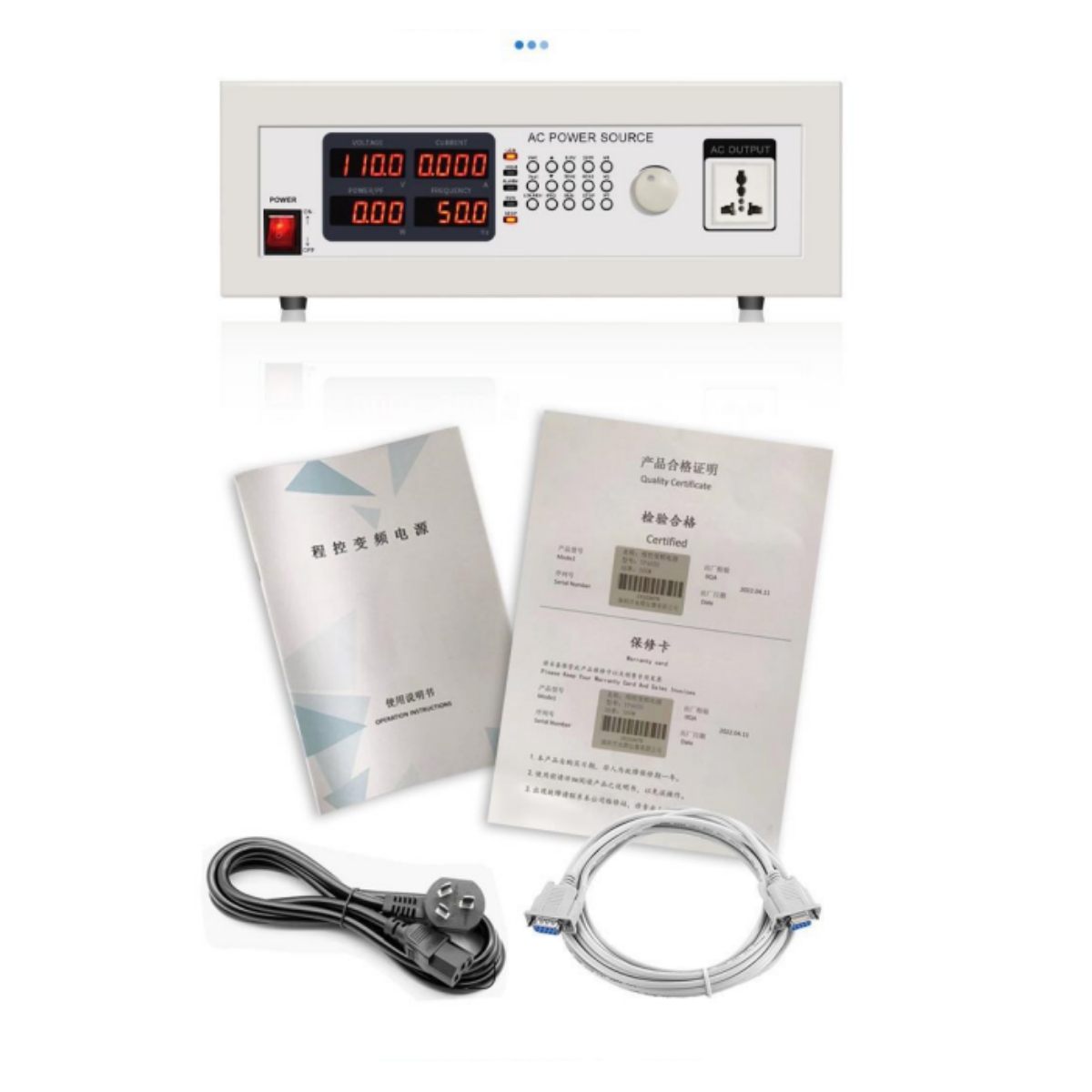
| Specifications | 500VA | 1 KVA | 2 KVA | 3 KVA | 5 KVA | 10 KVA |
|---|---|---|---|---|---|---|
| Capacity (KVA) | 0.5 | 1 | 2 | 3 | 5 | 10 |
| Max Load Current (A) - High Grade | 2.08 | 4.16 | 8.33 | 12.5 | 20.83 | 41.66 |
| Max Load Current (A) - Low Grade | 4.16 | 8.33 | 16.66 | 25 | 41.66 | 83.33 |
| Specifications | 15 KVA | 20 KVA | 30 KVA | 45 KVA | 60 KVA | 100 KVA |
|---|---|---|---|---|---|---|
| Capacity (KVA) | 15 | 20 | 30 | 45 | 60 | 100 |
| Max Load Current (A) - High Grade | 62.5 | 83.3 | 125.0 | 187.5 | 250.0 | 416.6 |
| Max Load Current (A) - Low Grade | 125.0 | 166.7 | 250.0 | 375.0 | 500.0 | 833.3 |
| Parameter | Technical Specifications |
|---|---|
| AC Input | Below 10KVA: Single-phase 110VAC or 220VAC ± 10%; 50Hz/60Hz ± 5% Above 10KVA: Three-phase 380VAC ± 10%; Three-phase four-wire + ground; 50Hz/60Hz ± 5% |
| AC Output | Low Grade: 1.0~150.0VAC | High Grade: 150.1~300.0VAC |
| Output Frequency | Below 20KVA: 45-400Hz (Adjustable) Above 20KVA: 45-65Hz (Adjustable) Adjust step: 0.1Hz, Shortcut keys: 50Hz, 60Hz |
| Frequency Stability | ≤ 0.1% |
| Voltage Stability | ≤ 1% |
| Degree of Distortion | ≤ 2% (THD) |
| Source Voltage Effect | ≤ 1% |
| Load Effect | ≤ 1% |
| Efficiency | ≥ 90% |
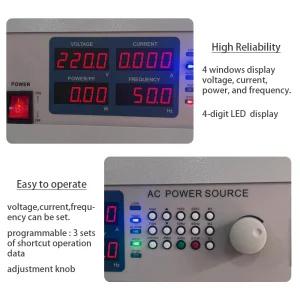
| Display Resolution | Frequency: 0.1% reading (0.1Hz res) Voltage: ± (0.5% reading + 0.5% range, 0.1V res) Current: ± (0.5% reading + 0.5% range, 0.001A/0.1A res) Power: ± (0.5% reading + 0.5% range, 0.01W/0.1KW res) |
| Power Factor Display | ± 0.1 with a resolution of 0.01 |
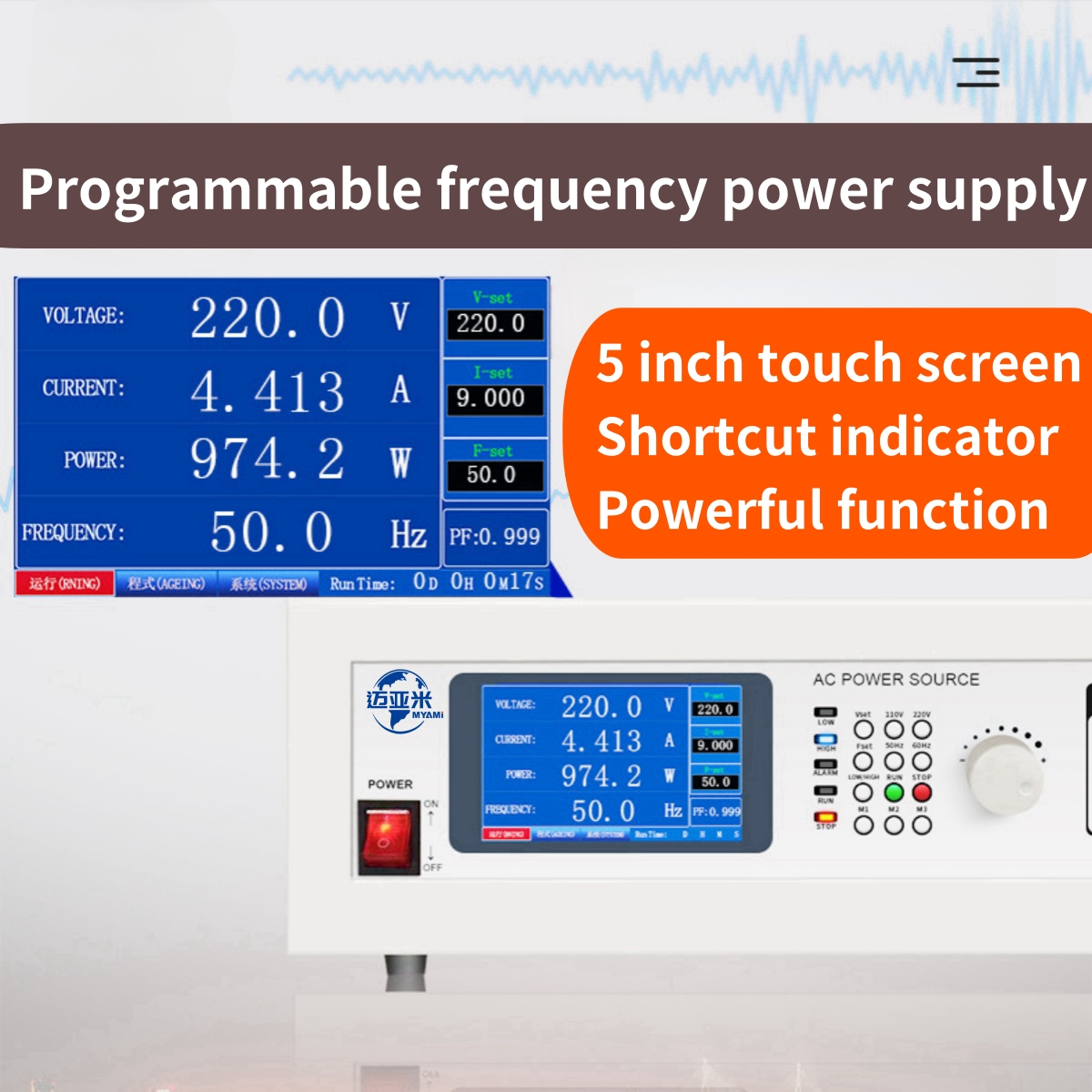
| Preset Function | Output voltage, output frequency, output current upper limit, communication address |
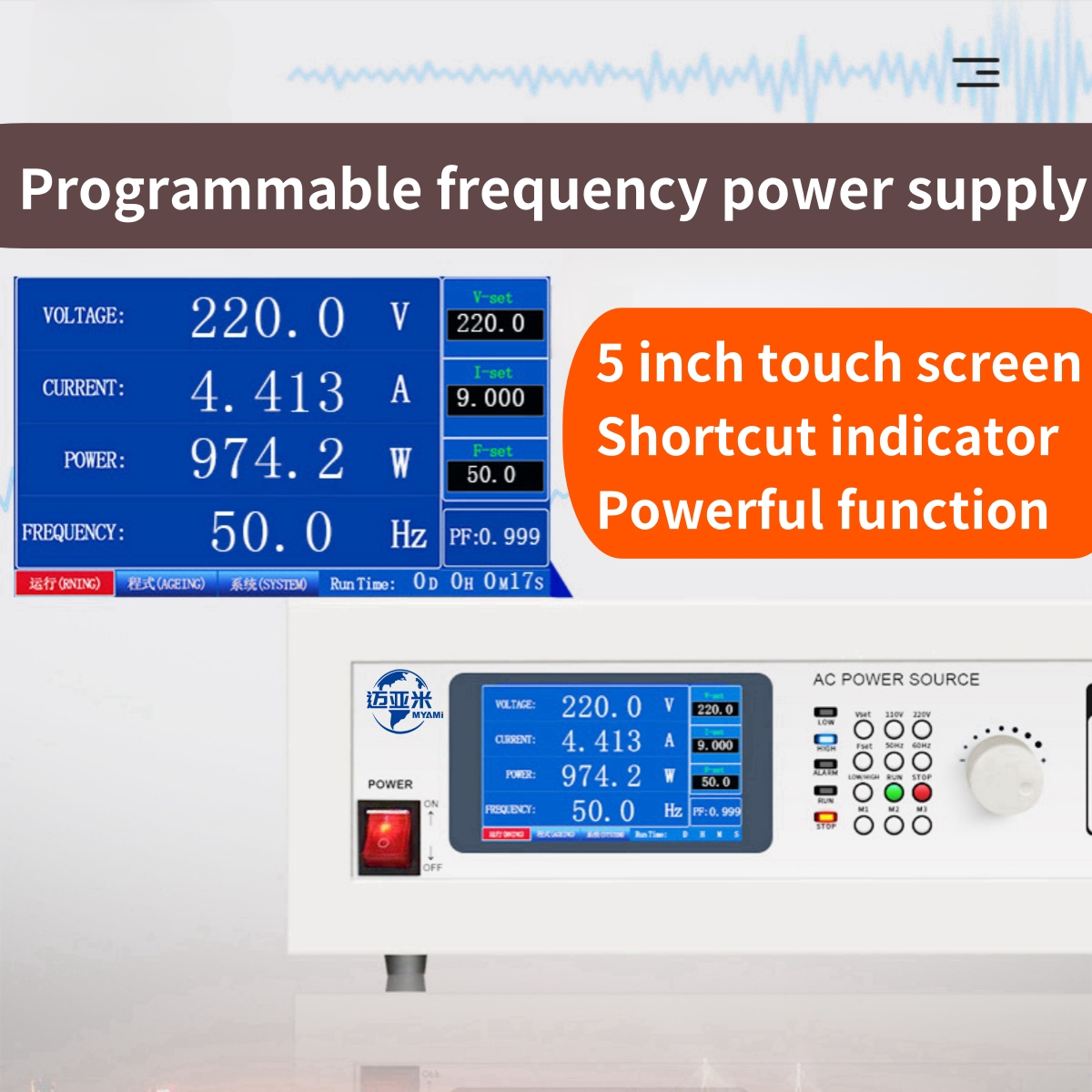
| Shortcut Function | Common voltage, frequency conversion, M1/M2/M3 groups of memory storage |
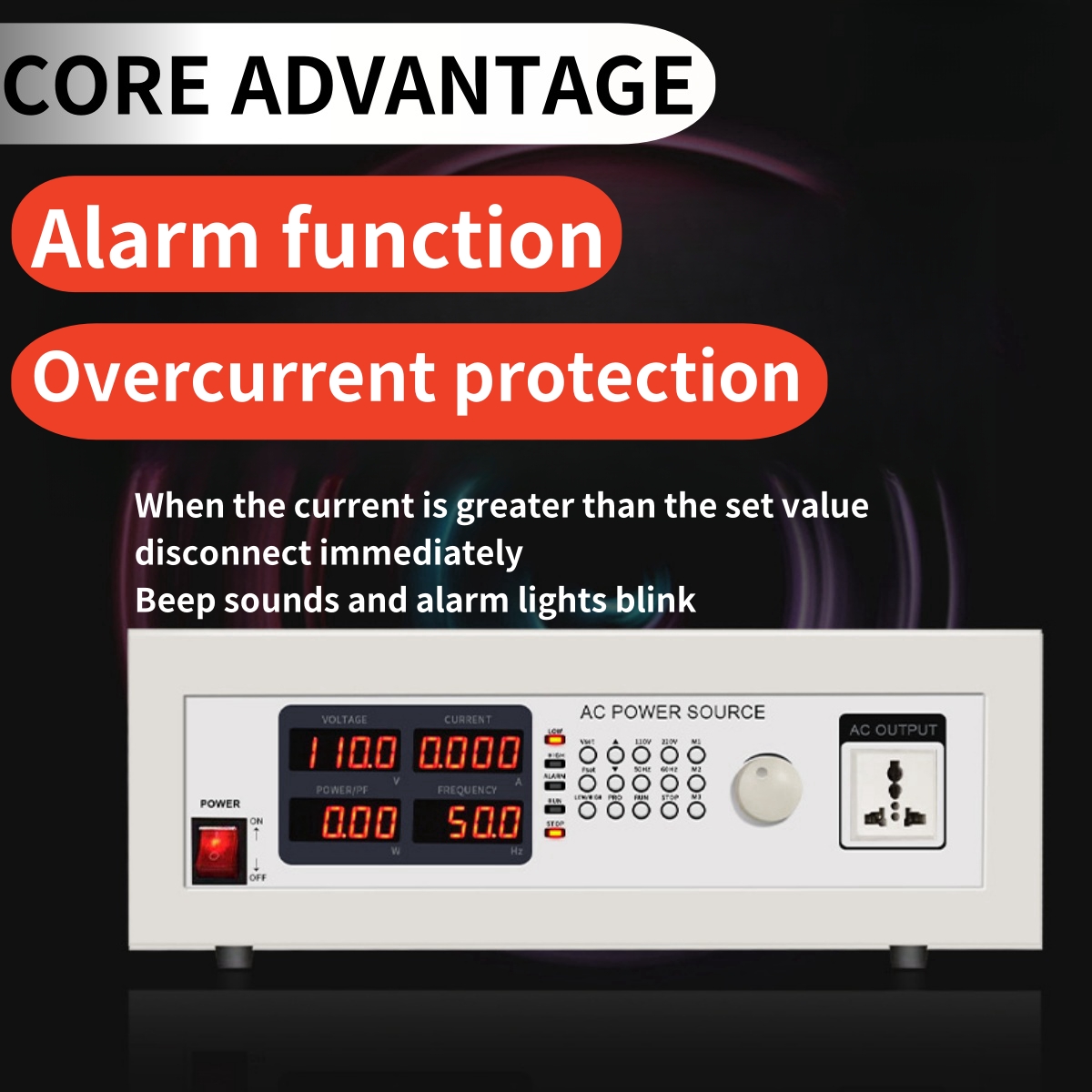
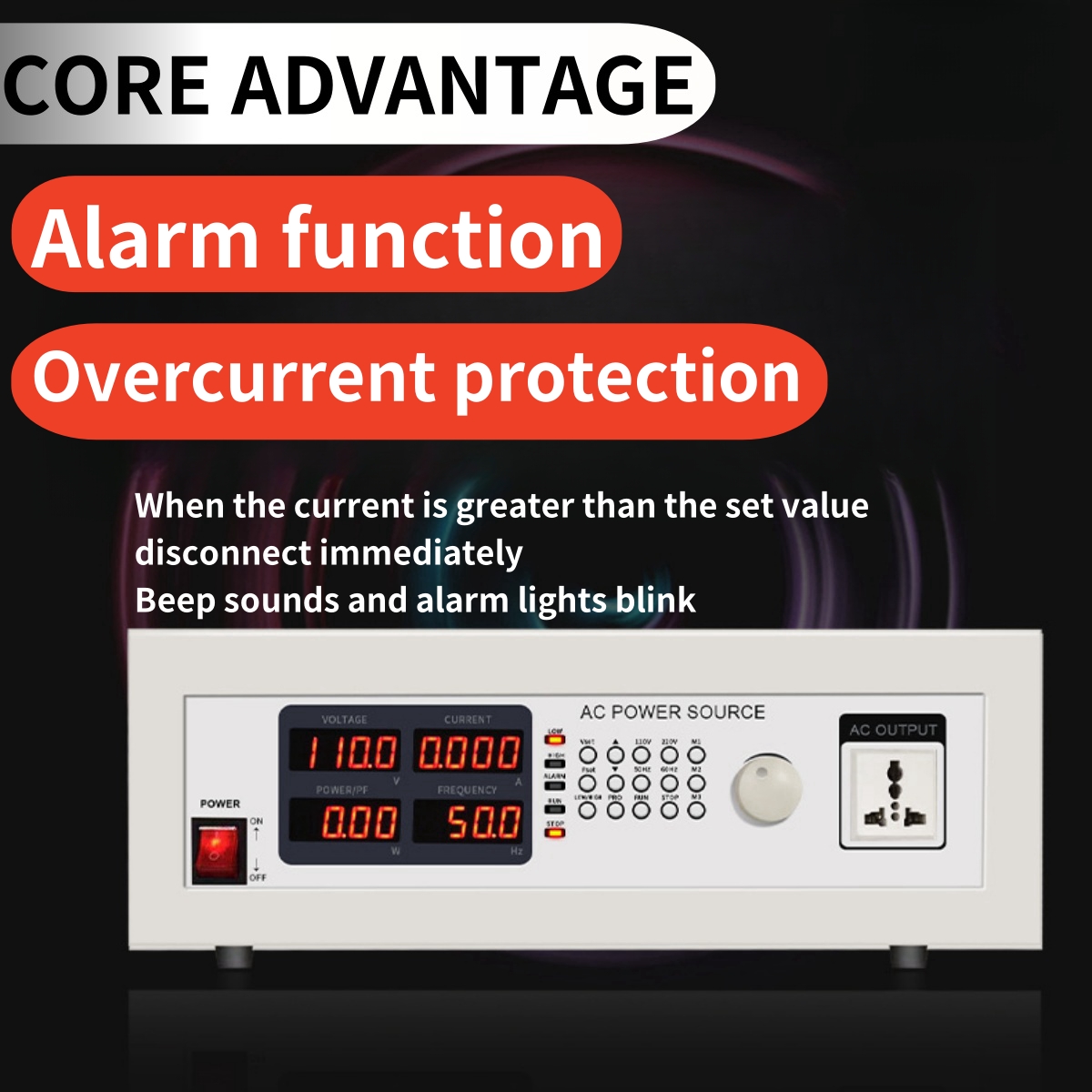
| Alarm Function | Sound and light alarm, displays fault codes |
| Overheat Protection | Power device temperature > 85°C ± 5°C |
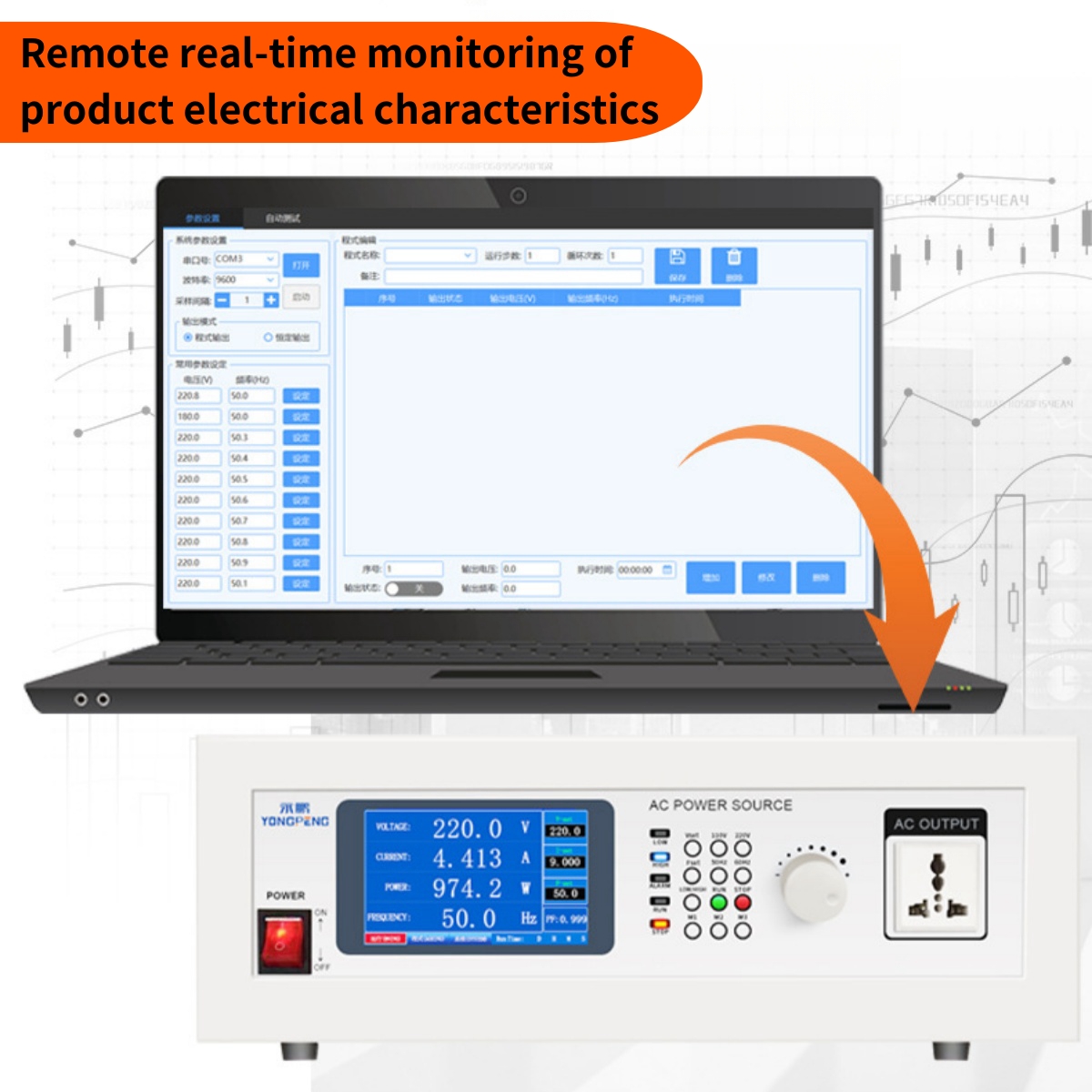
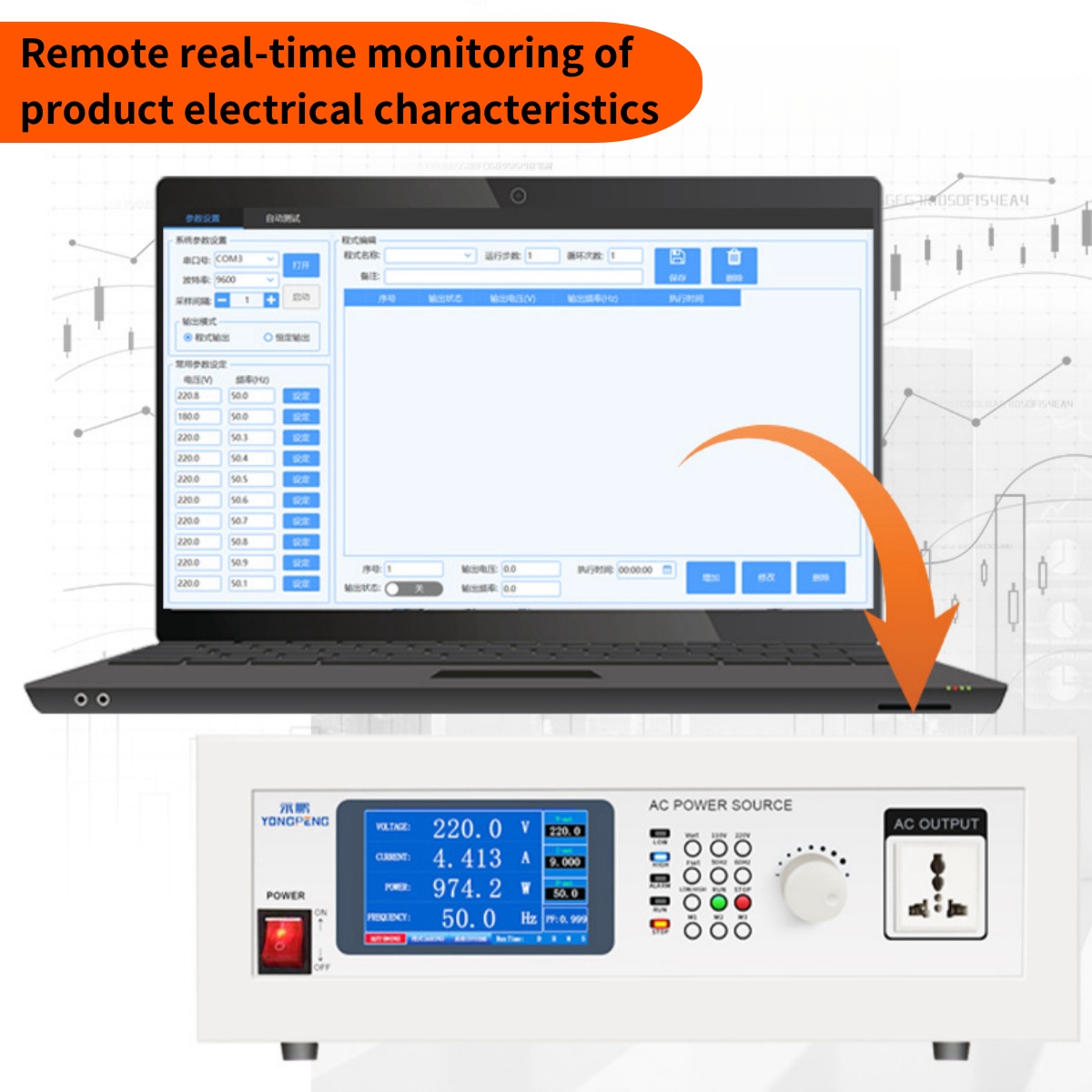
| Communication Interface | Standard Modbus RTU protocol, PC Software. RS-232C (standard) / RS485 (optional) |
| Case Protection Grade | IP20 |
| Case Structure | Cabinet-type (with casters) |
| Work Environment | Temp: -10°C ~ 40°C, Humidity: 10%~90% (25°C non-condensing), Altitude: < 2km |
| Power Specifications | Overload Protection Conditions |
|---|---|
| 0.5 - 5 KVA |
• Continuous operating condition: P output 1.0P rating / I output 1.0I rating • Off output within 15 seconds: 1.0P rated • Turn-off output within 5 seconds: 1.2P rated • Immediately turn off output: 2.0I rated |
| Above 10 KVA |
• Continuous operating condition: P output 1.0P rating / I output 1.0I rating • Off output within 15 seconds: 1.0P rated • Off output within 5 seconds: 1.1P rated (10KVA-20KVA & 30KVA+) • Immediately off output: 1.5I rated |