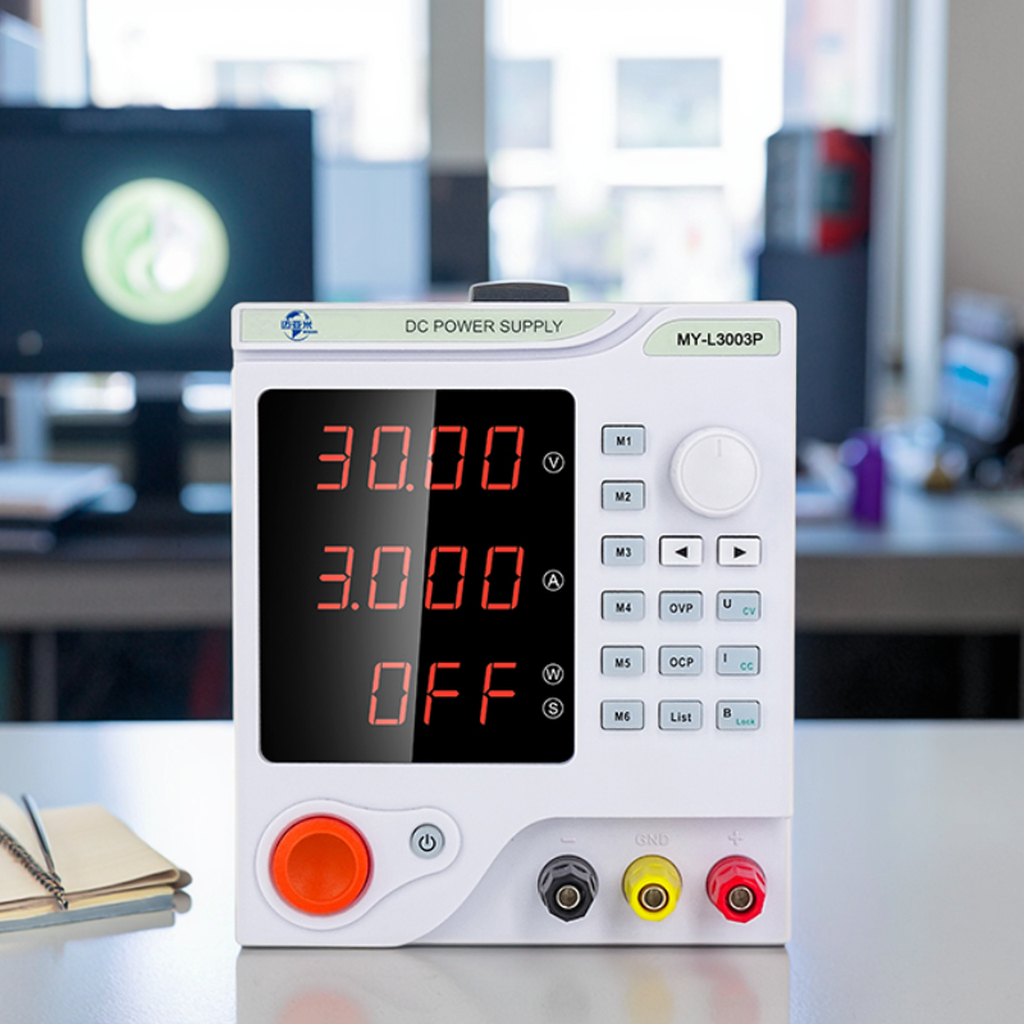
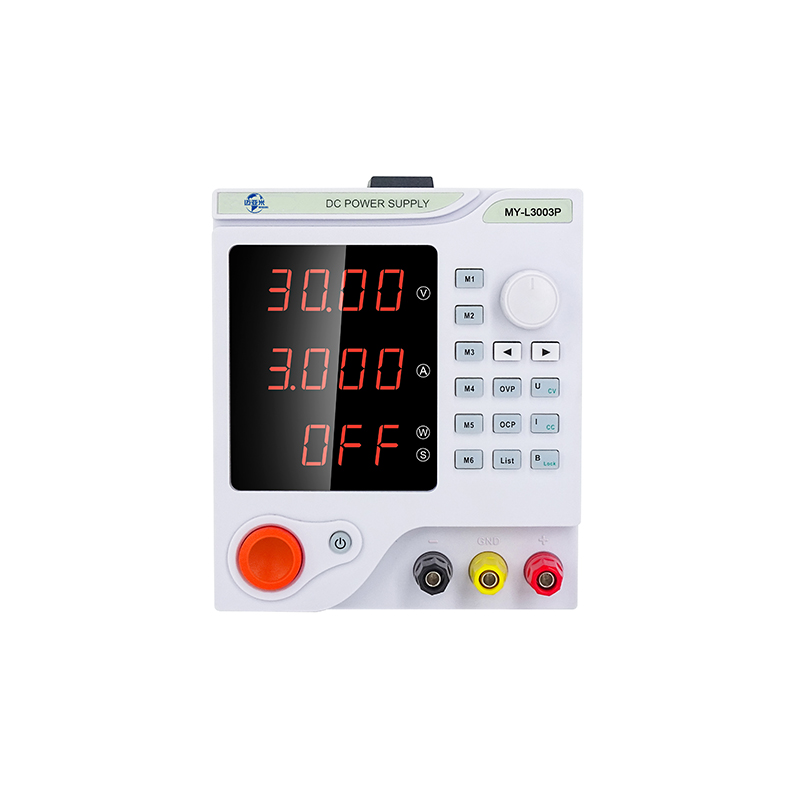
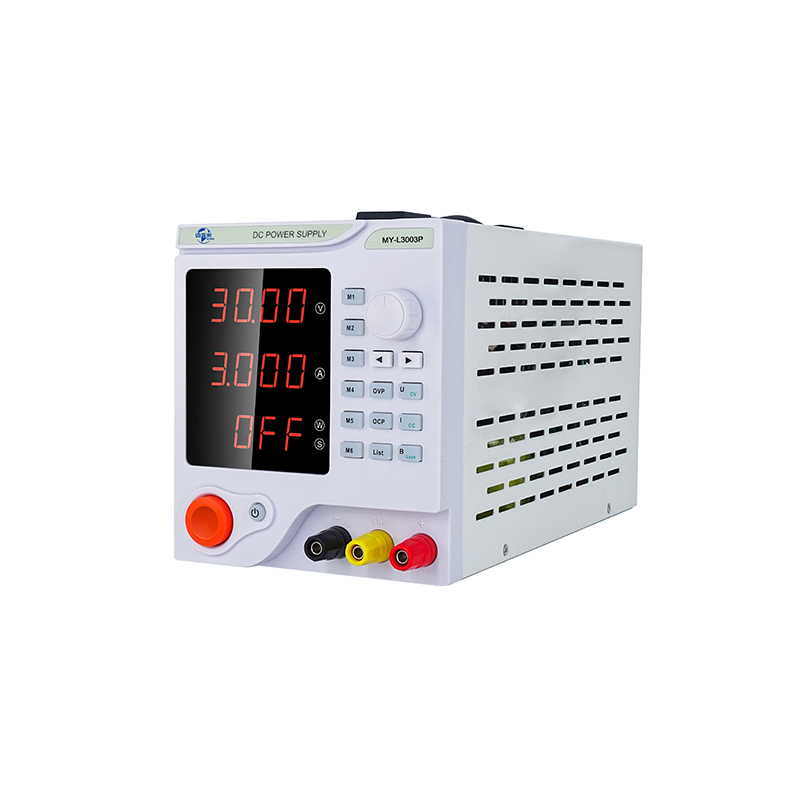
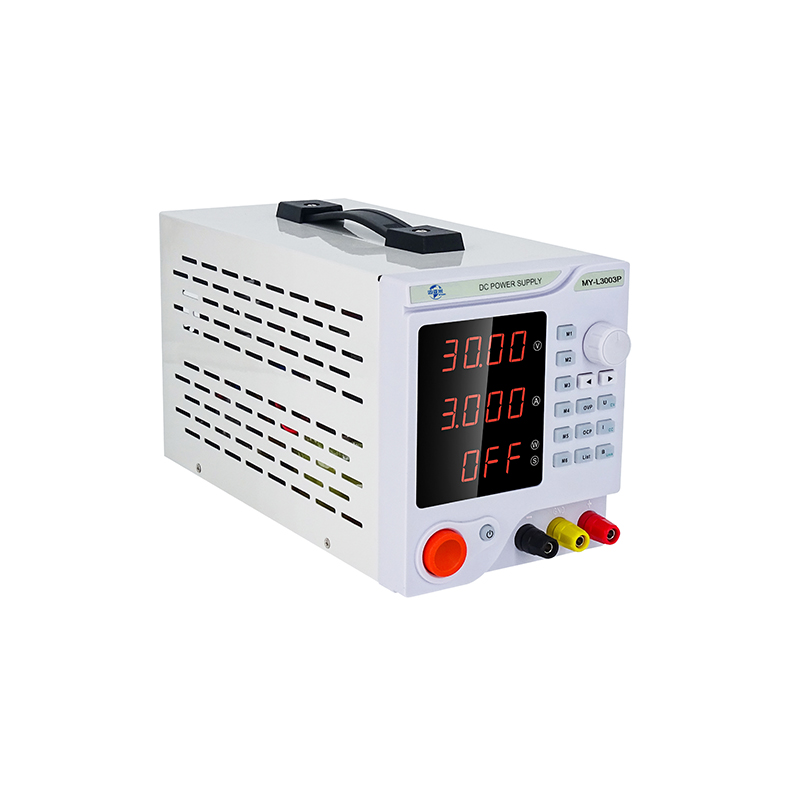
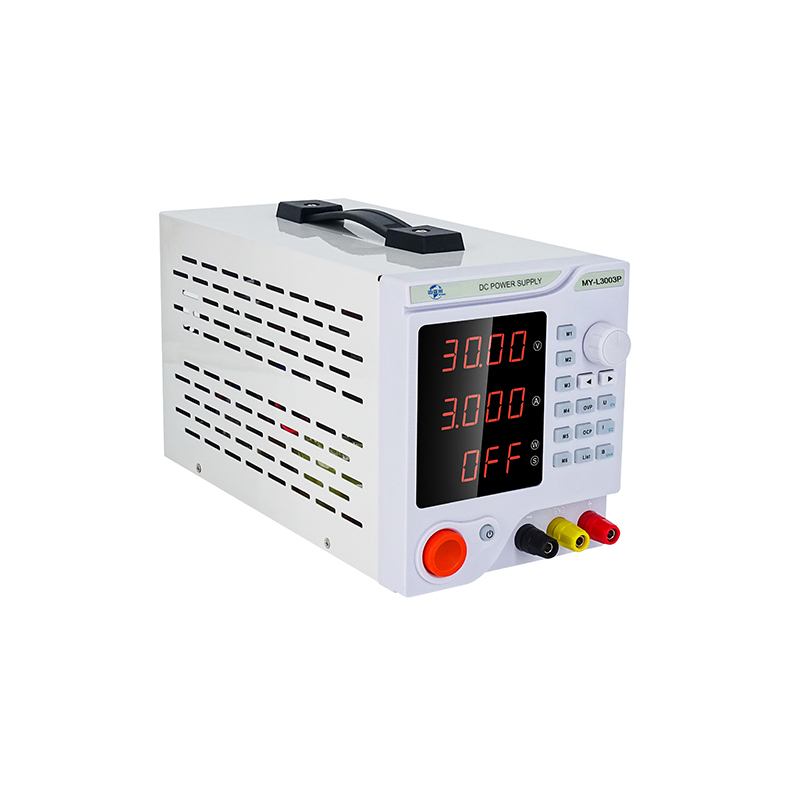
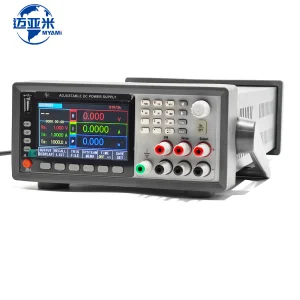
MYAMI 30v 3a 90W Programmable Bench Linear Dc Power Supply Adjustable 24v 12v 1a Variable Power Supply High Stability Laboratory

Product Description

Switch Mode Power Supply vs. Linear Regulated Power Supply

Linear Power Supply

Working Principle: Voltage reduction through transformer → rectification and filtering into DC → regulator stabilization (similar to "wide inlet and narrow outlet of water pipe").

Features: Small adjustable current range, low output ripple (highly suitable for precision equipment).

Switching Power Supply

Working Principle: Convert DC to high-frequency AC → Quickly switch through switching tubes → Step down with transformers → Rectify and filter into DC (similar to "repeated voltage regulation by electronic switches").

Features: High efficiency but slightly higher ripple (ideal for high current scenarios).

Example Scenario: Choose a linear power supply (with stable voltage) to power a microscope, and choose a switching power supply (with light, small, and high efficiency) to charge a phone.

Performance Comparison

1. Volume and Weight

  • Linear Power Supply: Due to the need for a large transformer and rectifier filter circuit, the volume is large (e.g., a 220V to 5V linear power supply measures about 10cm × 5cm × 3cm) and heavy (over 1kg).
  • Switching Power Supply: Uses a high-frequency circuit and integrated design to achieve a small size (only 1/3 of the same power linear supply) and lightweight construction (within 500g). It is preferred for portable devices such as drones and laptops.

2. Efficiency

  • Linear Power Supply: Energy conversion relies on resistance heating, resulting in lower efficiency of about 60% (e.g., for a 220V to 5V input of 100W, the output is only 60W).
  • Switching Power Supply: Highly energy-efficient with a conversion rate of 80% - 95%, generating minimal heat (input 100W, output above 90W), saving electricity costs in the long term.

3. Stability

  • Linear Power Supply: Features an extremely small output ripple (<10mV), making it highly suitable for equipment sensitive to voltage fluctuations (such as medical instruments and lab equipment).
  • Switching Power Supply: High-frequency switching may introduce higher ripple (>20mV). However, modern switching power supplies mitigate this through optimization and high-frequency filtering.

4. Transient Response

  • Linear Power Supply: The regulator directly responds to voltage changes, providing a microsecond-level fast transient response, suitable for scenarios requiring rapid power adjustment.
  • Switching Power Supply: Switching delays result in a millisecond-level transient response, which is acceptable and generally negligible for most consumer electronic devices.

Scenario Selection Matrix

Scenario Requirements Preferred Choice Core Reasons
Portable devices (mobile phones, laptops) Switching Power Supply Small size, high efficiency, wide voltage input
High power equipment (servers, motors) Switching Power Supply High efficiency, low cost, no heat dissipation pressure
Precision instruments (oscilloscope, mass spectrometer) Linear Power Supply Low ripple, low noise, and stable voltage
Low power fixed scenario (router, microcontroller) Linear Power Supply Low cost, high reliability, and simple circuit
Audio equipment (amplifier, DAC) Linear Power Supply No switch noise, avoiding interference with sound quality

Product Parameters

Linear DC Power Supply Unit

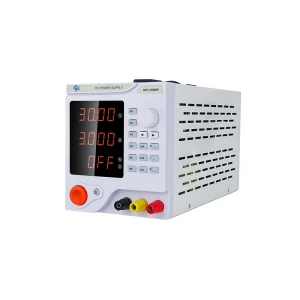
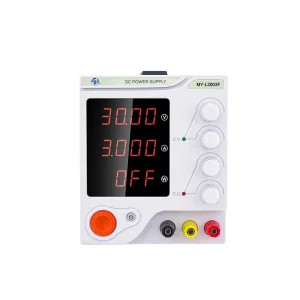
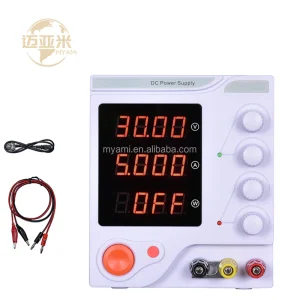
Linear DC Power Supply (30V, 60V, 150V / 1A, 3A, 5A)
Adjustable Programmable Bench Power Supply for Lab & Repair

Voltage and current can be preset
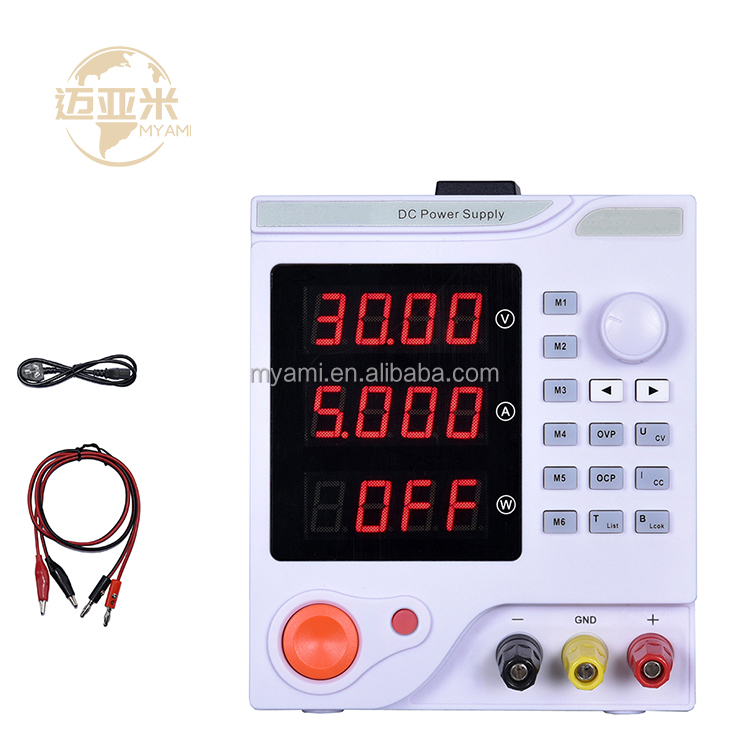
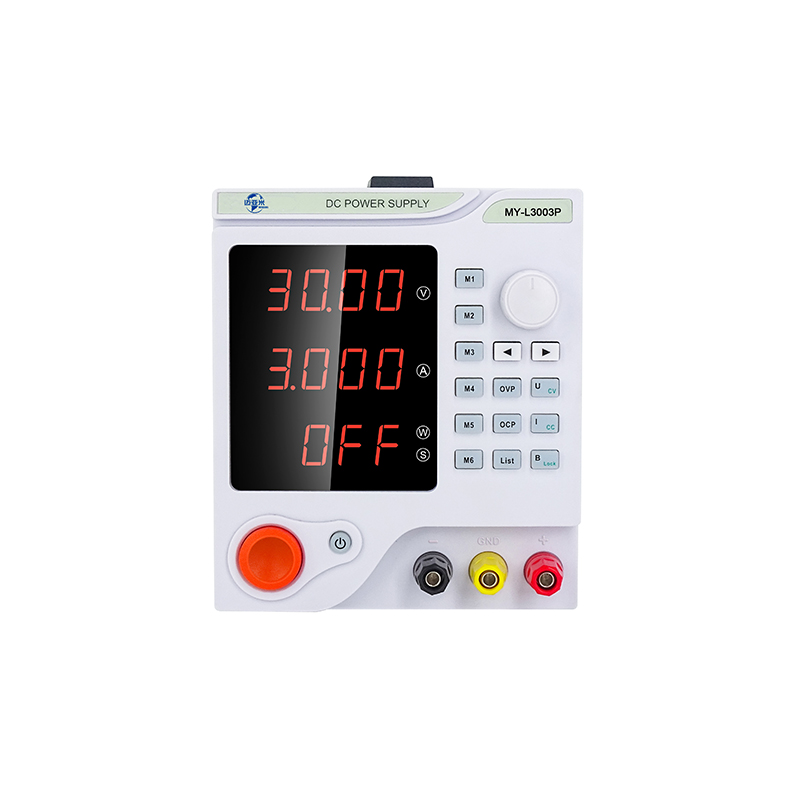
4-digit high-precision LED display for voltage, current, and power
Fivefold protection: Over Voltage, Over Current, Over Power, Over Temp, Short Circuit
Dedicated ON/OFF output control switch
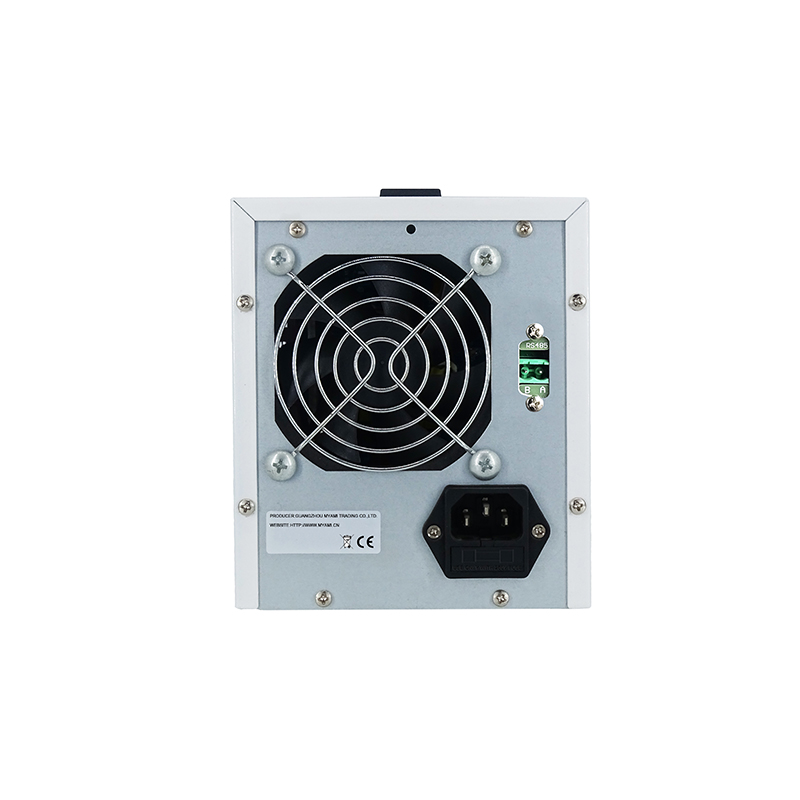
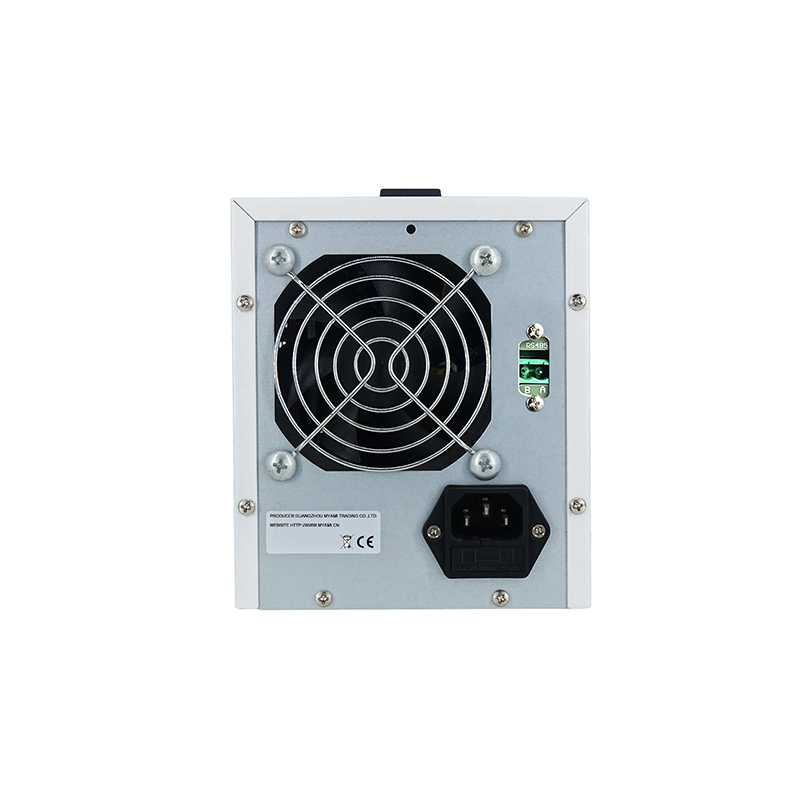
Optional RS232, RS485, and USB interfaces supporting MODBUS RTU
6 groups of memory storage parameters for quick recall
Model Voltage Range Current Range Display Type Control Accuracy
MY-L3003P 0-30V 0-3A 4-bit LED display 0.1mV / 0.01mA
MY-L3005P 0-30V 0-5A 4-bit LED display 0.1mV / 0.01mA
MY-L6003P 0-60V 0-3A 4-bit LED display 0.1mV / 0.01mA
MY-L15001P 0-150V 0-1A 4-bit LED display 0.1mV / 0.01mA
MY-L6005P 0-60V 0-5A 4-bit LED display 0.1mV / 0.01mA

Product Gallery

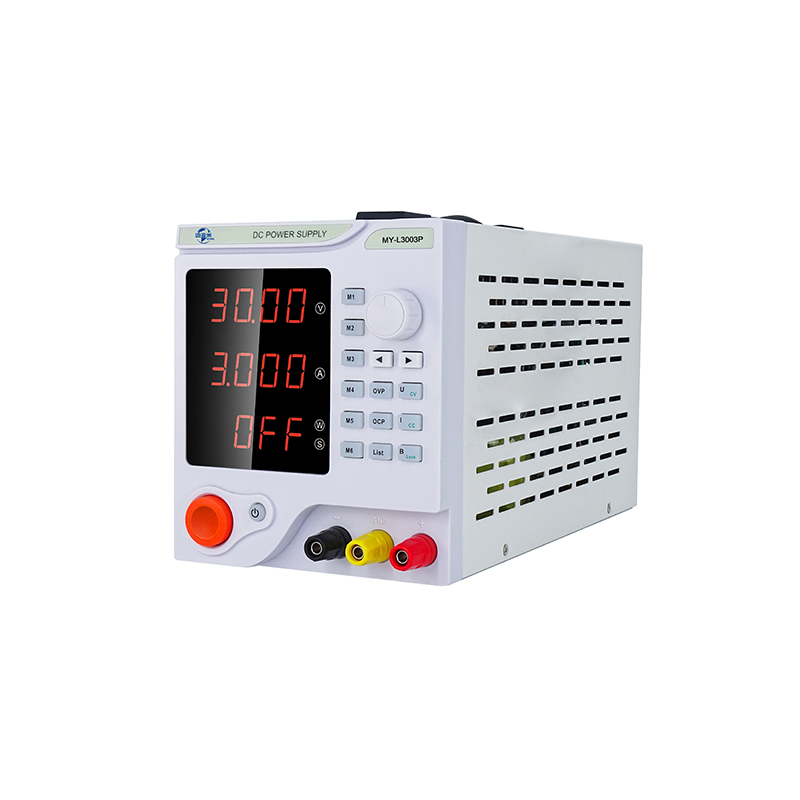
Product Angle View 1
Product Angle View 2
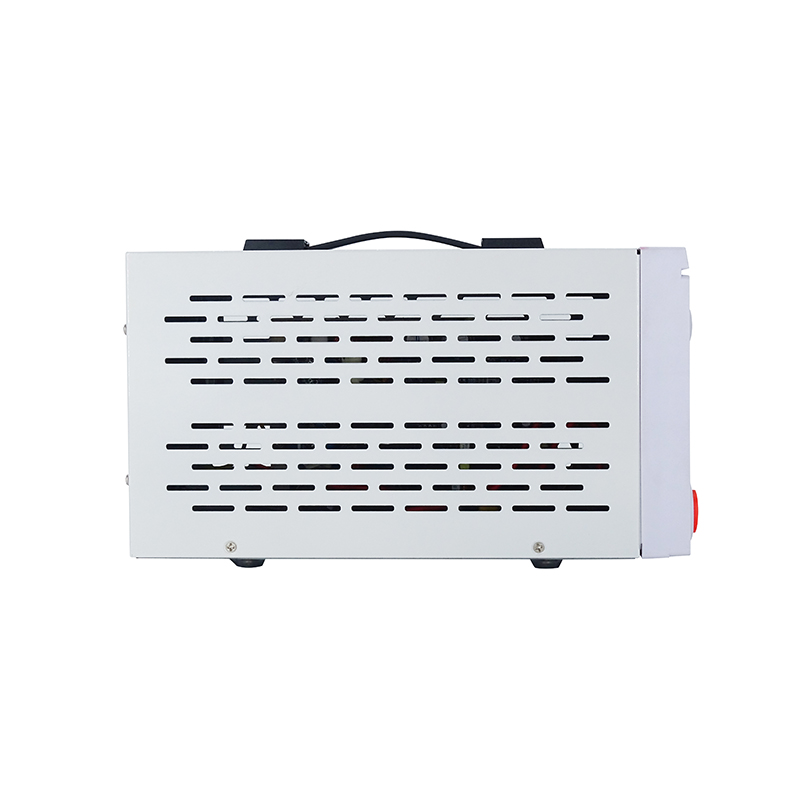
Product Angle View 3
Detail Panel View 1
Detail Panel View 2
Rear Interface Details
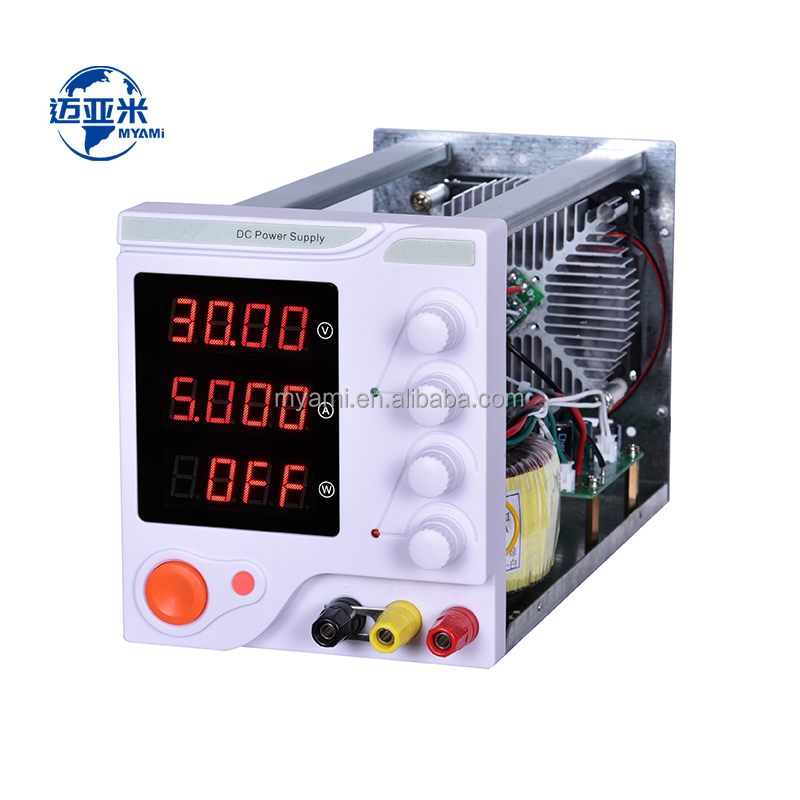
Internal Circuit Design Layout
Operational Specifications Setup

Who We Are

Manufacturing Area 1
Manufacturing Area 2
Quality Inspection Center
Technological Testing Facility

Frequently Asked Questions

What is the primary difference in working principle between linear and switching power supplies?
Linear power supplies step down voltage using a standard transformer and regulate it linearly to output stable, low-noise DC power. Switching power supplies convert raw DC to high-frequency AC, regulate it via quick-switching pulse-width modulation, and filter it back to DC, which maximizes conversion efficiency.
Why are switching power supplies much smaller and lighter?
Switching power supplies operate at high frequencies, which allows the use of significantly smaller step-down transformers and filtering capacitors compared to the large, heavy mains-frequency transformers required by linear power supplies.
Which power supply is better suited for high-precision laboratory experiments?
A Linear Power Supply is highly recommended for precision instruments like oscilloscopes, spectrometers, and sensitive audio setups because it features extremely low ripple voltage (<10mV) and prevents electromagnetic noise interference.
How energy-efficient are switching power supplies compared to linear ones?
Switching power supplies boast an efficiency rate of 80% to 95%, dissipating very little energy as heat. Linear power supplies are less efficient (around 60%) because they dissipate excess power as heat through their linear regulation elements.
What protection parameters do programmable bench power supplies typically feature?
They offer robust electronic protections including Over Voltage Protection (OVP), Over Current Protection (OCP), Over Power Protection (OPP), Over Temperature Protection (OTP), and Short Circuit Protection (SCP) to safeguard connected devices from damage.

Related Products