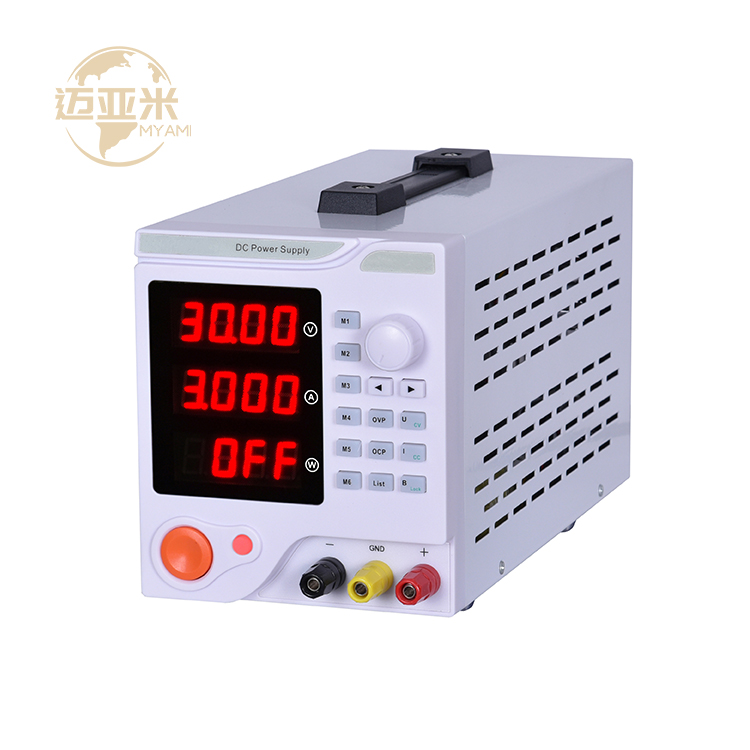
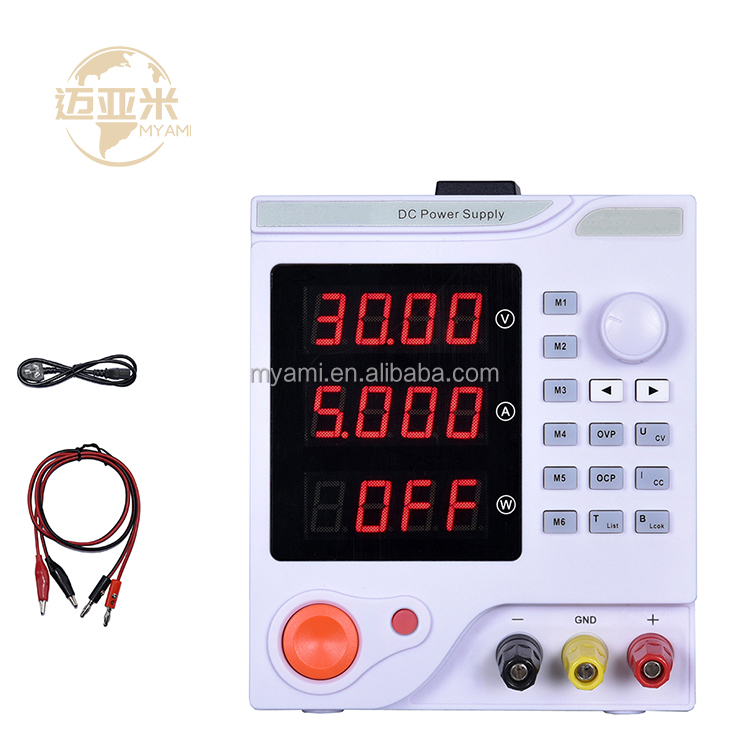
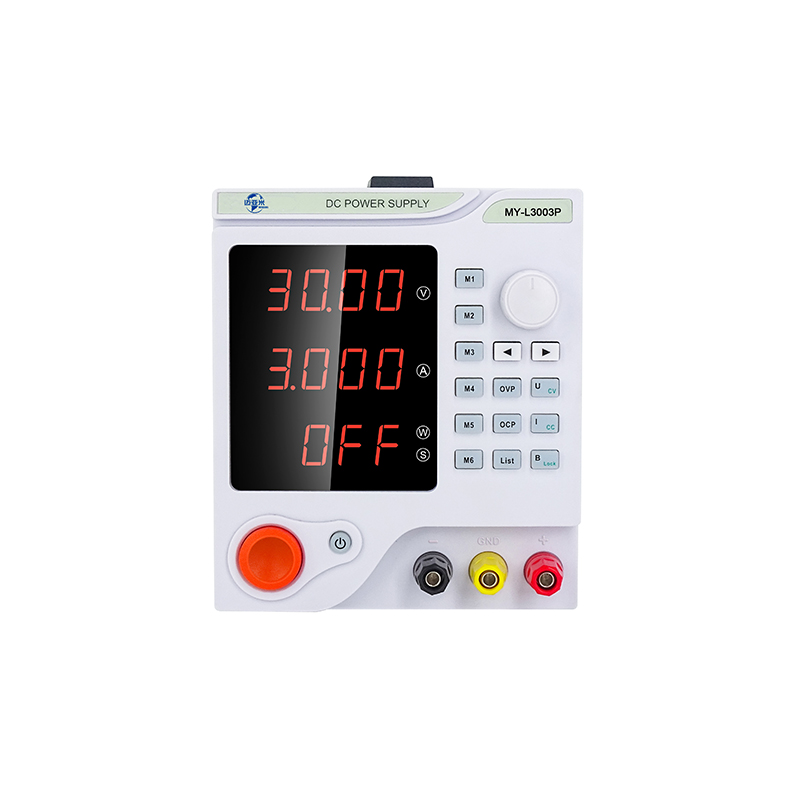
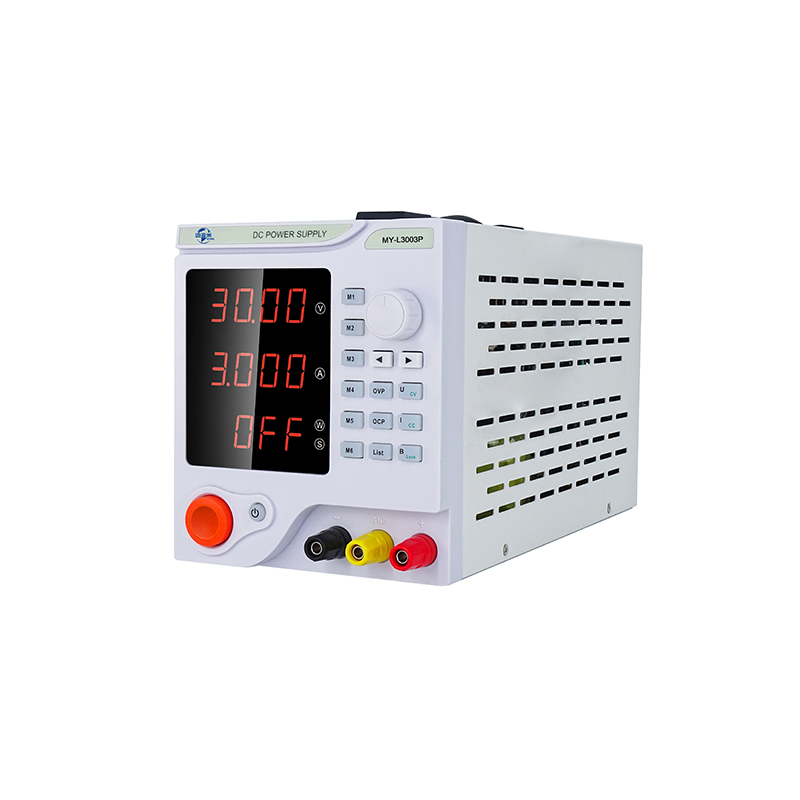
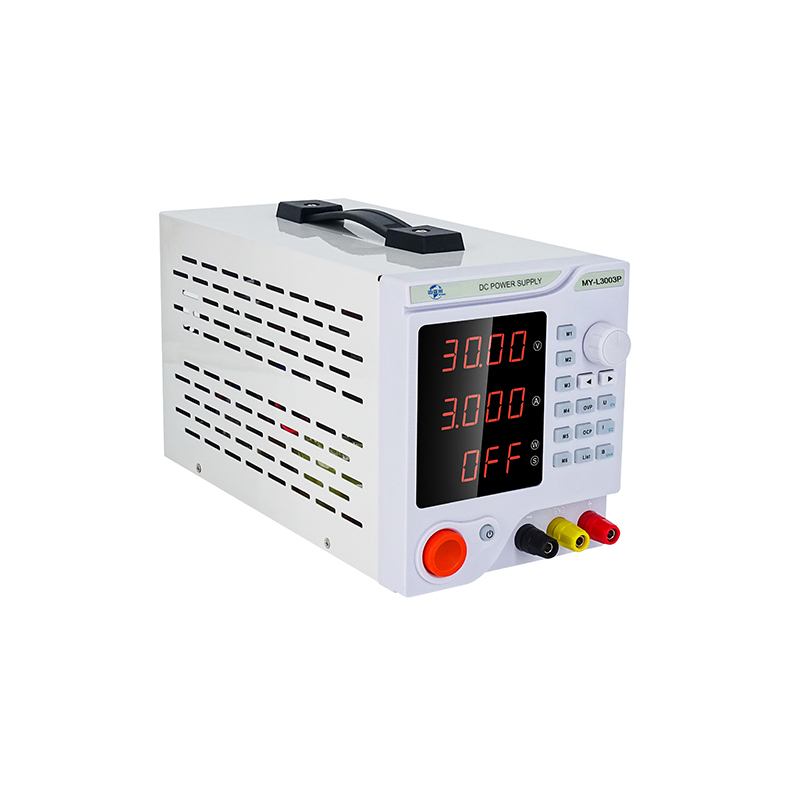
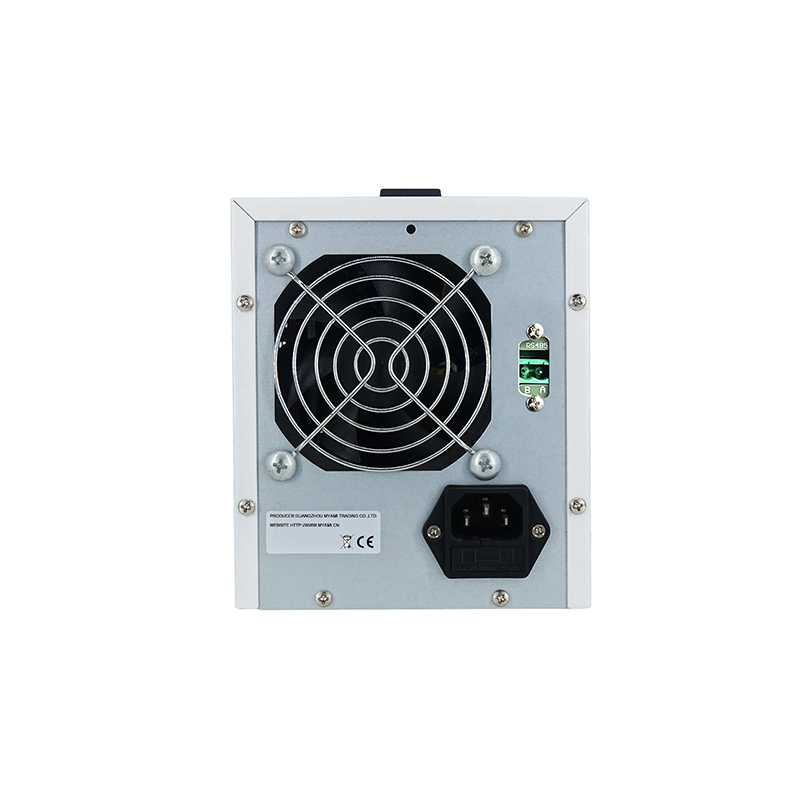
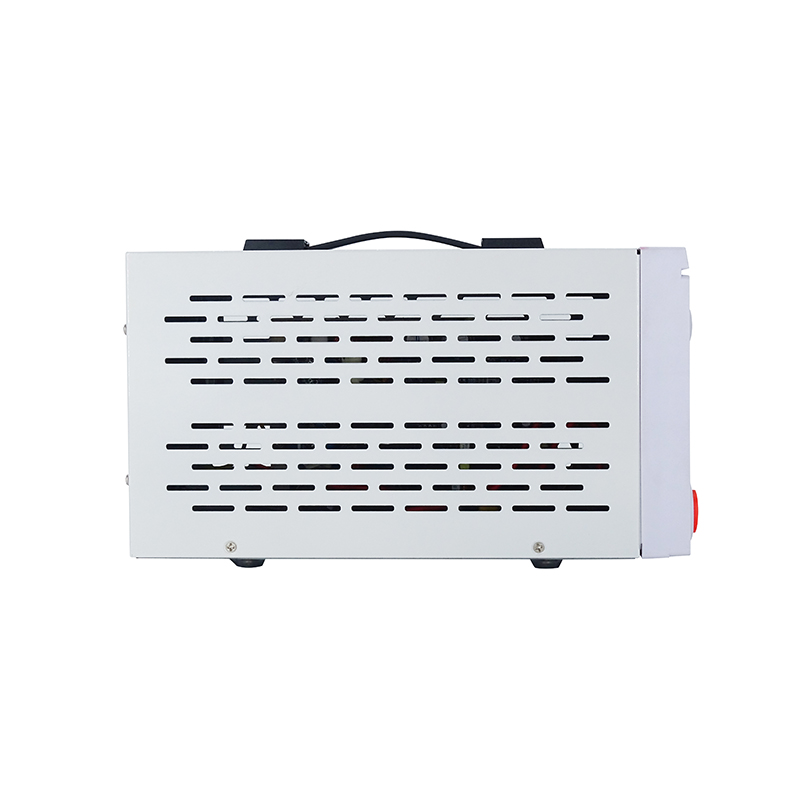
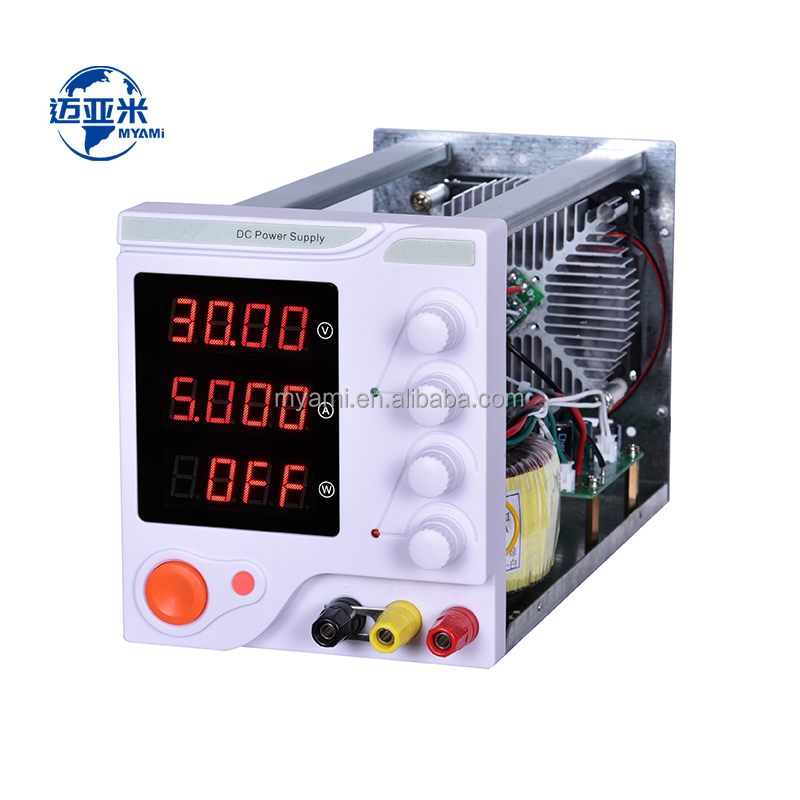
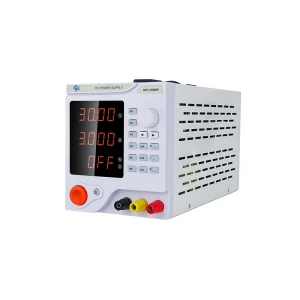
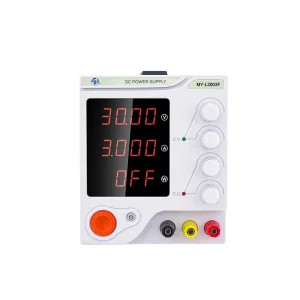
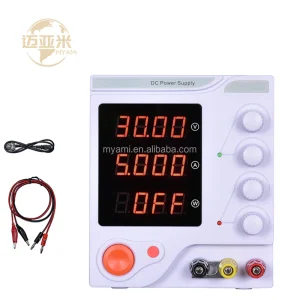
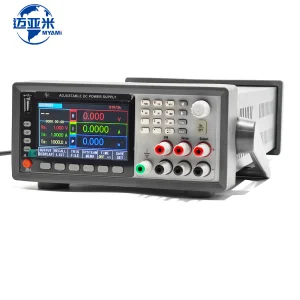
Linear DC power supply 30v 60v 150v 1a 3a 5a adjustable Programmable bench power supply variable lab short killer phone repair
The difference between switch mode power supply and linear regulated power supply
1. Working Principle:
Linear power supply: voltage reduction through transformer → rectification and filtering into DC → regulator stabilization (similar to "wide inlet and narrow outlet of water pipe").
Features: Small adjustable current range, low output ripple (suitable for precision equipment).
Switching power supply: Convert DC to high-frequency AC → Quickly switch through switching tubes → Step down with transformers → Rectify and filter into DC (similar to "repeated voltage regulation by electronic switches").
Features: High efficiency but slightly higher ripple (suitable for high current scenarios).
Example: Choose a linear power supply (with stable voltage) to power the microscope, and choose a switch power supply (with light, small, and high efficiency) to charge the phone.
2. Performance comparison:
1. Volume and weight: Switching power supply crushes linear power supply!
Linear power supply: Due to the need for a large transformer and rectifier filter circuit, the volume is large (such as a 220V to 5V linear power supply of about 10cm × 5cm × 3cm) + weight (over 1kg).
Switching power supply: high-frequency circuit + integrated design, small size (only 1/3 of the same power) + lightweight (within 500g), preferred for portable devices such as drones and laptop power supplies.
2. Efficiency: Switching power supplies are more energy-efficient!
Linear power supply: Energy conversion relies on resistance heating, with an efficiency of about 60% (such as 220V to 5V input of 100W, output of only 60W).
Switching power supply: High conversion efficiency (80% - 95%), almost no heat generation (input 100W, output above 90W), long-term use saves electricity costs.
3. Stability: Linear power supplies are more stable!
Linear power supply: with small output ripple (<10mV), suitable for equipment sensitive to voltage fluctuations (such as medical instruments and laboratory equipment).
Switching power supply: High frequency switching may introduce ripple (>20mV), but modern switching power supplies are already stable through optimization (such as high-frequency filtering) (acceptable for most devices).
4. Transient response: Linear power supply is faster!
Linear power supply: The regulator directly responds to voltage changes, with fast transient response (microsecond level), suitable for scenarios that require rapid power adjustment (such as precision experiments).
Switching power supply: Due to delayed switching of the switching tube, the transient response is slightly slower (in milliseconds), but the impact on most devices can be ignored.
3. How to choose?
Frequently Asked Questions (FAQ)
?
What is the difference in ripple performance between linear and switching power supplies?
Linear power supplies feature very small output ripple (typically <10mV), making them highly suitable for precision equipment. Switching power supplies may introduce higher ripple (>20mV) due to high-frequency switching, though modern filtering helps mitigate this.
?
Which power supply is better for portable applications?
Switching power supplies are much lighter (under 500g) and occupy only about 1/3 of the volume of linear models, making them the preferred choice for portable devices like drones and laptops.
?
What built-in safety protections do these programmable DC power supplies offer?
They offer five comprehensive protection modes: over voltage protection, over current protection, over power protection, over temperature protection, and short circuit protection.
?
Do these DC power supplies support remote computer connectivity?
Yes. Optional RS232, RS485, and USB serial communication ports are available, which fully support the industry-standard MODBUS RTU protocol.
?
How does the conversion efficiency compare between linear and switching power supplies?
Switching power supplies are highly energy-efficient with conversion rates of 80% to 95%, generating minimal heat. Linear power supplies are less efficient (around 60%) because they dissipate excess energy as heat.
?
Can I save multiple voltage and current presets on this device?
Yes, the unit provides 6 built-in sets of data storage, allowing you to configure and quickly recall any predefined voltage and current outputs.
 Myami Power