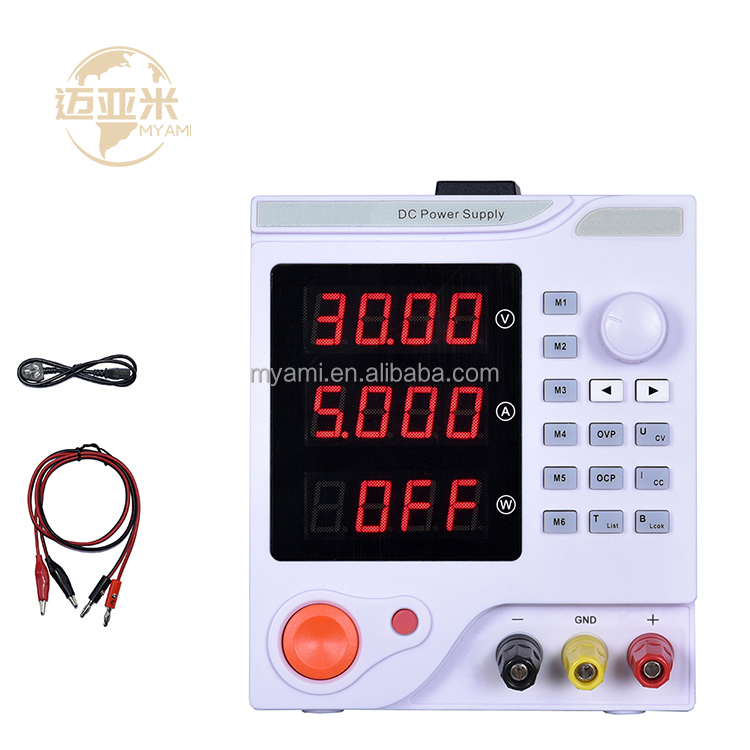
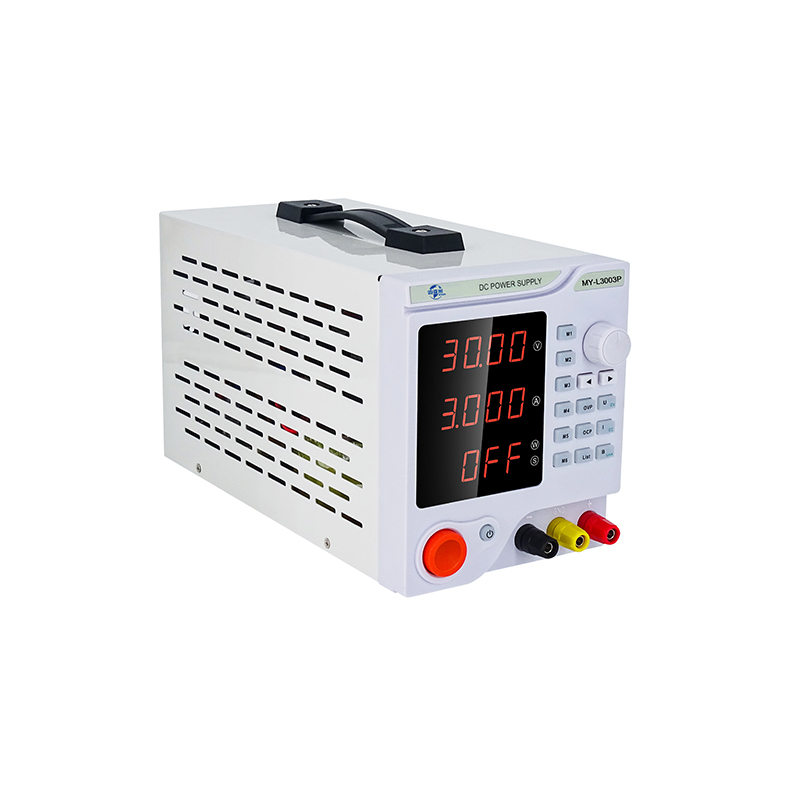
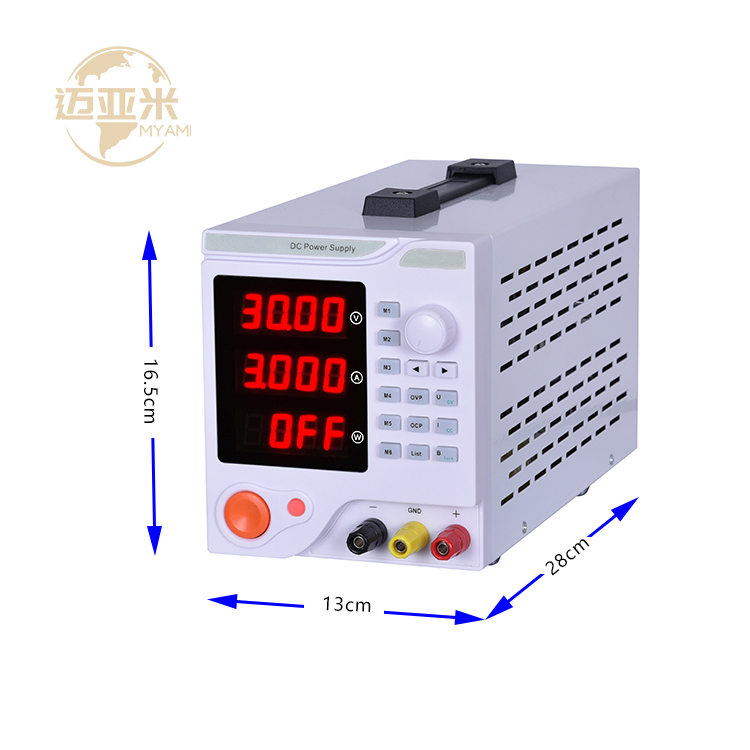
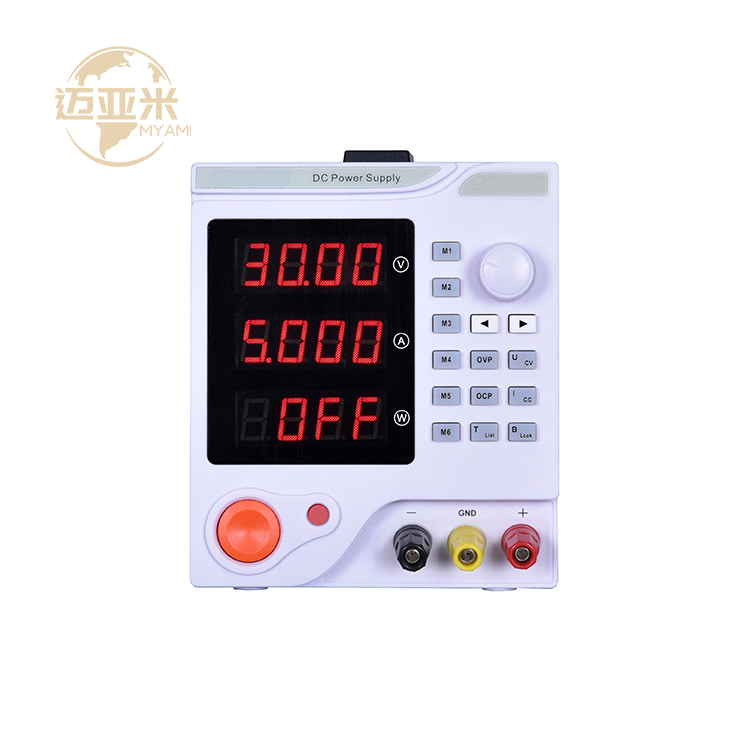
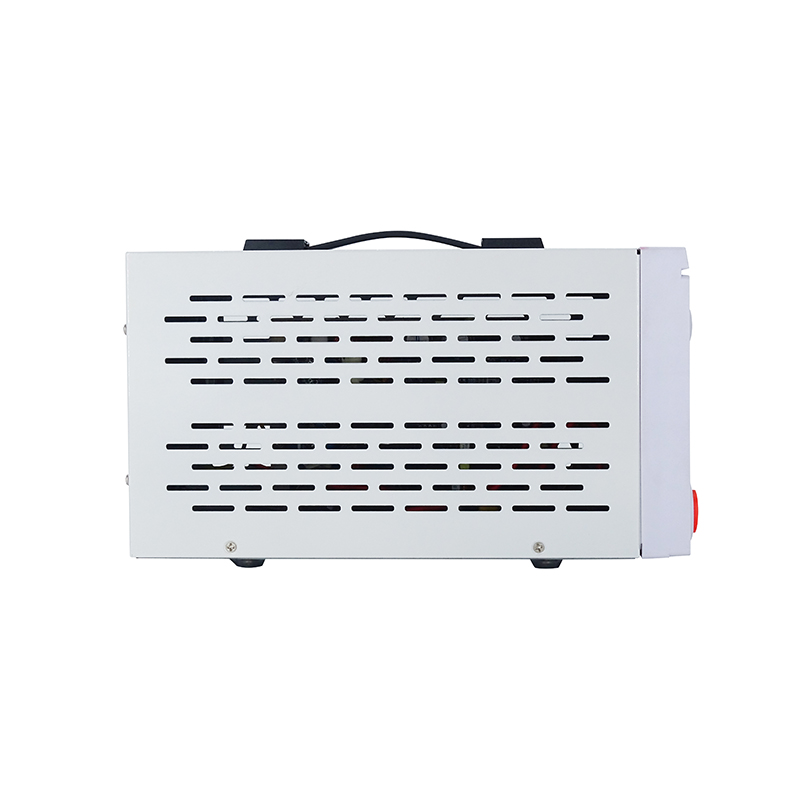
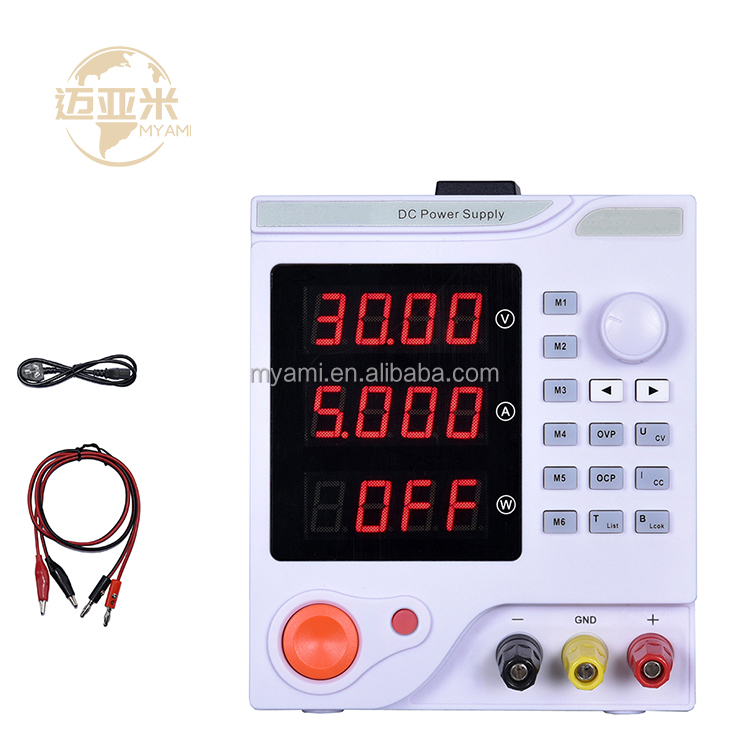
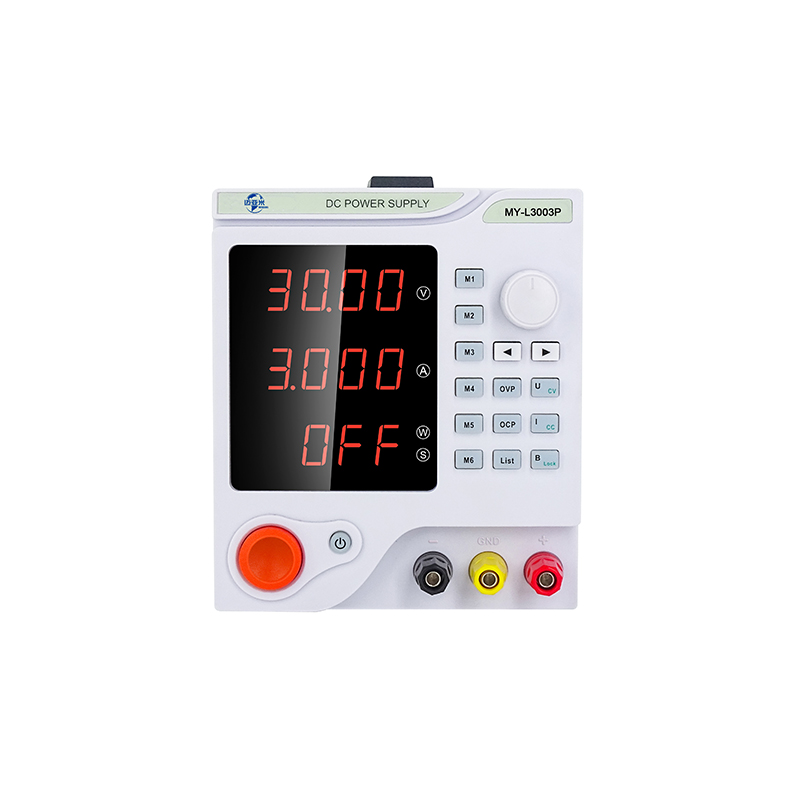
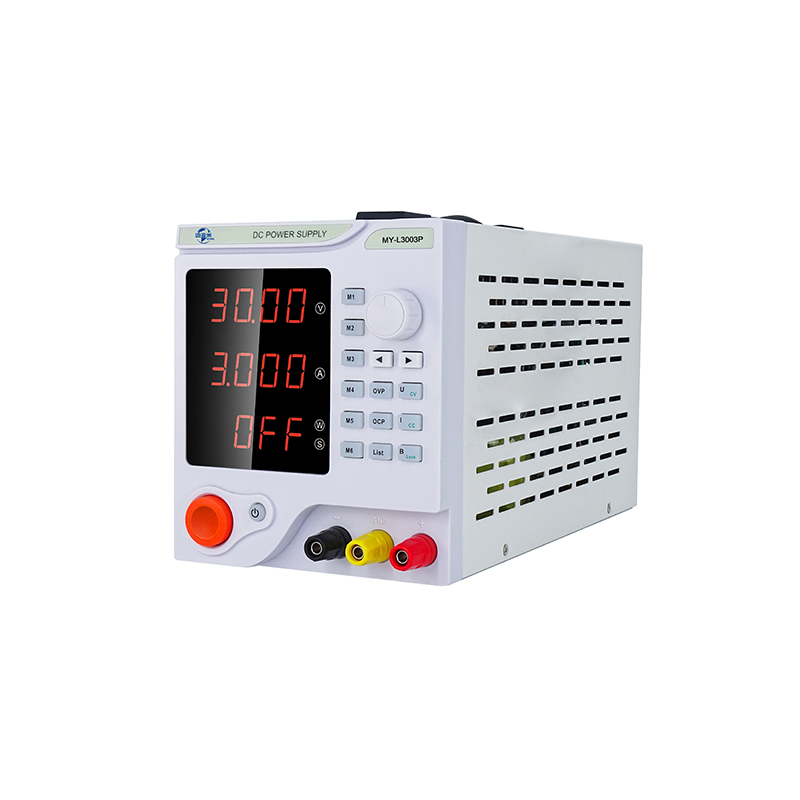
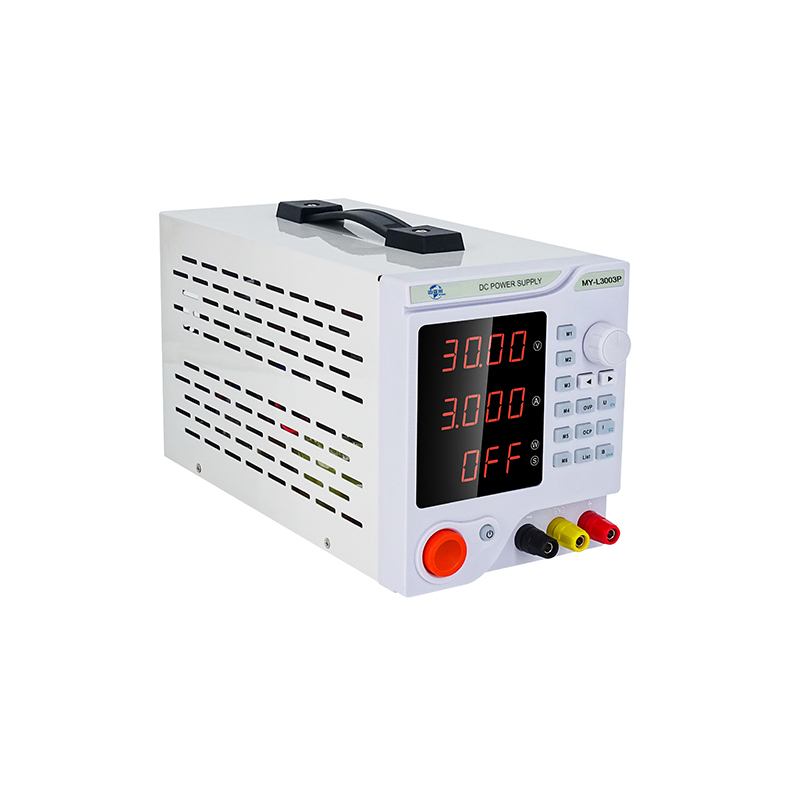
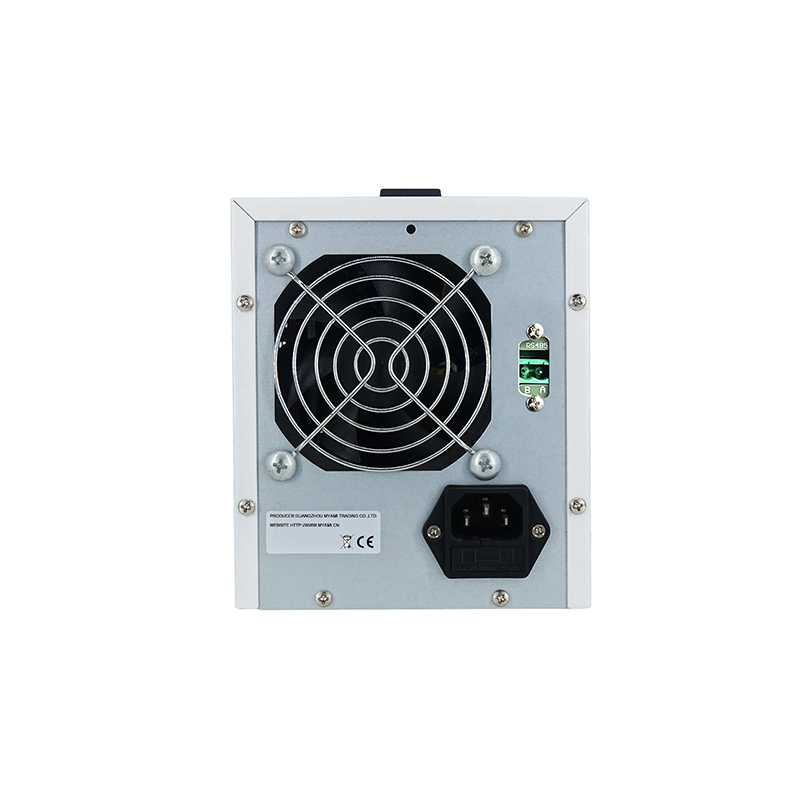
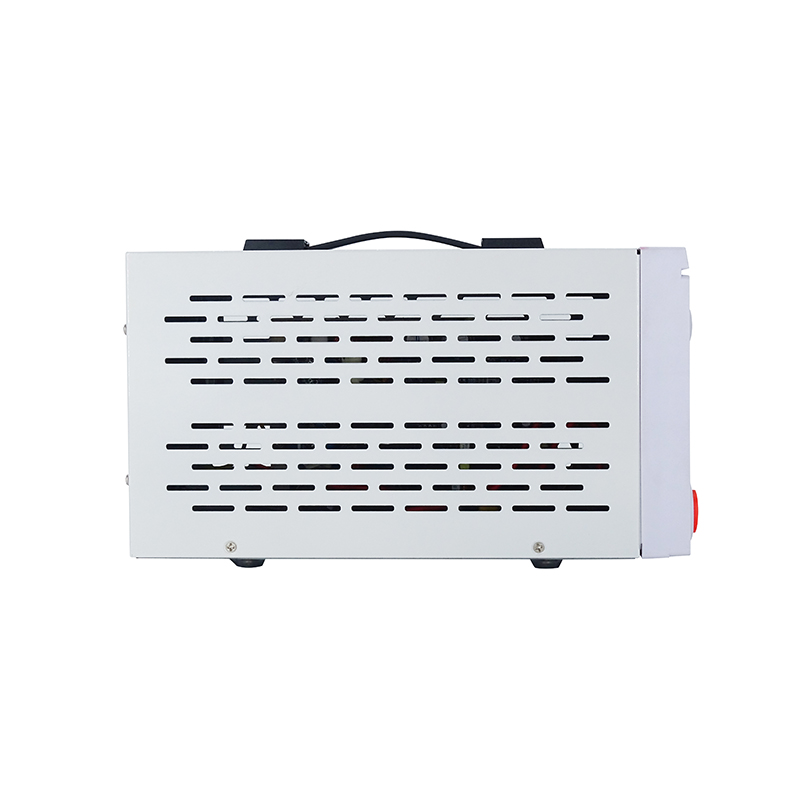
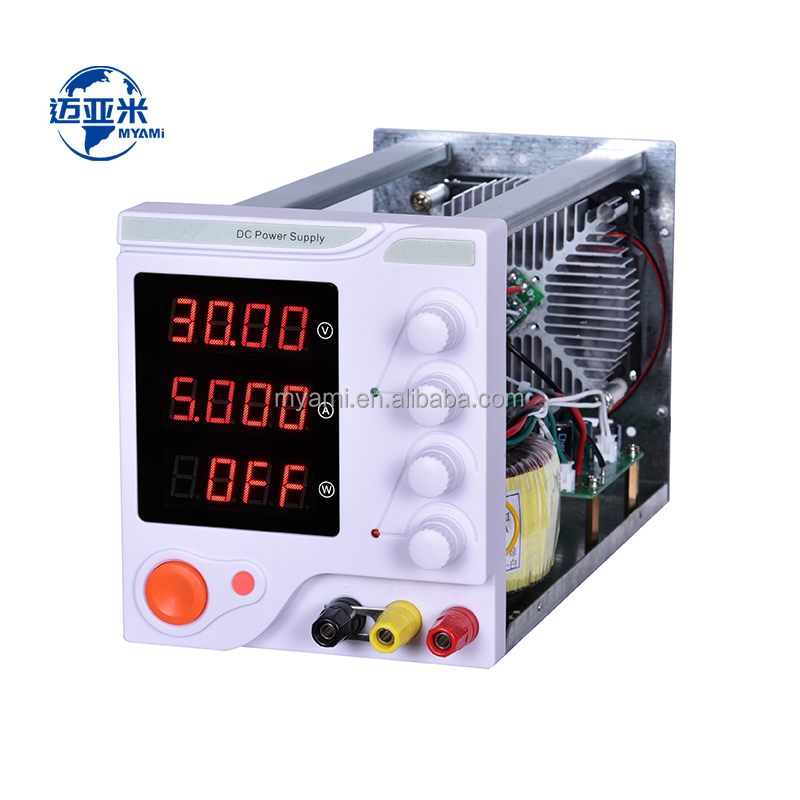
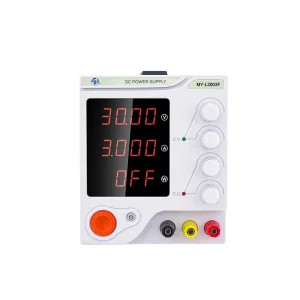
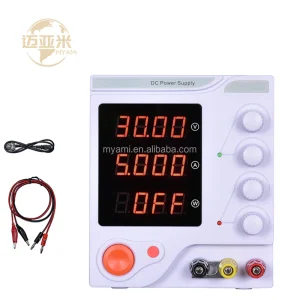
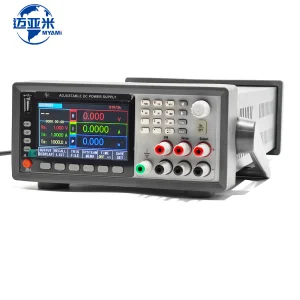
MYAMi MY-L6005P 0-60V 24V 30V 1A 5A Single Output Laboratory Variable Linear Dc Power Supply Digital Display for Laptop Repair

Product Description

The Difference Between Switch Mode Power Supply and Linear Regulated Power Supply

Linear Regulated Power Supply
Working Principle: Voltage reduction occurs through a transformer, followed by rectification and filtering into DC, and stabilization via a regulator.
Key Features: Small adjustable current range, exceptionally low output ripple. Highly suitable for precision equipment.
Example Scenario: Powering high-precision devices like microscopes where stable voltage is critical.
Low Ripple High Stability
Switching Power Supply
Working Principle: Converts DC to high-frequency AC, switches rapidly through switching tubes, steps down with transformers, and rectifies/filters into DC.
Key Features: Highly efficient but with a slightly higher output ripple. Ideal for high-current scenarios.
Example Scenario: Charging portable electronics like mobile phones where light weight and high efficiency are prioritized.
High Efficiency Lightweight

Detailed Performance Comparison

Volume & Weight

Linear Power Supply: Employs large transformers and heavy rectifier filter circuits, resulting in larger dimensions (e.g., 220V to 5V linear units average 10cm x 5cm x 3cm) and higher weight (often exceeding 1kg).

Switching Power Supply: Built with high-frequency circuits and integrated layouts, yielding a compact size (only 1/3 of an equivalent linear model) and lightweight profiles (under 500g). Perfect for drones and laptops.

Efficiency & Energy

Linear Power Supply: Relies on resistance heating for energy conversion, capping efficiency at around 60% (e.g., a 100W input generates only about 60W of useful output).

Switching Power Supply: Delivers excellent conversion efficiency ranging from 80% to 95%, generating minimal heat and saving electricity costs during long-term operations.

Stability & Ripple

Linear Power Supply: Features minimal output ripple (<10mV), making it extremely stable and reliable for sensitive instruments like medical and laboratory equipment.

Switching Power Supply: High-frequency switching may introduce higher ripple (>20mV), though modern designs mitigate this issue through high-frequency filtering to suit most consumer devices.

Transient Response

Linear Power Supply: The regulator responds directly to voltage shifts at microsecond speeds, ensuring rapid adjustment for precision testing setups.

Switching Power Supply: The delay introduced by switching operations yields a slightly slower response (millisecond range), which is negligible for standard applications.

How to Choose: Decision Table

Scenario Requirements Preferred Choice Core Reasons
Portable devices (mobile phones, laptops) Switching Power Supply Small size, high efficiency, wide voltage input range
High power equipment (servers, motors) Switching Power Supply High efficiency, low cost, minimal heat dissipation pressure
Precision instruments (oscilloscope, mass spectrometer) Linear Power Supply Low ripple, low noise, highly stable voltage
Low power fixed scenarios (routers, microcontrollers) Linear Power Supply Low cost, high reliability, simple circuit design
Audio equipment (amplifiers, DACs) Linear Power Supply Zero switching noise, preventing interference with audio output

Product Parameters

Linear DC Power Supply
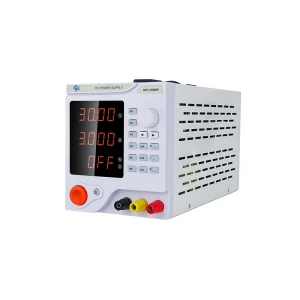
Linear DC Power Supply (30V, 60V, 150V / 1A, 3A, 5A) - Adjustable & Programmable Bench Power Supply
  • Voltage and current can be preset
  • 4-digit high precision display for voltage, current, and power
  • Five-fold protection: Over-voltage, Over-current, Over-power, Over-temperature, and Short-circuit protection
  • Dedicated ON/OFF output control switch
  • Optional RS232, RS485, and USB serial communication supporting MODBUS RTU protocol
  • 6 customizable data storage groups for easy configuration recall
Model Voltage Current Display Type Accuracy
L3003P 0-30V 0-3A 4-bit LED display 0.1mV / 0.01mA
L3005P 0-30V 0-5A 4-bit LED display 0.1mV / 0.01mA
L6003P 0-60V 0-3A 4-bit LED display 0.1mV / 0.01mA
L15001P 0-150V 0-1A 4-bit LED display 0.1mV / 0.01mA
L6005P 0-60V 0-5A 4-bit LED display 0.1mV / 0.01mA

Detailed Product Images

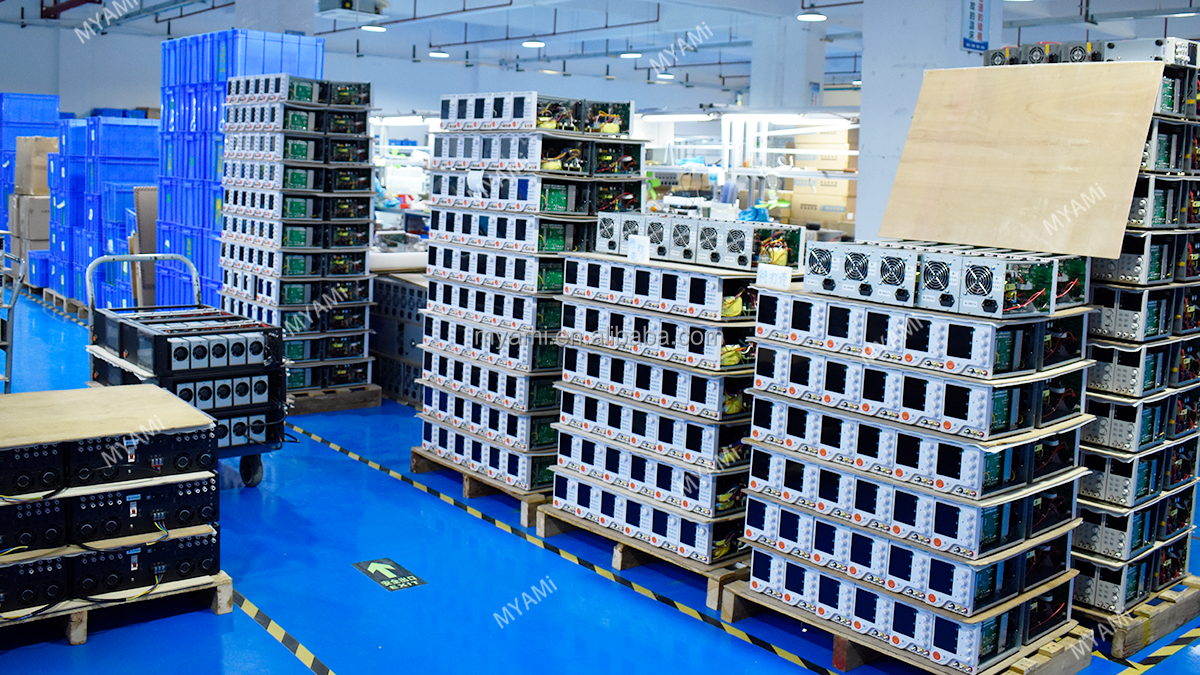
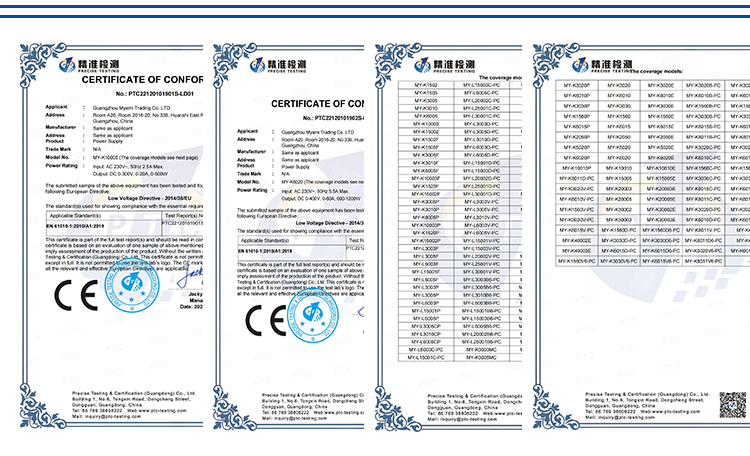
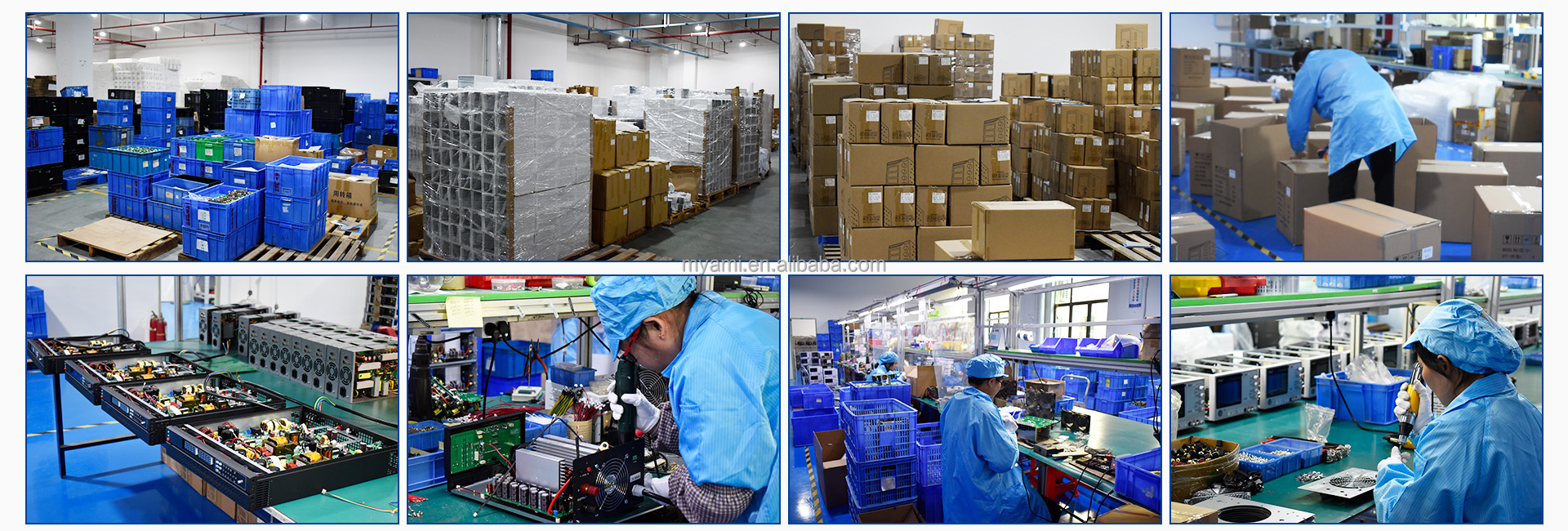
Manufacturing & Quality Control

Production Process Flowchart
Quality Inspection Line
Advanced Testing Area
Automated Calibration Equipment
Finished Product Warehouse

Frequently Asked Questions (FAQ)

Q1: What is the main difference between linear and switching power supplies?
A1: The primary difference lies in the working principle. Linear power supplies use a step-down transformer and linear regulator which generates minimal noise but operates at lower efficiency (~60%). Switching power supplies switch current at high frequencies using electronic switches, offering high efficiency (80%-95%) and lighter weights, though with slightly more high-frequency noise.
Q2: Why are linear power supplies preferred for precision audio and medical applications?
A2: Linear power supplies feature exceptionally low voltage ripple (<10mV) and zero high-frequency switching noise. This guarantees clean signal transmission without electromagnetic interference, making them the gold standard for high-fidelity audio equipment and sensitive medical devices.
Q3: How much lighter is a switching power supply compared to a linear one?
A3: Due to integrated circuitry and the lack of a large copper-wound transformer, a switching power supply is typically about 1/3 of the size and weight of an equivalent linear power supply, often weighing under 500 grams.
Q4: What safety protections are built into these programmable bench power supplies?
A4: The featured programmable models include five layers of hardware protection: Over-Voltage Protection (OVP), Over-Current Protection (OCP), Over-Power Protection (OPP), Over-Temperature Protection (OTP), and Short-Circuit Protection.
Q5: Can these linear bench power supplies communicate with computer software?
A5: Yes, they offer optional RS232, RS485, and USB interfaces. They support the standard MODBUS RTU industrial protocol for automated testing and remote configuration.
Q6: How does the memory recall function work?
A6: Users can preset up to 6 distinct groups of output voltage and current parameters. You can switch between these configurations rapidly to streamline laboratory testing or repair tasks.

Related Products